The Virginia Marine Resources Commission (VMRC) unanimously rejected a petition in late June that would help prevent diamondback terrapins from dying in commercial crab traps, amid outcry from watermen. The commission will review recreational requirements, however.
Known for the diamond-shaped rings on their shells, diamondback terrapins are found in the tidal portions of the Chesapeake Bay. The Virginia Department of Wildlife Resources sees the turtles as a species of “very high conservation need.” According to the department, terrapins’ biggest threats are loss of nesting habitat and death in crab traps. The turtles enter the traps to eat the bait and drown if they can’t escape.
Filed by the Center for Biological Diversity, the Virginia Herpetological Society, Wild Virginia and Ohio University professor Willem Roosenburg, the petition asked the commission to require licensed commercial and recreational anglers to add “bycatch reduction devices” to their traps, widely known as crab pots, in waters within 150 yards of shore.
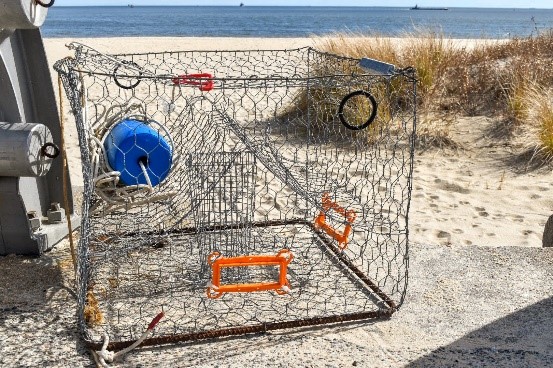
The devices are wire or plastic slots that prevent turtles from entering a crab pot while allowing crabs to pass through. Maryland requires the devices on recreational crab pots. Virginia offers a discount on the license for recreational anglers who use traps that have the devices.
The petitioners presented the results of six studies to the commission. All demonstrated that the devices were nearly 100% effective in keeping terrapins out of the traps, though four showed that traps with the exclusion device also caught fewer crabs than those without.
Editor’s note: The petition had 18,541 signers and about 450 comments against it. You can find the petition and public comments here.
At the commission meeting, many commercial anglers said the slots would require more maintenance. The devices cost about $4 per pot, but crabbers said that cost would add up and, just as important, that they might reduce their catch.
Commissioner Jamie Green was concerned about enforcing the requirement. VMRC police would have to pull pots, measure the device for compliance and check licenses.
The commission denied the petition but recommended that commission staff evaluate applying the requirement to only recreational anglers.
This article originally appeared in at bayjournal.com on July 8, 2025.