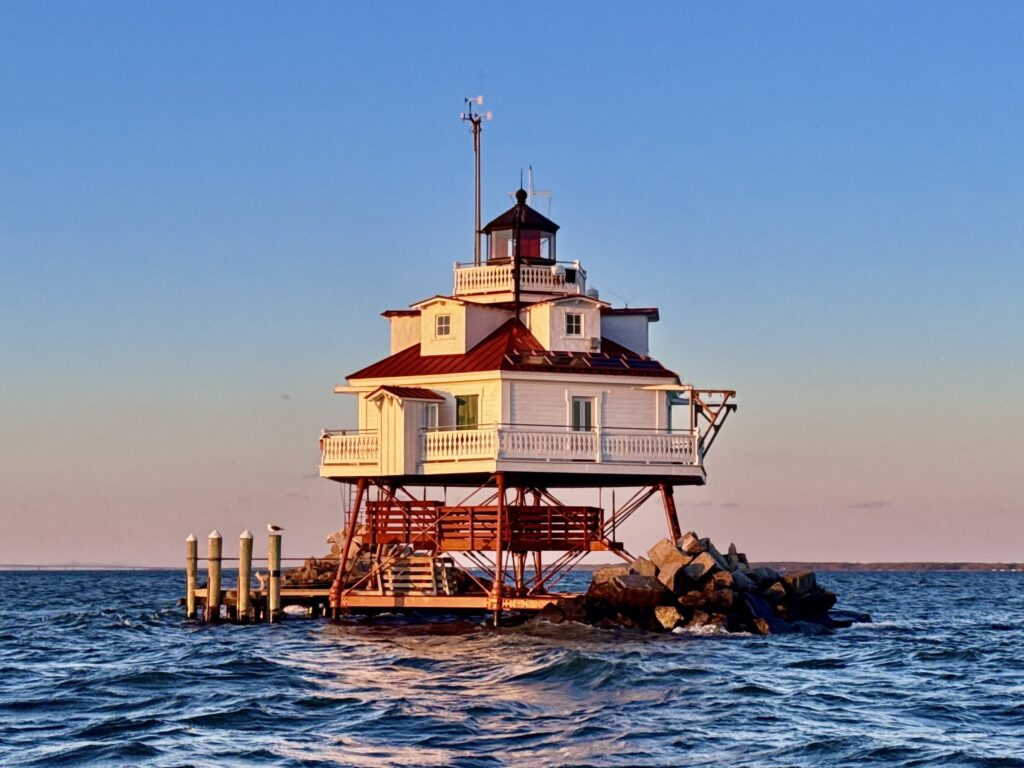
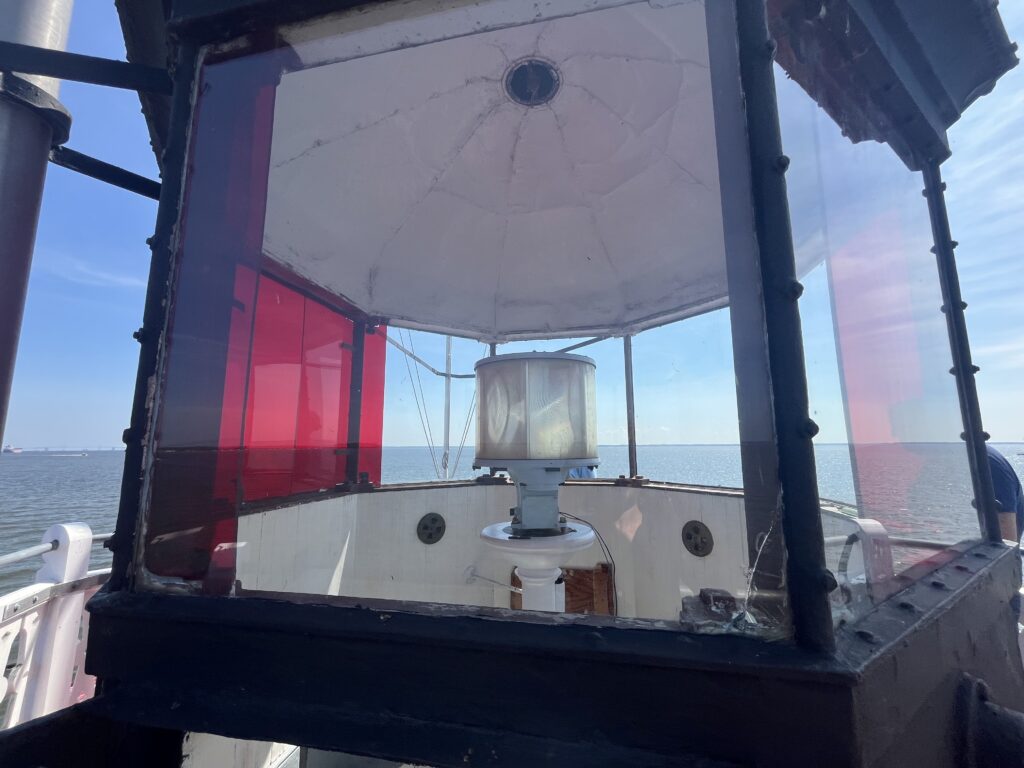
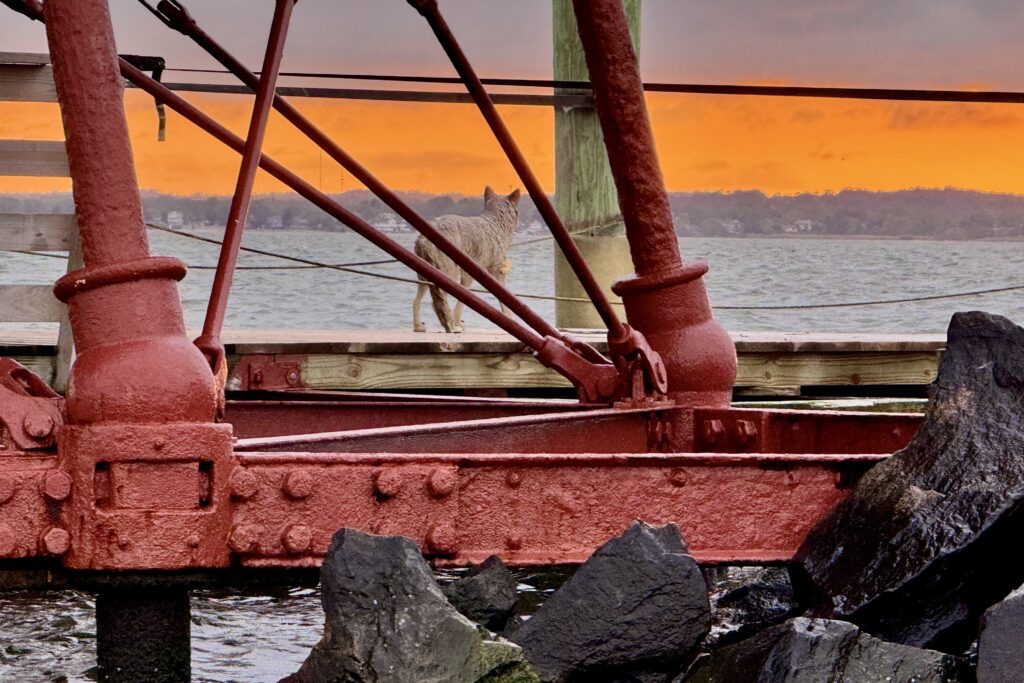
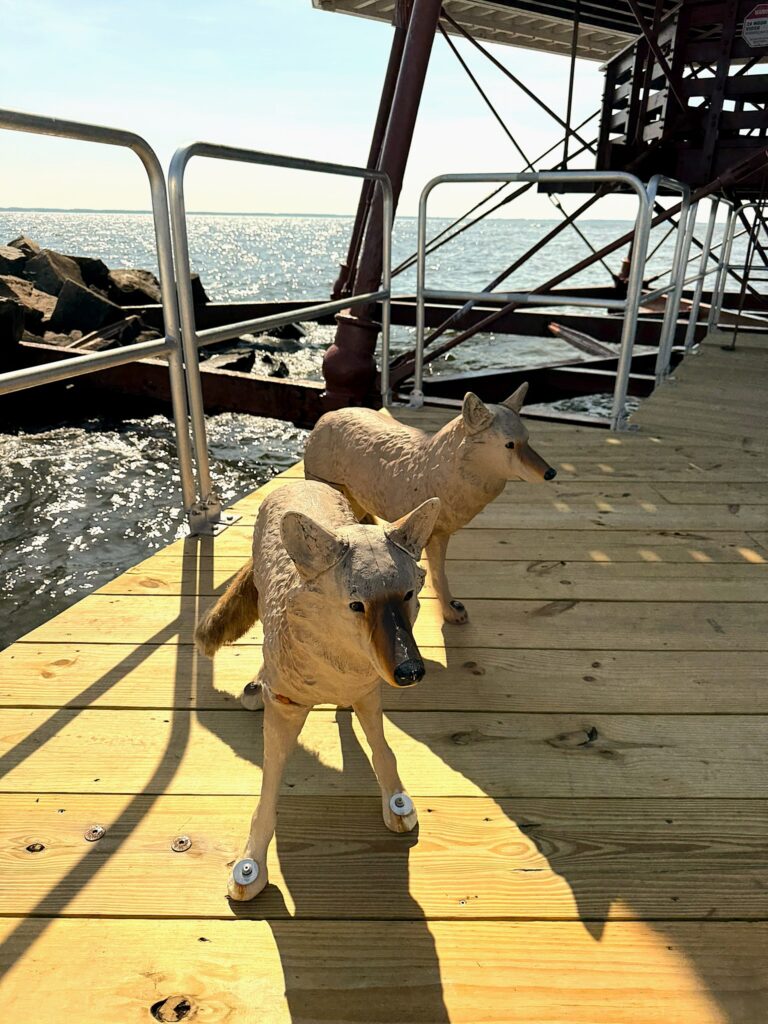
It’s midnight on the Chesapeake Bay. From the shallow water off Thomas Point Shoal, a beam of light swings around the humid darkness. White, red, then white again— it whirls with sturdy regularity around the top of the lighthouse. Waves break against the iron pilings below, splashing two coyote decoys that keep watch against seagulls. The lighthouse is eerily empty inside. Chairs sit in moonlight beside a silent Victrola. A bookshelf holds Reader’s Digest volumes and detective stories. In the radio room, an 1875 calendar lies open on the desk.
Thomas Point Shoal Light may be empty now, but it was home to four lighthouse keepers as recently as 1986. This year, it’s celebrating its 150th anniversary as the last working screw-pile lighthouse on its original foundation in the Bay.
A century and a half provides a wealth of history— since its 1875 construction, Thomas Point Light has survived ice flows and tropical storms, housed generations of hardy lighthouse keepers before its automation by the Coast Guard, and was designated a National Historic Landmark in 1999. To this day, it continues to guide boats in the Bay, posing a pressing question: how long can a working lighthouse survive?
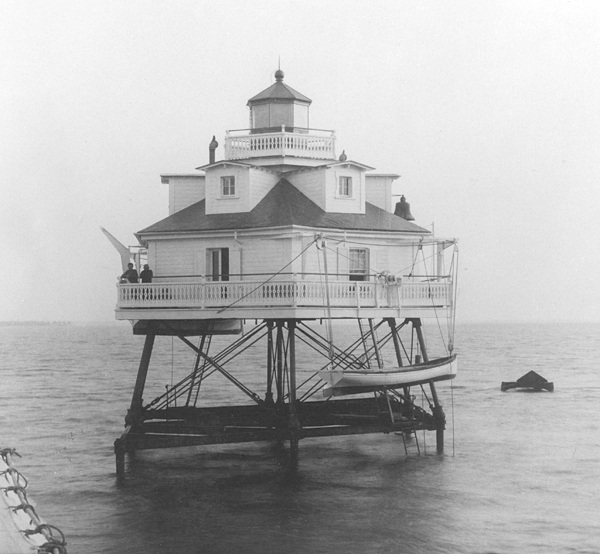
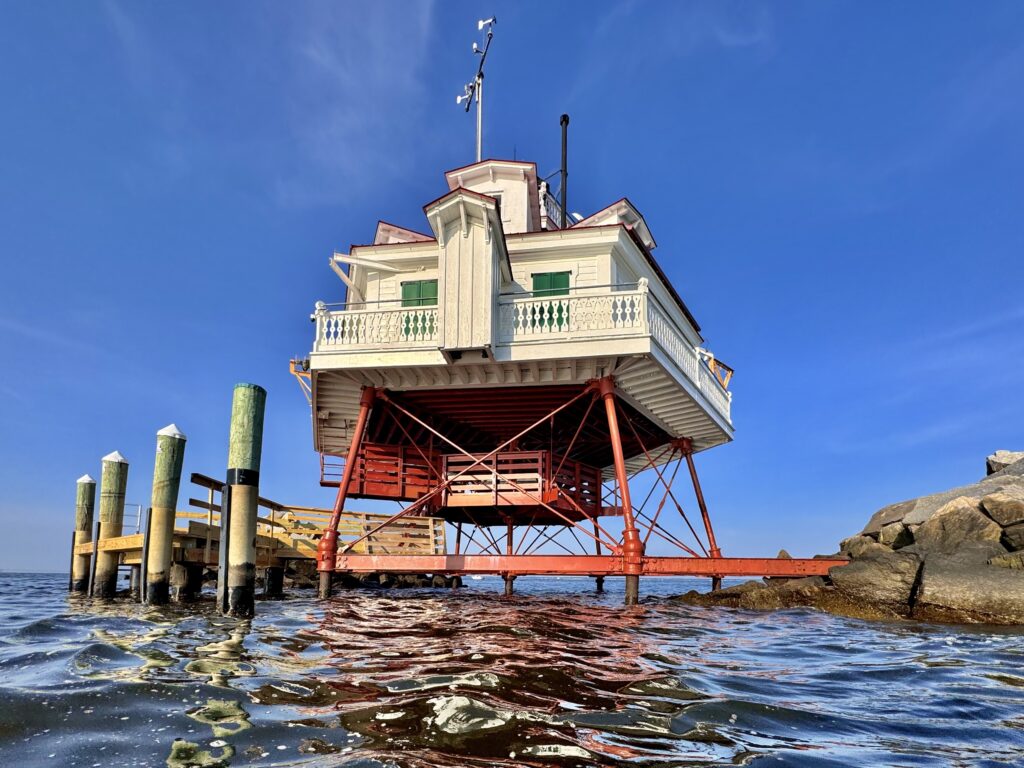
It stands near the entrance to the South River, at the edge of the Thomas Point Shoal, marking a sudden depth change of 13 feet. Its eastern side stands in 20 feet of water; its western side only 7 feet. Built as a screw-pile structure, it sits on nine cast iron beams that were screwed into the silt bottom of the Chesapeake Bay. When it was built in 1875, it took 30 workers to turn each beam into place. Now, it’s the last of its kind on the Bay— screw-piles are no longer built because of their susceptibility to extreme weather. Others have been carried away by wintry ice flows, but the Thomas Point Shoal Light has held its ground.
While all nine screwpiles are cast-iron and have stood the test of brackish water, the beams that sit just above the waterline are made of steel. It’s this steel that worries lighthouse caretakers today. More vulnerable to corrosion, the steel structure is threatened by the Bay’s slowly rising water levels. According to a study commissioned for Thomas Point Light, the Bay has risen 14 inches in the last 97 years and is predicted to rise 18 more in the next 25. A rise of 4-7 feet is predicted by 2100. The question of how to protect the steel beams from becoming permanently submerged is a crucial one. Losing them to the water could mean losing the last piece of Chesapeake Bay lighthouse history.
Thomas Point Shoal Light was the last manned lighthouse on the Chesapeake Bay. Until 1986, lighthouse keepers lived and worked there, in its charming 1.5-story hexagonal cottage with a kitchen, living room, and radio room inside. Manning the light was a full-time job, and life could be challenging. Only accessible by boat, the house had no running water and little space for exercise: keepers would take baths in buckets and jog the wraparound balcony to stretch their legs. With a circumference of 35 feet, it took almost 50 laps to run a mile.
The old lens was set in an open bath of mercury before it was automated, causing problems for the live-in keepers. “Mercury poisoning was an occupational hazard,” says John Potvin, longtime manager of the lighthouse. Old stories of lighthouse keepers going mad were indicative of a real danger in the profession.
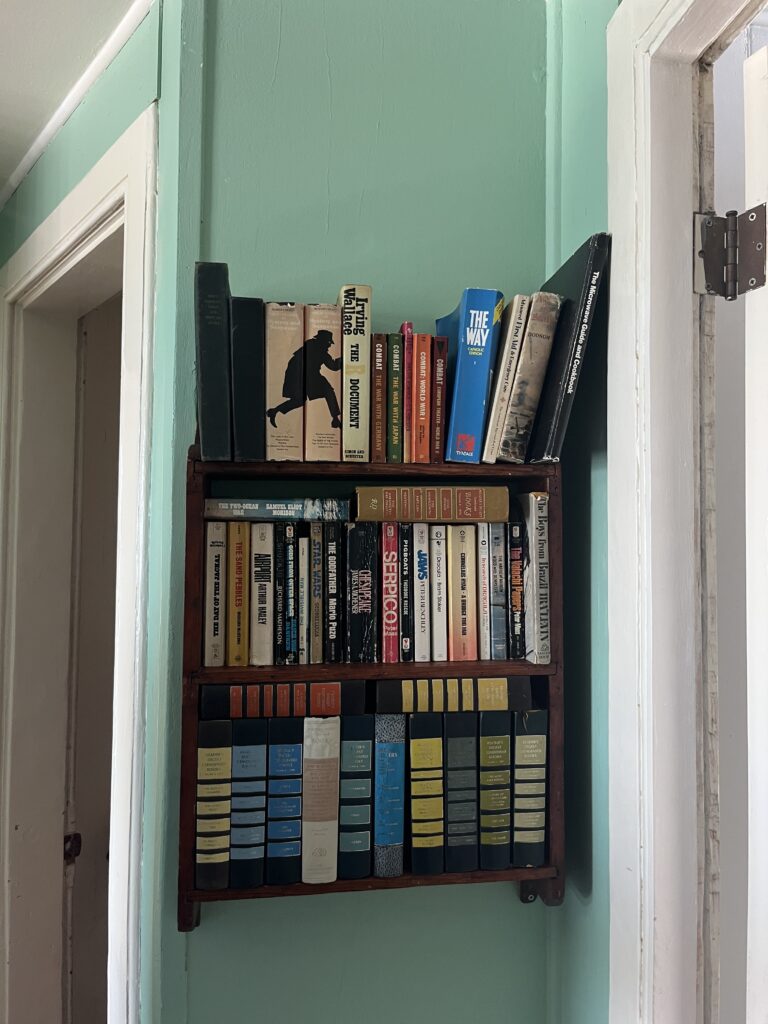
But there were upsides to this unconventional abode. Fishing and crabbing opportunities abounded, and the six dormer windows overlook the blue expanse of the Chesapeake Bay— a killer 360-degree view. The keepers were voracious readers in their free time. The U.S. Lighthouse Establishment provided lighthouses around the country with portable libraries— little wooden boxes that held about 50 books and were swapped between lighthouses every few months for variety.
Thomas Point Light was designated a National Historic Landmark in 1999, receiving well-deserved recognition for its heritage and its status as the last of its kind on the Bay. The U.S. Coast Guard maintains its light as a navigational aid, sharing easements with the Maryland Historic Trust and the National Oceanic and Atmospheric Administration (NOAA), which keeps a weather station there. Tours are in high demand, given by volunteers from the Chesapeake chapter of the U.S. Lighthouse Society. Only a few tour dates remain available this year, but if you join the email list, you can take advantage of last-minute openings.
If you visit Thomas Point now, you’ll find it frozen in time: the inside has been preserved and restored with its original walls and floors. Each room is set up to showcase a different era in its history. It’s 1875 in the kitchen, 1900 in the living room, 1975 in one of the bedrooms, and 1986 in the radio room. All of the restoration work has been done by volunteers.
Without keepers, the lighthouse has just two inhabitants today: the two decoy coyote statues, nicknamed Drew and Debbie, mounted on the landing dock. They’re the only thing that keeps away the seagulls, says John Potvin.
The beloved history of Thomas Point Shoal Lighthouse is intertwined with Chesapeake Bay Magazine’s own. We have featured its recognizable silhouette on more than 10 print covers since our founding, including the cover of our very first issue in May 1971. We’ve covered all the light’s modern milestones, from its 1975 addition to the National Register of Historic Places and 1986 automation to its appearance on a U.S. postage stamp and a 2020 visit from Jimmy Buffett.
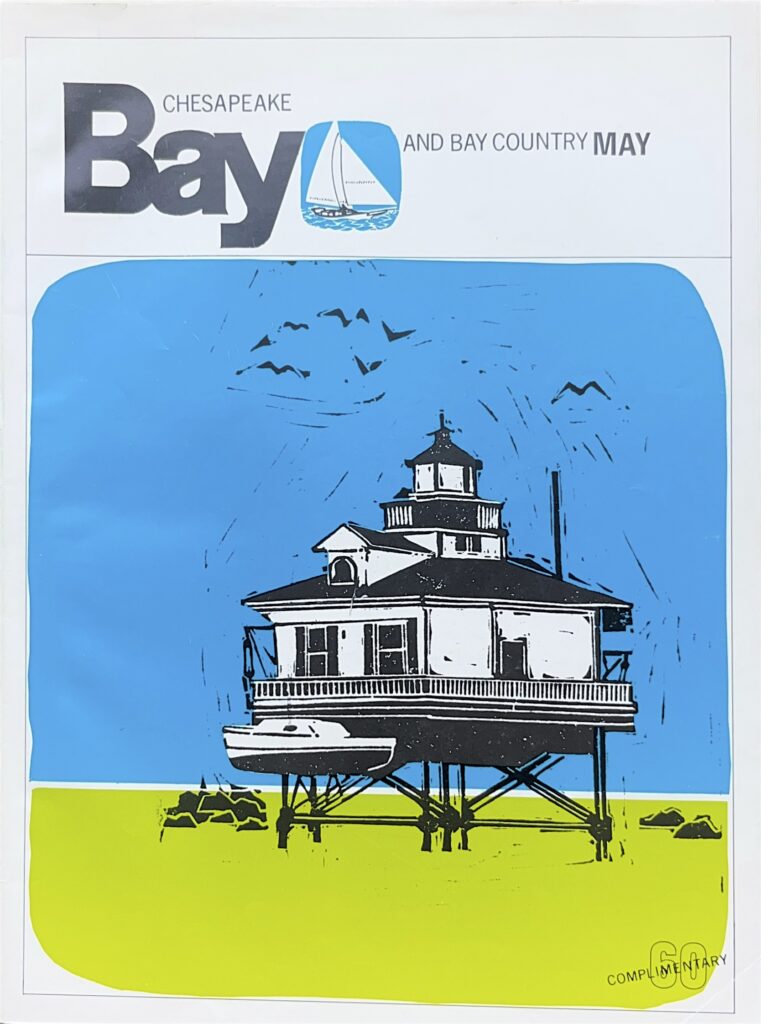
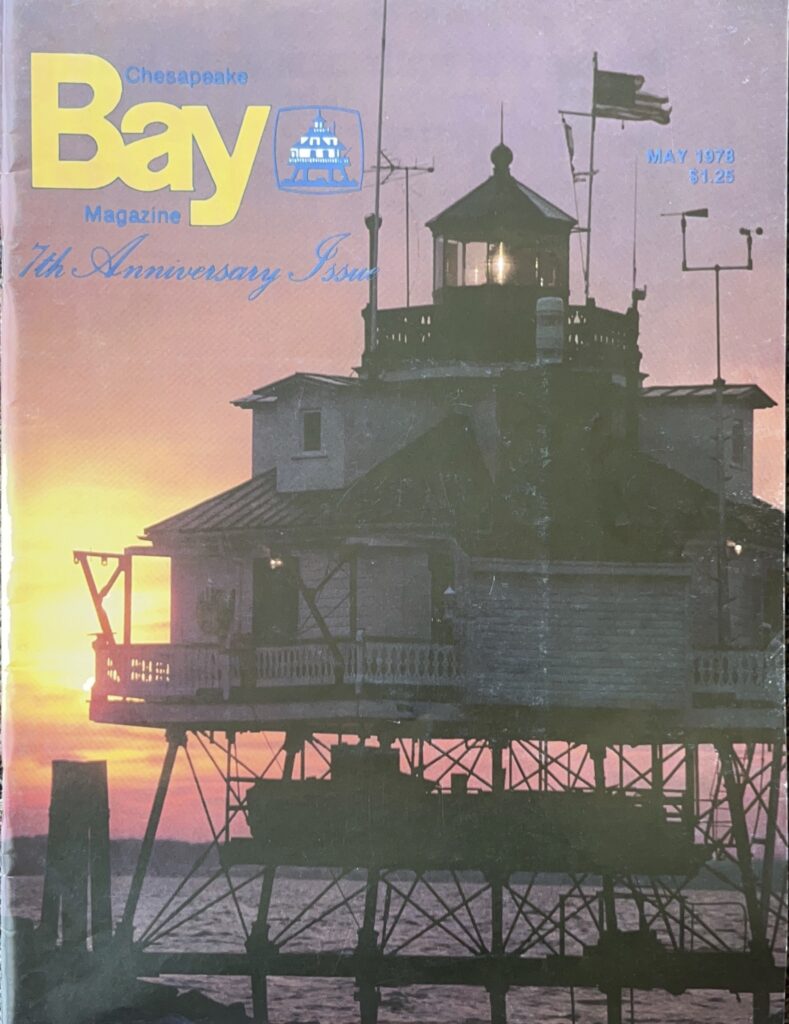
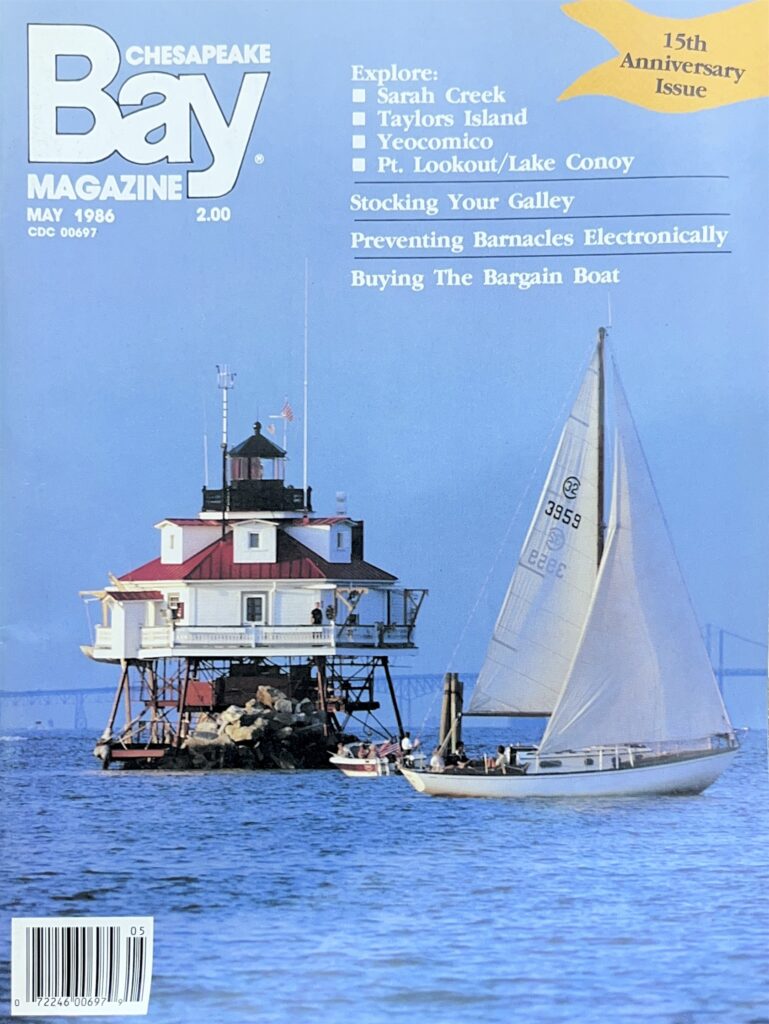
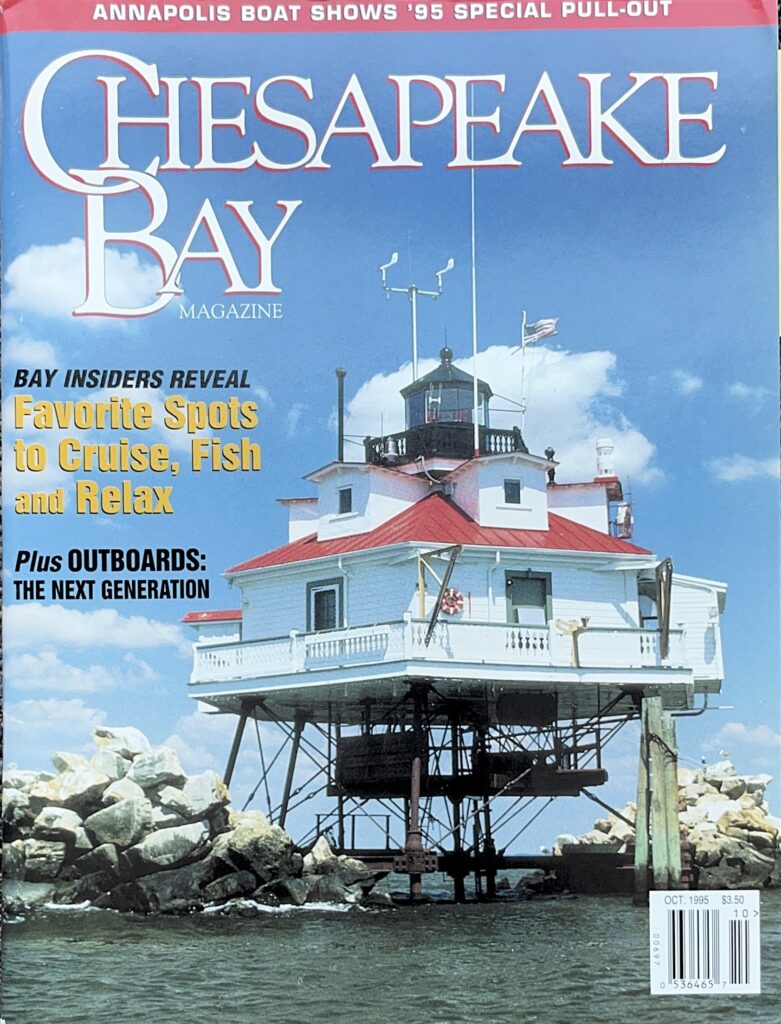
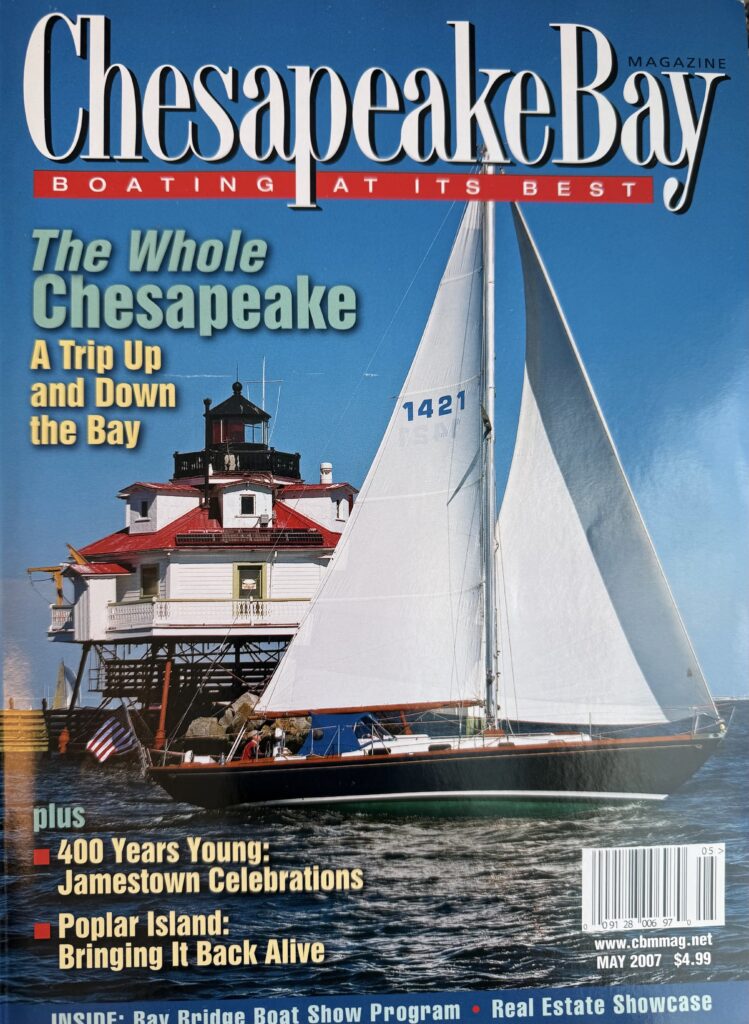
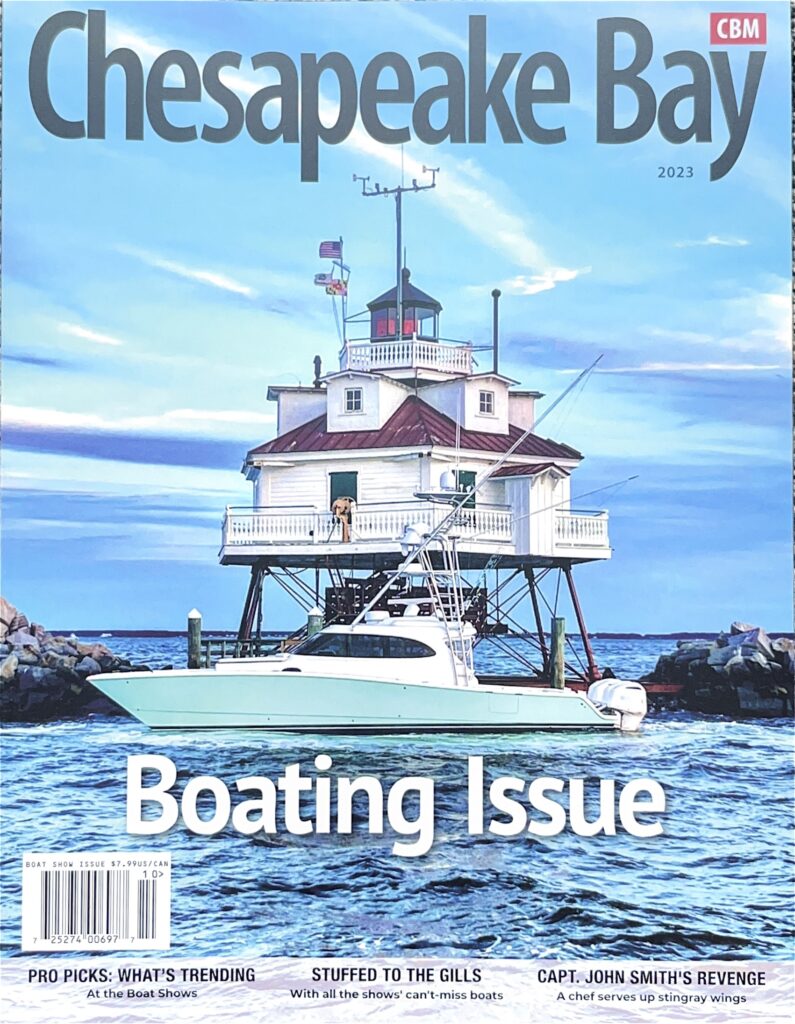
“The lighthouse has survived, thus far, attempts at automation, relocation, and even total elimination,” we reported in our May 1976 issue, when the lighthouse was still manned. Thankfully, the lighthouse still survives today.
“It’s one of only 12 lighthouses in the country that is a National Historic Landmark,” John Potvin told us in 2021. “It falls into the same category as the Maryland State House or the White House or the Washington Monument.”
After 150 years, will this national treasure withstand the rising waters of the Chesapeake Bay? Caretakers are working hard to make the answer “yes.” Their goal is to elevate the entire lighthouse by 4-6 feet before the water gets higher. But first, they must figure out how. At their upcoming Aug. 9 anniversary party, they’ll raise funds to hire an engineering consultant to study the logistics. This study will cost $200,000. They have $30,000 left to raise. After that comes the even more costly task of actually lifting up the lighthouse, but for now they are focused on finding a method.
Tickets are on sale for the 150th celebration (and going fast), held at the Navy-Marine Corps Memorial Stadium on Saturday, Aug. 9. Attendees can look forward to speeches by US Lighthouse President Henry Gonzalez and National Park Service Chesapeake Gateways Superintendent Wendy O’Sullivan, along with music from the locally beloved Eastport Oyster Boys, dinner, door prizes, and a wine pull. At last check, there were less than 30 tickets left. All proceeds will go toward the plans for elevating the lighthouse.
In one and a half centuries, Thomas Point Shoal Lighthouse has seen 27 presidencies, two world wars, and at least 80 hurricanes on the Chesapeake Bay. Through it all, its steady beacon has guided boats to safety in darkness and fog. Along with its caretakers, docents, and volunteers, its admirers here at Chesapeake Bay Magazine hope to see that light for many years to come, shining as a living reminder of the past.