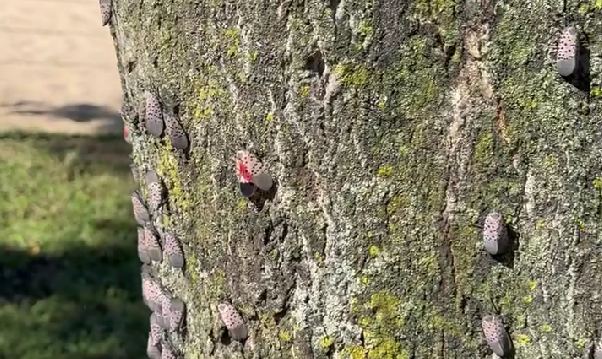
We’ve been warned about its arrival for a few years now, but this is the year the spotted lanternfly has really become a pest.
This environmentally harmful invasive species is abundant in most of Maryland and several Virginia counties. It was introduced from Asia in 2014 and spread from Pennsylvania to the Chesapeake Bay states by 2018. It’s attracted to ornamental trees and shrubs, but its favorite is the tree of heaven, which is also a highly invasive plant from Asia. The tree of heaven helps the spotted lanternfly population to spread, and the tree itself is also harmful. According to the Maryland Department of Natural Resources (DNR) the tree of heaven grows fast and produces a chemical that is toxic to other plants, causing it to outcompete or even kill native species.
DNR goes so far as to recommend cutting down a tree of heaven if you have one in your yard. Spotted lanternflies can damage crops, especially grapevines, which is bad news for East Coast vineyards. They also leave behind a sticky substance known as “honeydew” that can coat surfaces like cars.
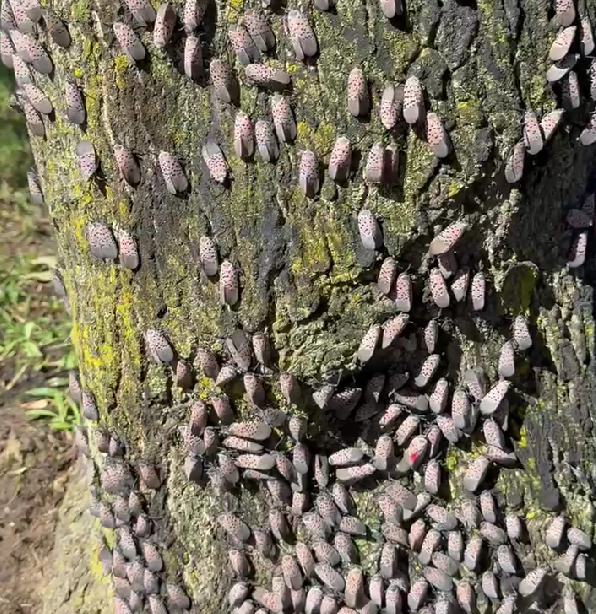
All of these negative aspects make a responsible Bay neighbor want to kill as many lanternflies as possible to stop the spread. However, DNR is warning everyone not to go after the invasive insect with products and methods that could hurt other wildlife.
DNR says in a recent appeal to the public, “It’s important to manage spotted lanternflies, an environmentally harmful invasive species. But methods to kill or stop the spread of these insects should not come at the cost of the ecosystem we’re trying to protect.”
DNR warns Bay dwellers not to use sticky tape or glue traps, which can kill beneficial insects, birds, or other animals along with lanternflies. Insecticides are also bound to hurt “good” bugs like pollinators, introduce harmful chemicals to your yard, and damage the surrounding environment. DNR also shoots down the idea of homemade mixtures of bleach, vinegar, dish soap, water, or salt, saying they will hurt multiple species.
The best bet, the agency says, is to use circle traps. They are nets placed on a tree of heaven or other tree where you see a large group of spotted lanternflies. Circle traps capture the lanternflies as they climb up the trees.
If there is a bright spot to be found, it’s the native predators that have been able to turn spotted lanternflies into snacks. Birds, mantids, spiders, and even native bats have all been seen to eat the bugs.
If you see a group of spotted lanternflies in Maryland, report it to the Maryland Department of Agriculture. They’re collecting data to help them plan for future lanternfly management. You can report a sighting here. If you’re in Virginia, check this map to see if lanternflies have already been reported in your area. If they haven’t, be sure to let your local Virginia Cooperative Extension office know.