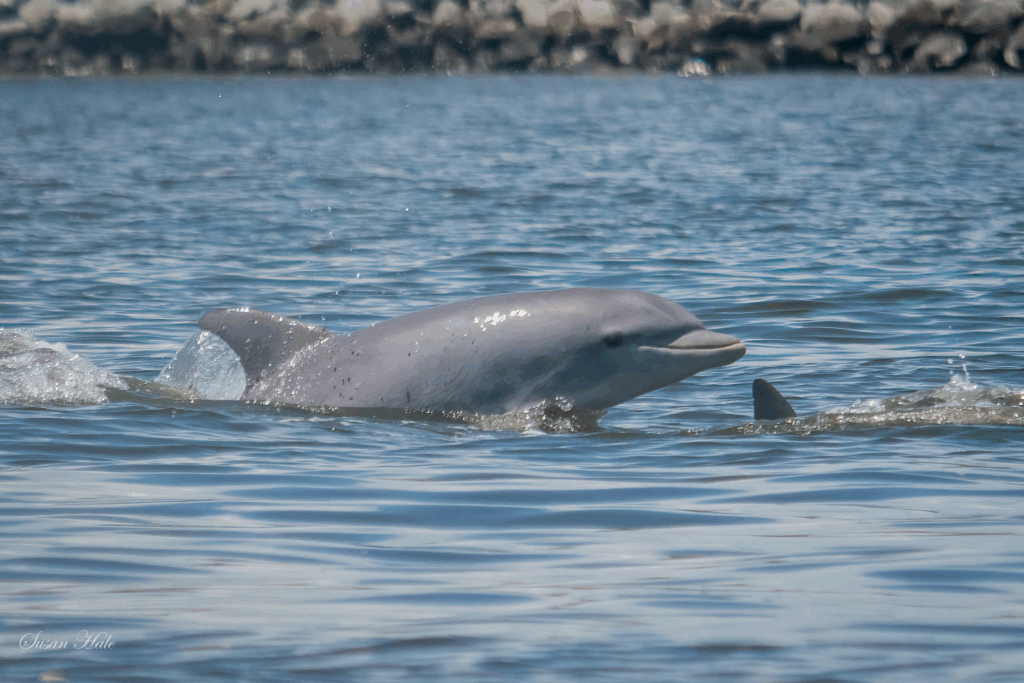
Have you ever had the good fortune to spot dolphins in the Chesapeake Bay, and wanted to tell people about it? There’s an app for that. The Chesapeake DolphinWatch app is in its ninth season this summer, allowing users to post and record the locations of dolphin sightings in the Bay. It’s fun to see where the popular marine mammal has been traveling, and it helps scientists, too.
The University of Maryland’s Center for Environmental Science (UMCES) launched the app in 2017 as part of a research effort to collect data about dolphins in the Bay. In its first year, it had 1,500 users registered. Now, it has over 18,000, either logging sightings or looking at the ones on the map. There are around 1,200 sightings reported every year, says Jamie Testa, DolphinWatch project coordinator.
This app demonstrates the value of citizen science. Anybody can register for free, and the sightings are reported by everyone from fishermen to recreational boaters. Researchers can verify reports by email if needed. “We rely on our dolphin watchers,” says Testa. “The people power that these volunteers provide is invaluable. We could never do that on our own.”
Nine seasons of data collection have provided UMCES with valuable information about dolphin behavior in the Chesapeake Bay—mainly, where they are and when. Summertime is prime sighting season, providing warmer temperatures and an abundance of food sources. However, sightings decrease the farther north you go: while the lower Bay sees dolphins year-round, the middle Bay sees them from April through October and the upper Bay only sees them in June and July.
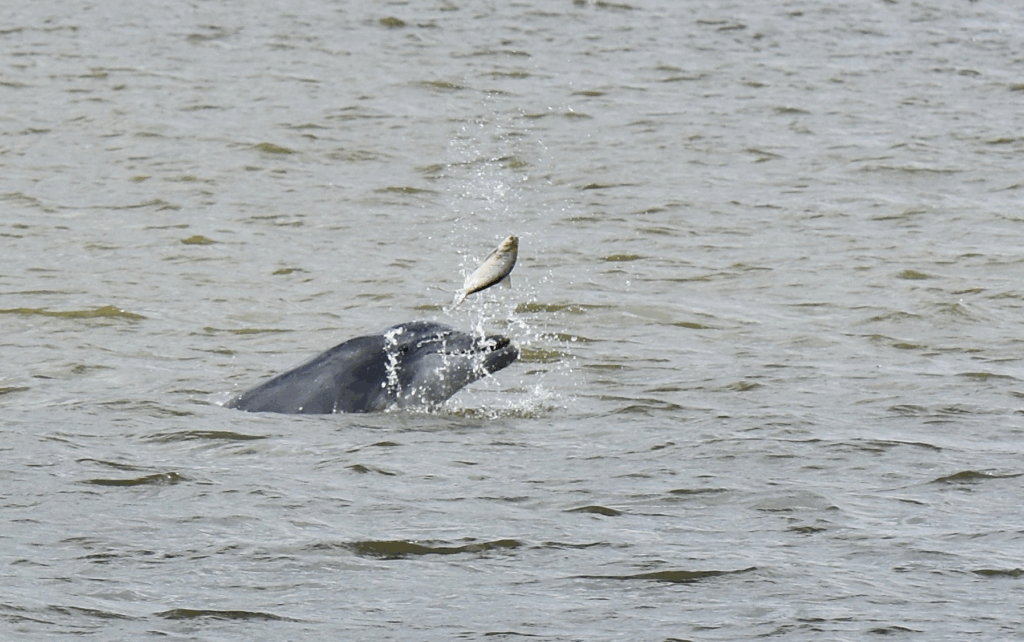
What makes dolphins leave the upper Bay so early? This is one question that researchers are still working on. “It’s very interesting,” says Testa. “We suspect it’s not just a temperature cue, because by August they’re already heading south. And it’s still very warm in that part of the Bay. So there must be other cues, but we’re still looking into what they might be.”
The app may also help researchers track a rebound in the dolphin population after an Unusual Mortality Event (UME) about a decade ago. From 2013 to 2015, bottlenose dolphins on the Atlantic Coast suffered from an airborne disease called cetacean morbillivirus, which caused a population drop: some populations decreased almost by half. After this marine pandemic—years before we humans started dealing with our own—dolphins are on the rise again, and the DolphinWatch app gives us a chance to watch them come back.
“Folks who have lived and worked on the Bay for a long time and know that dolphins are frequent visitors agree that there are more of them now,” says Testa. Since they can withstand a wide range of salinity, they can be found far upriver. The lower Bay, especially, has had an abundance of such reports: “All the creeks, rivers, and streams off the lower Bay, you name it, we’ve had a sighting from there,” says Testa. The middle Bay has seen dolphins in the Severn, Choptank, and West rivers, just to name a few. “It’s more limited in the upper Bay,” says Testa, but the Chester and Patapsco rivers have had several reports in recent years.
Data from the app also helped inform the Baltimore Key Bridge Rebuild project, as workers continue to demolish the remaining damaged structures using controlled explosions. “We wanted to make sure dolphins were considered throughout the recovery process,” says Testa. The noises from the explosions pose a threat to the sound-sensitive dolphins in the Patapsco River. Sighting data from the app shows what times of year dolphins are most likely to be away from the bridge, allowing planners to schedule explosions with this in mind.
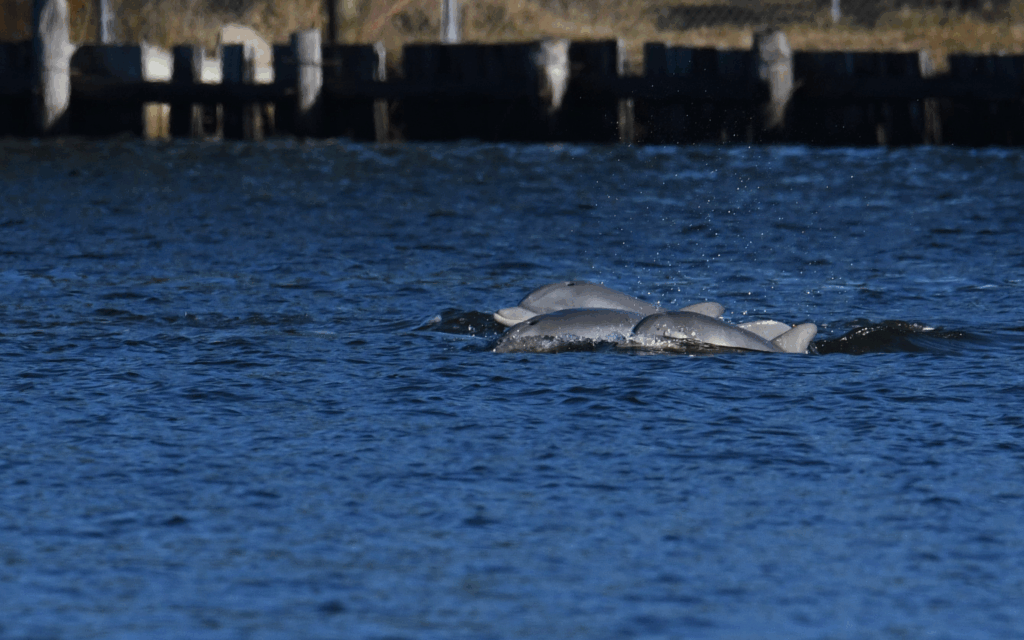
While dolphins are fun to see, boaters have certain responsibilities if they come across any in the wild. First, slow down: not only will you avoid running into them, but you’ll quiet the water. Dolphins are extremely sensitive to sound, especially from noisy boats. If you’re fishing, pull in your lines so they don’t become entangled. Federal law requires that you maintain a distance of at least 50 yards (150 ft) and don’t interact. “Dolphins will bow ride,” says Testa, “So if they choose to engage with you that’s fine, but you shouldn’t try to entice them.” You also want to avoid coming between animals— dolphins are highly social, travelling in tight-knit pods with lots of mother-and-calf pairs. “They rely on that social cohesion,” says Testa. Lastly, never get in the water with dolphins. “They’re so majestic and it’s so tempting, but that would be dangerous for everyone involved.”
Dolphins are considered “charismatic megafauna” in conservation talk— in other words, people like seeing them. They’re big, popular animals that garner a lot of public attention and can act as ambassadors for broader conservation efforts. By joining the DolphinWatch community to report your own sightings, you’re contributing to something larger than just dolphin research: knowledge of these animals’ behavior may help us understand how to better care for the Bay itself and all of the creatures who call it home.