Stone crabs are to Florida what blue crabs are to the Chesapeake Bay. 99 percent of them are caught in the Sunshine State, and their claws are ubiquitous on restaurant menus. But stone crabs may be closer than you think, if a recent trend in Virginia continues.
For the first time on record, watermen have caught stone crabs in the Chesapeake. Virginia Institute of Marine Science (VIMS) is spreading the word about this phenomenon in hopes of learning more about the crab’s expanding range.
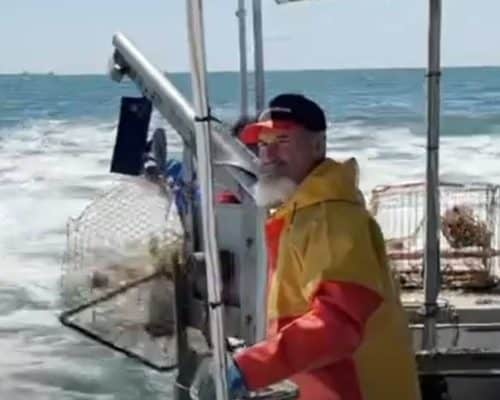
VIMS Professor Rom Lipcius tells us he has in his possession four stone crabs that were all caught at different times off Willoughby Spit in Norfolk. Since then, he has received reports from other locations in the lower Chesapeake Bay, in Rudee Inlet, and on the seaside of Virginia. Until recently, North Carolina was the farthest north that stone crabs were usually seen.
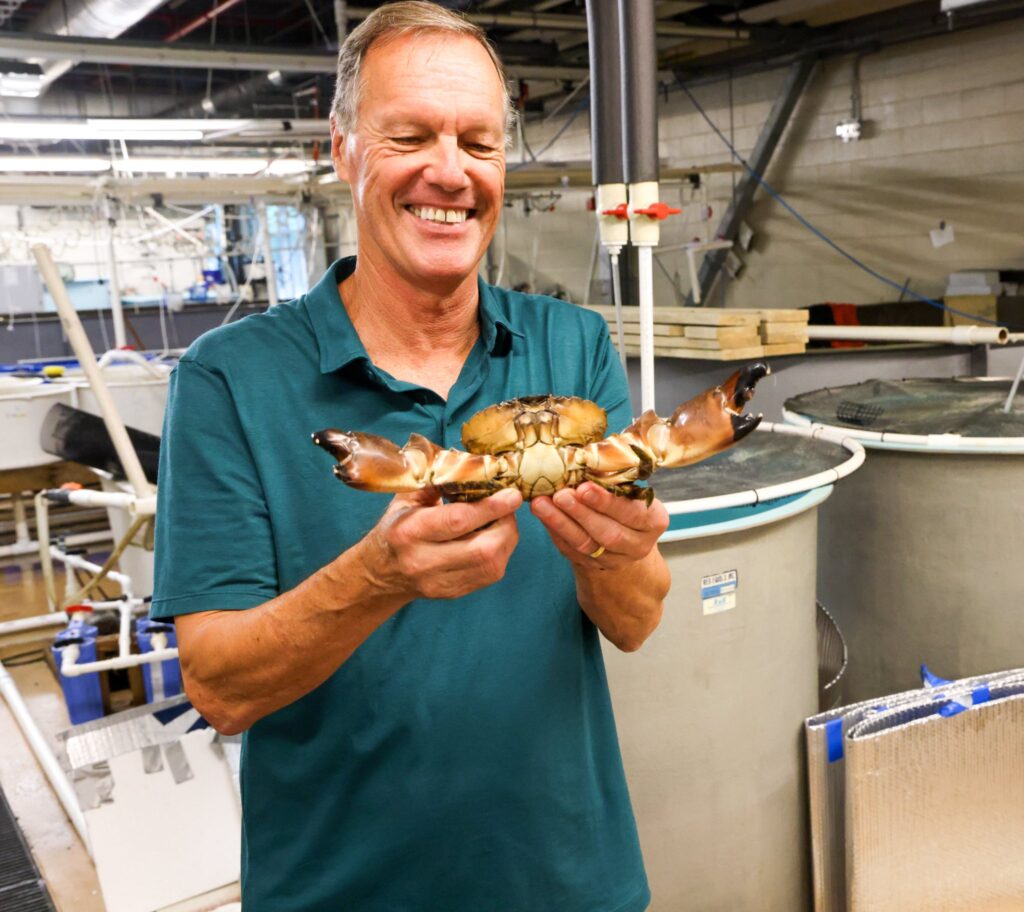
Lipcius is gathering information, and even collecting live crabs, for a scientific publication documenting and analyzing the stone crabs as they colonize the Chesapeake Bay. He’s asking crabbers (both commercial and recreational) to document any findings of stone crabs in the Bay. “If you observe or legally catch a stone crab in Virginia waters, please email Rom at [email protected] with information,” VIMS instructs.
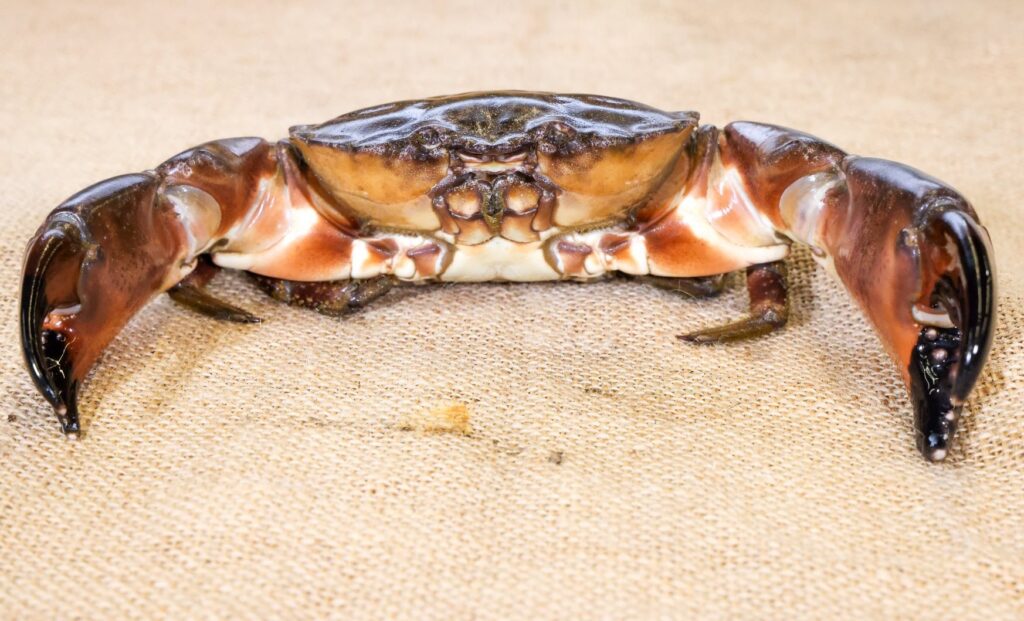
To document a crab you may spot, you’ll need to capture photos or the live crab itself with a report of harvest location and date information. This is important because Lipcius and his team is trying to validate which exact stone crab species is appearing in Virginia: the Florida stone crab or the Gulf stone crab. So far, Lipcius believes it is the Florida stone crab. He hopes to get funding for genetic testing of the crabs. Lipcius is also working on a map of documented observations that would be available to see online.
Unlike so many invasive species that pop up in the Bay, the stone crab is not invasive, it’s just migrating further north as warmer water opens new habitat. VIMS hopes to learn whether the stone crab is actually reproducing in the Bay, but so far it looks like the crab larvae are floating into the Bay from waters further south, and then surviving and growing inside the Bay. The researcher doesn’t believe there will be a major impact on the food web because stone crabs and blue crabs already coexist in many of the same areas, eating similar prey.
Lipcius believes the arrival of stone crabs in our Bay may be beneficial since it adds another fishery resource for crabbers. And unlike blue crabs, watermen can harvest the stone crab without killing it. The powerful claws are the only part harvested, because that’s where most of the meat is. (The claws account for more than half of the crab’s total weight.) So in Florida, watermen usually harvest the larger claw, then release the crab back into the water where it can regenerate a new claw.
The only possible concern he voices: When a stone crab is caught in a blue crab trap, how will it affect the catch of blue crabs? That remains to be seen.
If you’re hoping to catch some stone crab claw for dinner, you may be wondering whether it’s legal to harvest them in Virginia. For now, they fall under blue crab regulations. Setting crab traps requires a license with the exception of waterfront homeowners, who may set two traps off their shoreline or dock.
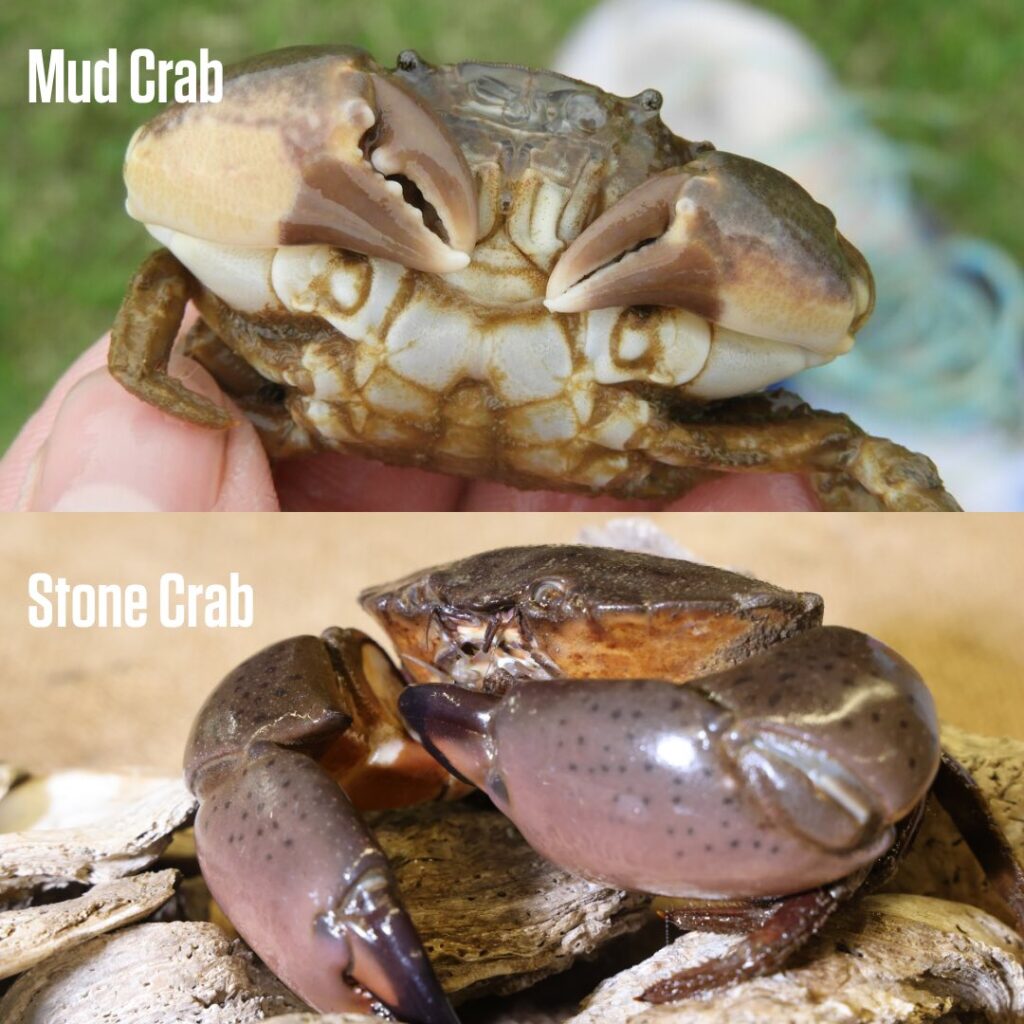
For those who are keeping an eye out for stone crabs to report to scientists, VIMS points out that juvenile mud crabs can often be mistaken for stone crabs. When looking for stone crabs, check for a larger body size (up to 6.5″ across, compared to 2.5″ mud crabs), pale horizontal stripes on the legs, and prominent black tips on the claws.