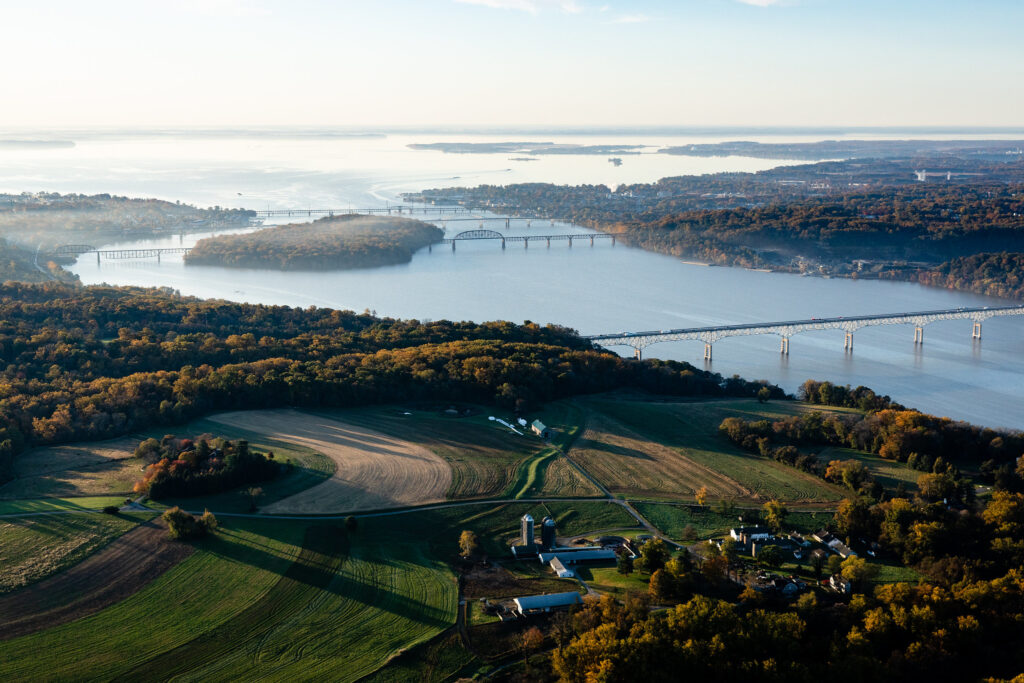
Four governors and the mayor of Washington, D.C. descended on the National Aquarium in Baltimore Tuesday to adopt a revised Chesapeake Bay Watershed Agreement. An update to the Chesapeake Bay restoration plan devised in 2014 with a 2025 deadline, this new Watershed Agreement will direct the next 15 years of Bay cleanup efforts.
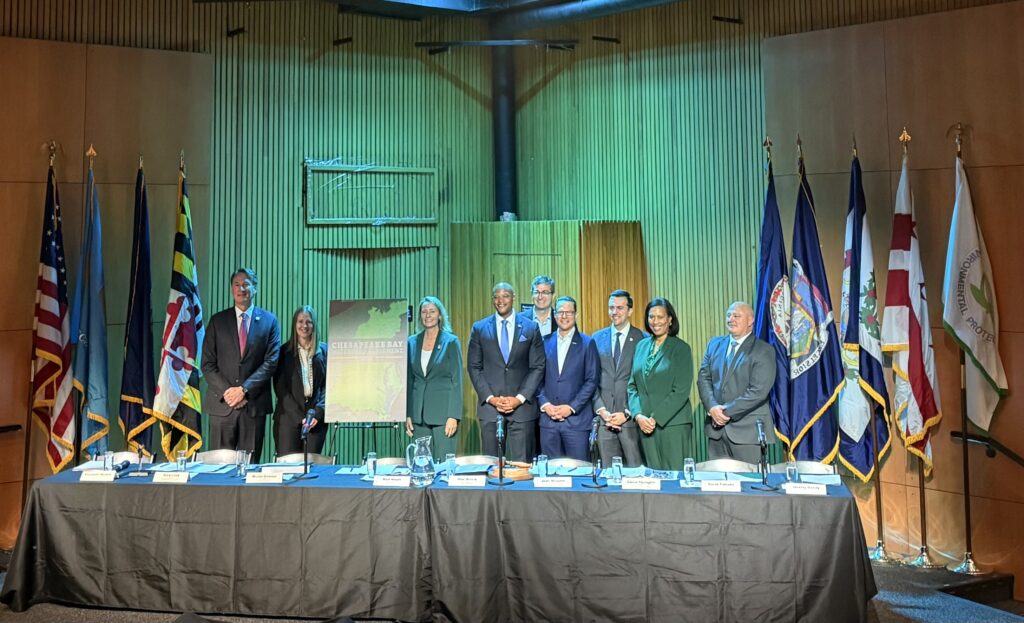
The governors of Maryland, Virginia, Pennsylvania and Delaware, the D.C. mayor, representatives from West Virginia and New York, the EPA, and the Chesapeake Bay Commission, gathered for the Chesapeake Executive Council’s annual meeting. The council met privately, then announced publicly that it had approved the revised watershed agreement, elected Pennsylvania Governor Josh Shapiro as the new Chairman of the Executive Council, and ordered recommendations this year to include the federally recognized tribal nations of the Chesapeake Bay watershed in the Chesapeake Bay Program for the first time.
The Indigenous Conservation Council of the Chesapeake Bay, led by chairperson Chief G. Anne Richardson of the Rappahannock Tribe, was present at the meeting. The Principals’ Staff Committee is charged with working alongside tribes in the watershed to flesh out partner responsibilities and expectations, add the council’s signature to the Chesapeake Bay Watershed Agreement, and seek Indigenous knowledge for watershed restoration. The recommendations are due July 1, 2026.
The revised 2025 Chesapeake Bay Watershed Agreement builds upon progress, according to Virginia Governor Glenn Youngkin, instead of simply restarting the program. “We are redoubling our effort to make achievable, not just aspirational, goals.” While 2040 is the next big milestone date for the new agreement’s goals, there are “critical checkpoints” planned along the way, Youngkin said. The new agreement contains four goals: Thriving Habitats, Fisheries and Wildlife; Clean Water; Healthy Landscapes; and Engaged Communities. It also includes 21 outcomes for the Bay states to reach. To achieve the outcomes, the partners will create management strategies for each.
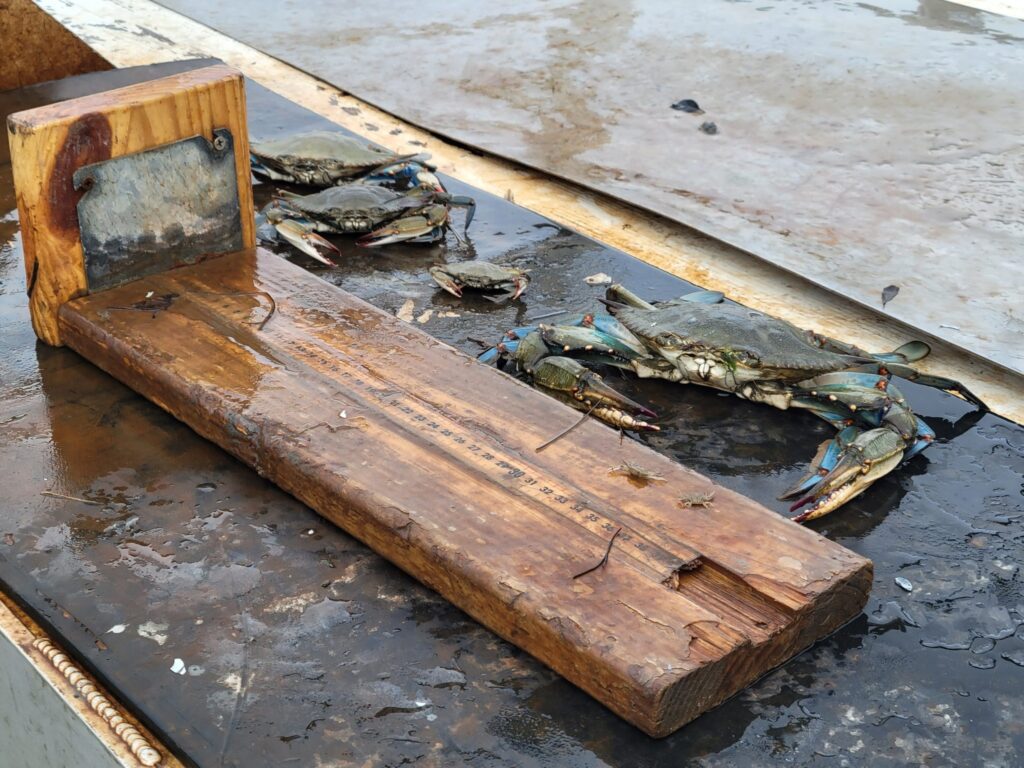
Thriving Habitats, Fisheries and Wildlife zeroes in on important species like blue crabs, brook trout, and oysters along with habitats like underwater grasses, fish passages, and wetlands. Both Youngkin and Maryland Governor Wes Moore cheered the major progress made in oyster restoration and habitat. All of the last watershed agreement’s waterways targeted for restoration have been completed, and then some. Last season was a “bumper” year for the oyster harvest.
Healthy Landscapes refers to healthy forests and trees, land use planning, protected lands, and adapting to climate and environmental change. Pennsylvania’s Shapiro pointed out that his state’s outdoor tourism economy relies on clean air and water.
The Clean Water goal includes targets like reducing excess nitrogen, phosphorous and sediment, going after toxic and emerging contaminants, and attaining and monitoring water quality standards. Delaware Governor Matt Meyer spoke about the importance of holding polluters accountable with tough penalties and making sure all leaders are on board with clean water efforts. “If a single city, county, or town disregards what we’re doing, we will all be the worse for it,” he said.
The goal of Engaged Communities refers to public access, environmental literacy among students, local government leadership, stewardship, and workforce. D.C. Mayor Muriel Bowser spoke about initiatives in her district to increase green jobs, like solar installation, for D.C. residents through training programs.
All of the watershed states’ leaders emphasized the importance of acting quickly and removing bureaucratic obstacles. Maryland State Senator Sara Love, chair of the Chesapeake Bay Commission, talked about acting with urgency and setting clear timelines. The agreement sets specific 2040 objectives for oyster restoration, freshwater mussel restoration, wetlands preservation, waterbirds protection, land conservation, public access, and environmental workforce development, with a 2033 mid-point check-in.
Chesapeake Bay Executive Council members also made it clear that a clean watershed is an investment in the economy, not just in the environment. Moore pointed out that in Maryland alone, the Bay generates $3.2 billion and 58,000 jobs a year in tourism and supports the 3,300 jobs in the state’s seafood industry that nets $600 million annually.
EPA Deputy Administrator David Fotouhi said, “You don’t have to choose between a strong economy and a cleaner environment. You can have both.”
Shapiro spoke of the power of the Bay to drive economic growth, from fishermen to outdoor recreation outfitters, from tourists to farmers. Shapiro is the first Pennsylvania governor to lead the Executive Council in more than 20 years, signaling a strengthened commitment for the upriver state to do its part. “Pennsylvania is back in the game,” he declared, touting the state’s accelerating nitrogen reductions and the high marks the Susquehanna River earned on the most recent Bay report card.
The Chesapeake Bay Foundation (CBF) was pleased at the adoption of the revised Watershed Agreement. CBF President Hilary Harp Falk said in a statement, “We must use what we’ve learned over the last 40 years to deliver lasting solutions for polluted runoff from farms, cities, and new development. We should build on past successes like oyster restoration to exceed these goals. We’ll keep pushing for the policies and investments needed to make that happen. Because when the Bay thrives, so do we.”