It’s an age-old question: who has rights to a Chesapeake Bay crabbing spot? Is it the commercial waterman who has been laying his trotline there all season? Or is it the recreational crabber who got out on the water early and beat him to it?
This question came to a head with a dispute on the Magothy River in late August. Maryland Natural Resources Police (NRP) say officers responded on Aug. 27 to a confrontation between recreational crabbers on their boat and a commercial crabber. The recreational crabbers told police they were crabbing with collapsible traps near Gibson Island. They said that a commercial waterman running a trotline in the area “intentionally pulled up two of their traps and cut the line that connects the trap to the buoys.”
NRP officers spoke with the commercial crabber and found two buoys on his boat with trap lines that had been cut. The crabber, a 23-year-old from Queenstown who isn’t being named by police, was issued a citation for “destroying gear belonging to another person.” If he is convicted, the man could face up to a $1,000 fine.
We wanted to know what the law says about disputes like this between recreational crabbers and watermen. Maryland Department of Natural Resources regulations state, in short, that each must stay at least 100 feet away from the other.
The COMAR 08.02.03.03 trotline regulation says, “An individual may not set or fish a trotline within 100 feet of another individual’s set trotline, collapsible crab trap, or net ring,” and COMAR 08.02.03.06 concerning set gear says, “An individual may not set or fish a crab net ring or collapsible crab trap within 100 feet of another individual’s set trotline, collapsible crab trap, or net ring.”
Unlike oyster grounds, there aren’t any leased areas for crabbing. NRP spokesman Hunter Dortenzo tells Chesapeake Bay Magazine, “If gear isn’t already placed, there is no restriction as to who can work that specific area whether commercial or recreational.”
Even so, some watermen feel that proper etiquette should be followed.
CJ Canby, the captain of the F/V Miss Paula with a large following on his “Crab Dad” social media pages, says it’s simply common sense to give watermen a wide berth. “100 feet apart is nothing on the water, when you have a couple thousand feet of line out. With the tide, it doesn’t stay perfectly in a straight line.” Canby, who has been crabbing professionally for 24 seasons, points out that when it’s still dark, someone else’s gear can look farther away than it does when the sun comes up.
He tells us that among watermen, it’s generally understood that if someone has a “lay” (where they’re going to put their trotline), “you don’t go out an hour earlier and beat him there.” Canby says, “If you’re going into a new area, you kinda wait to see if someone else is using it. See who’s there, and then set your traps or line accordingly.”
He has observed that sometimes recreational crabbers think watermen must have intel on where the best crabbing spot is, and try to get as close as possible. But that’s not necessarily the case. “Crabs are not only in one spot. If there’s an edge, they’re probably anywhere on the edge.” Canby advises, “Learning your river, learning many different spots… things like that would be beneficial and stop a lot of these instances.”
Canby doesn’t condone any waterman destroying another person’s gear. If there is a disagreement, “You have to call DNR, get DNR involved,” he says. But he believes the hobby crabber could avoid an unpleasant experience in the first place by giving the waterman plenty of distance. “Try to approach the [waterman] and say, ‘Hey, where’s your line?'” Ultimately, he asks, “Do you really want to go out crabbing and have a terrible experience and cause a bunch of drama?”
His tip for recreational crabbers is, “Start your traps in 4ft of water and end it at 12, to see where you’re catching crabs. Try different areas, see what works, and put the rest at that depth.”
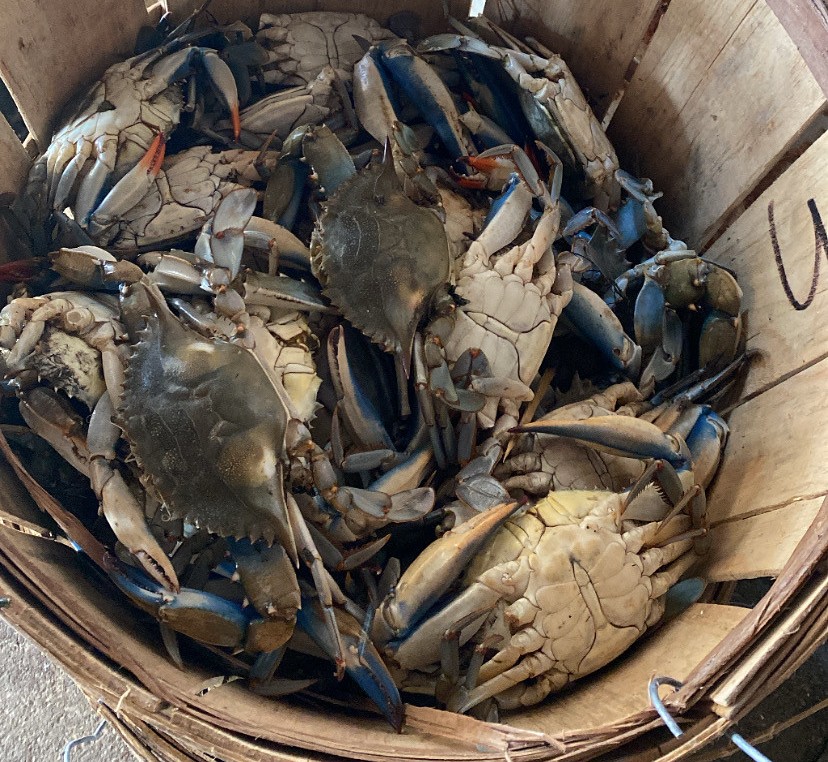
The good news, according to Canby’s observations this season, is that there are plenty of crabs to go around. “There’s been a ton of crabs this year. Fall crabbing has been phenomenal. We don’t need to crab right on top of each other. Especially in the upper Bay, it’s the best I’ve seen in my 24 seasons.”