These veterans are finding new ways to serve their country— this time on civilian soil— by taking care of the Chesapeake Bay.
On Tuesday, a volunteer group of veterans and active-duty service members helped the Chesapeake Bay Foundation (CBF) process 2.5 million recycled oyster shells for use in oyster restoration on the Bay. The event was hosted in partnership with Backcountry Hunters and Anglers’ Armed Forces Initiative (AFI)— a program that introduces the military community to public lands and waters through conservation and recreation opportunities. Hailing from as far as Seattle, participants travelled from across the nation for a multi-day trip to the Chesapeake Bay region, where they are fishing, crabbing, and giving back to the Bay through volunteer restoration work.
“We want to give veterans a new mission in conservation,” said Garret Robinson, Marine Corps veteran and vice-chair for the AFI Mid-Atlantic chapter. “It’s good for the mind, the spirit, the body, the whole thing. And doing conservation work allows us to continue enjoying the wild spaces we have.”
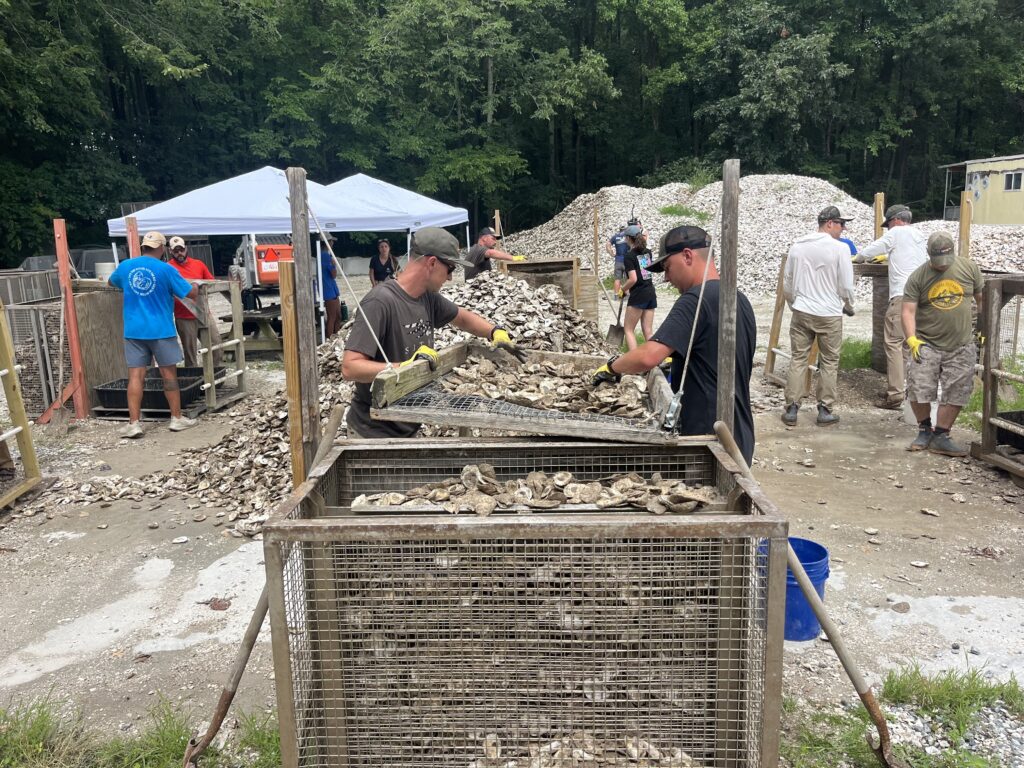
The project was held at CBF’s Maryland Oyster Restoration Center at Parish Creek Landing Marina in Shady Side. Volunteers spent the morning shoveling recycled oyster shells onto shell shakers, removing dirt and debris by shaking them across a metal screen like a giant sieve. They then dumped the shells into cages, which will be submerged in water and seeded with millions of oyster larvae before being planted in the Severn River by the oyster vessel Patricia Campbell. It was heavy work, but the AFI volunteers enjoyed it.
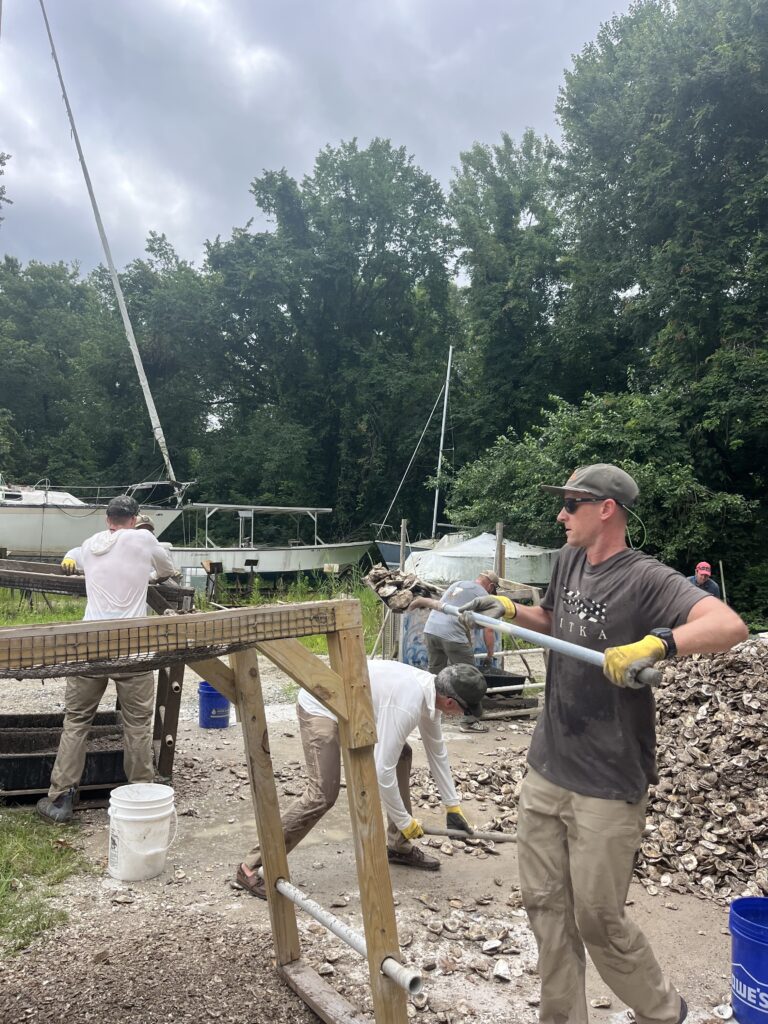
“It’s absolutely therapeutic,” said Ken Huxtable, an active-duty Marine stationed in Quantico, Virginia. He moved there from Texas last week. “The stressors of military life are everything from combat or deployment to what I just did— uprooting my family and moving across the country to start somewhere fresh. That comes with its own emotional, physical, and psychological stress. But being outside, surrounded by birds, trees, and nature— it absolutely helps reset you.”
As hunters and fishermen, Backcountry members feel keenly the importance of protecting natural resources. Their recreational enjoyment depends upon the health of our country’s wild lands. “It’s not about hunting and fishing. That’s a byproduct of being in the outdoors,” said Garret Robinson, who grew up on the Bay. “I owe it to the resource to do this work. I want it to be available to the next generation.”
“I’ve always been a big proponent of taking care of your backyard before worrying about other things,” said Benner Geurtsen, an active-duty Coast Guard engineer stationed in Curtis Bay, Maryland. AFI gives him the opportunity to steward this backyard environment by taking care of the Bay.
Greg Singleton, a veteran and fisherman, splits his time between Fairfax County and Norfolk, Virginia. “Everything in your yard winds up in the drain, which winds up in the creek, which winds up in the Potomac, which winds up in the Bay,” he said. “It’s just deductive reasoning that everything matters.”
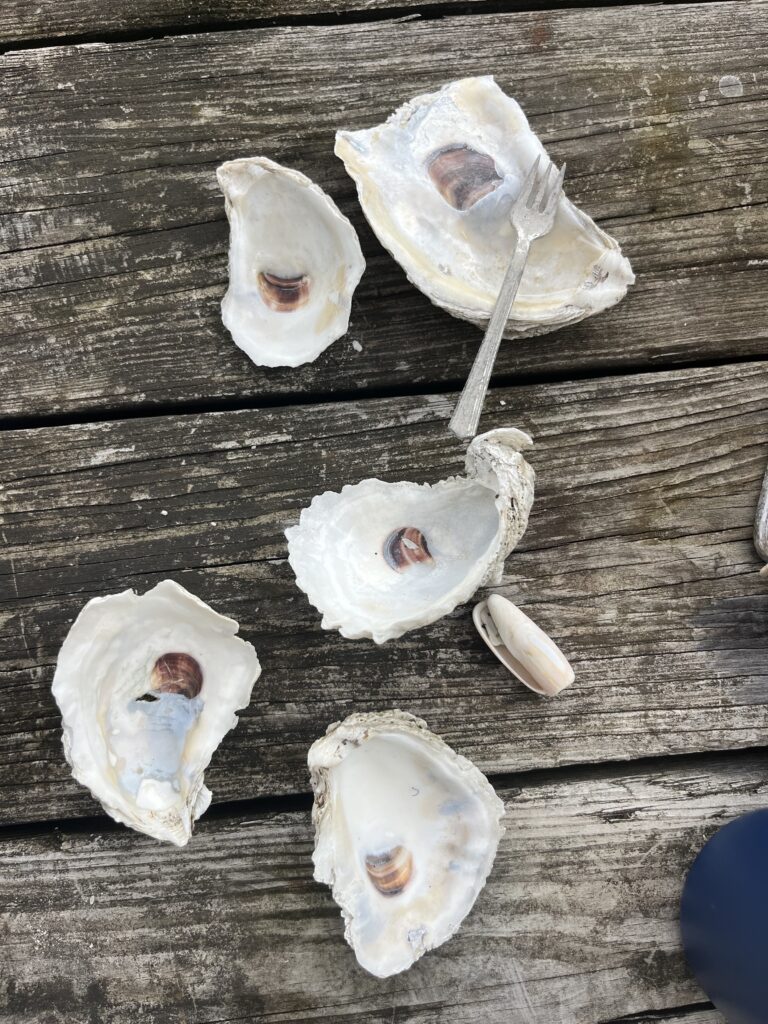
Tuesday’s restoration project certainly mattered: oysters are a keystone species in the Chesapeake Bay, which means that a healthy ecosystem depends on them, especially their ability to filter water. The veteran volunteers cleaned 2.5 million oyster shells, which will become substrate for oyster spat to be planted on a sanctuary reef in the Severn River. That’s around 100 million gallons of daily water filtration, estimates Kellie Fiala, Maryland Oyster Restoration Coordinator at CBF.
“We produce millions and millions of oysters a year, but we would not be able to do that without volunteer groups,” said Fiala. “This just happens to be a really incredible volunteer group, incredibly hardworking people— people that have given many, many years and are continuing to serve the country. We feel like we should be giving back to them more than anything. And yet they’re out here restoring oysters.”
On Thursday, the veterans are travelling to Virginia Beach for a second round of oyster restoration with CBF, this time on the Lower Bay. “We’re using this opportunity to step into a long-term CBF-BHA relationship,” said Garret Robinson. He hopes there will be further partnerships to come.