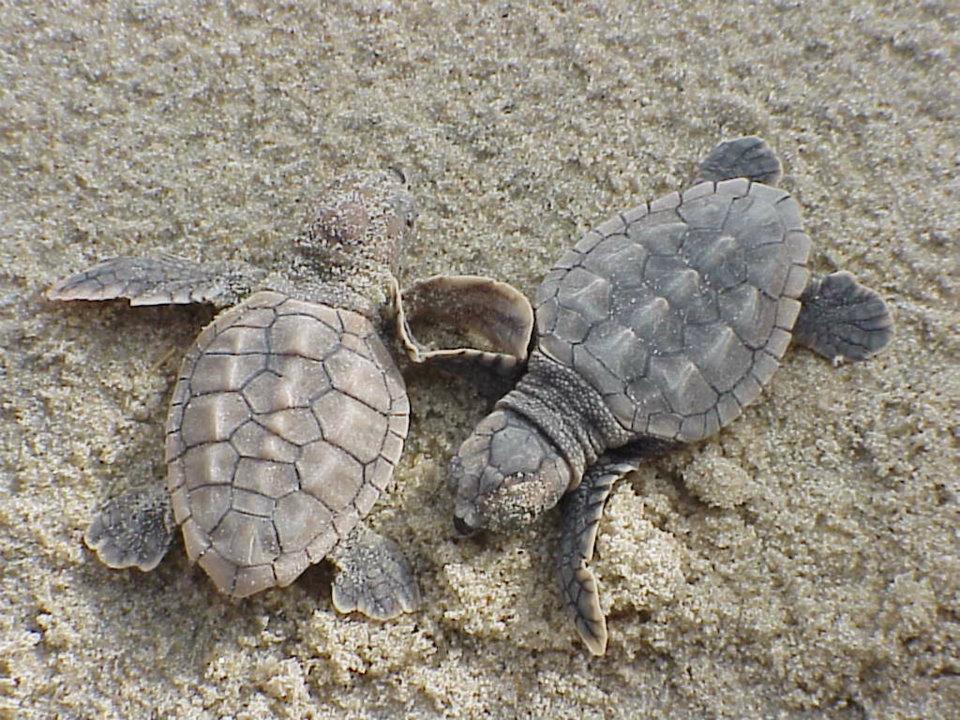
The City of Virginia Beach announced in January 2025 that a beach replenishment project would get underway this summer to help widen and protect the coastline of Croatan Beach. But that goal has been delayed because of a loggerhead sea turtle’s growing family.
The city follows a beach replenishment implementation schedule of every five to seven years, and the last project was in 2019. Beach replenishment is meant to restore eroded coastal areas damaged by severe climate conditions, such as storms, winds, waves and flooding.
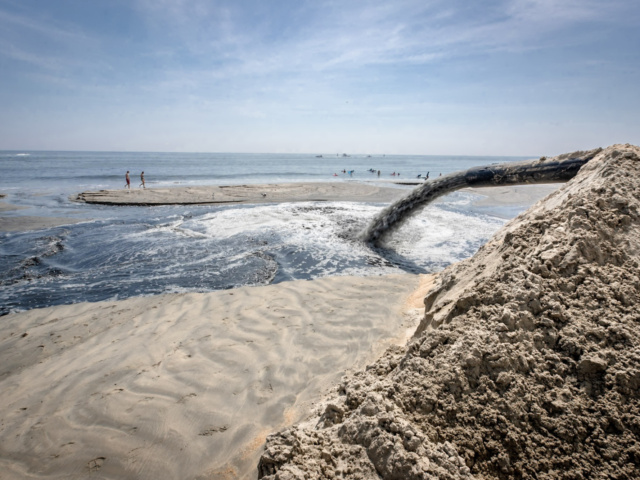
The beach is rebuilt using dredged sand from the Atlantic Ocean Channel (AOC) offshore, which is pumped onto the beach through a submerged pipeline. The Port Authority regularly dredges the ocean channel to ensure large container ships can navigate to the Port of Virginia. Virginia Beach leaders point out, “The City is benefitting from the dredge activity of the Port Authority’s need to dredge the Atlantic Ocean Channel and doesn’t turn down opportunities to put more material on the beach to enhance hurricane protection efforts.”
The U.S. Army Corps of Engineers (USACE) began beach replenishment along the Resort Area Beach in late January, between 15th and 45th streets. The plan was to move from Resort Beach to Croatan Beach in early July, where there is a high need for replenishment. Their goal was to add 130,000 cubic yards of sand at Croatan, widening the beach and protecting the homes beyond it.
But the discovery of a loggerhead sea turtle’s nest filled with 130 eggs on the beach has pushed back the entire project. Federal environmental guidelines bar any disturbance to loggerhead nesting activity, since they are an endangered species. The Virginia Aquarium Stranding Response team is responsible for monitoring all Virginia Beach nests. Their volunteers walk the city-owned beaches looking for signs of a “crawl” (distinct markings often made by a mother sea turtle, dragging herself through the sand perpendicular to the coastline to lay her eggs). Experts responded to a crawl report at Croatan Beach on July 20 and confirmed it to be a loggerhead nest.
Aquarium staff moved the eggs up closer to the dunes to give them a better chance of survival and set up a protective perimeter around the nesting area. The Aquarium is keeping the exact location and possible hatching time frame quiet, in order to protect the nest from foot traffic. Virginia Aquarium spokesperson Kristina Hedgepeth says, “We are obligated to avoid disturbing the natural environment by limiting noise, foot traffic, and light sources during an emergence event.” She says the best way for people near the beach to do their part in keeping the hatchlings safe is to turn off their lights at night.
The Aquarium is working together with “nesting partners” including U.S. Fish & Wildlife Resources, Virginia Beach, and USACE. Since the Army Corps’ dredging is restricted from Sept. 1 to Nov. 14 in an active nesting area, the contractor performing the beach replenishment will return in mid-November after the baby turtles’ hatching and migration period ends.
The overall beach replenishment project comes at a cost of $20.2 million, a cost that is shared between the City of Virginia Beach and USACE’s funds. But the city says the investment in beach replenishment has already “averted more than $1 billion in storm-related damages” to date.