Along Virginia’s Chickahominy River, a CSX train derailment toppled 53 coal cars and two locomotives. A week and a half later, waterway advocates are questioning the impact of the incident on one of Virginia’s most ecologically important rivers.
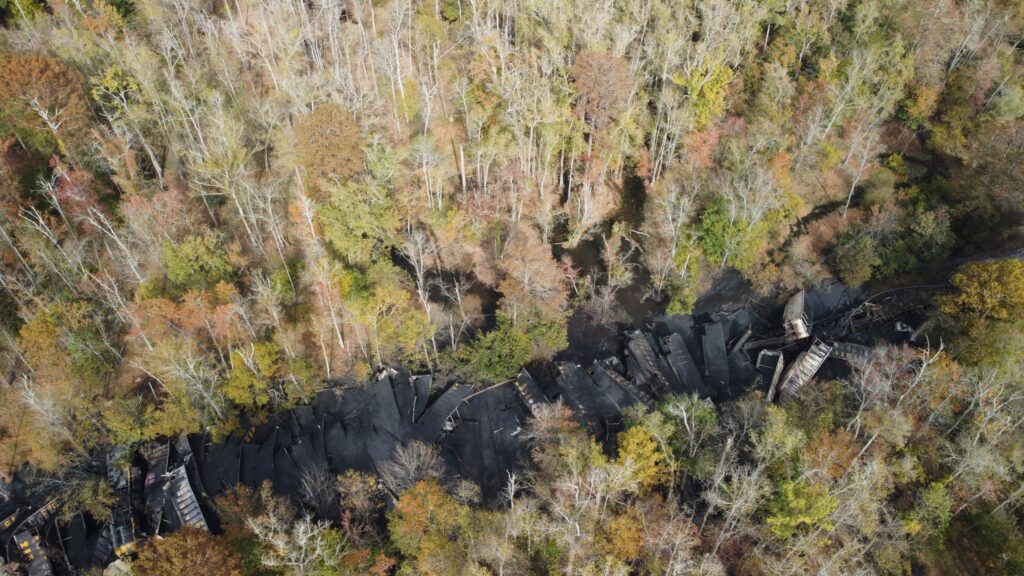
The train went off the tracks on Oct. 25 in Providence Forge, east of Richmond, Virginia. Aerial photos show train cars littering the tracks alongside wetlands on the Chickahominy, an 87-mile-long winding tributary of the James River. CSX confirms that an estimated 7,000 gallons of diesel fuel was involved in the crash. They are recovering about 4,000 gallons. And they are cleaning up about 4,000 tons of coal.
The James River Association (JRA) publicly expressed concern about the pollutants that spilled into the Chickahominy’s “fragile swamplands”, pointing out that the Department of Conservation and Recreation rated the site in the top 3.5% of all lands in Virginia for ecological core value. Downstream, the land is protected as important habitat for freshwater mussels, underwater grasses, and migratory fish.
“The Chickahominy is a unique and critical tributary of the James River and the greater Chesapeake Bay, providing critical environmental benefits and habitat to plants and wildlife,” said Tom Dunlap, James Riverkeeper at JRA. “Many of the neighboring property owners have spent years or decades working on conservation practices to protect this area for the important resource that it is, and seeing this happen is a punch in the gut.”
The Chickahominy is also the source of drinking water for communities on the lower peninsula, including Newport News.
CSX advised rail customers that no hazardous materials were being transported (the EPA does not classify coal as a hazardous substance) and there is no danger to the surrounding community. Spokesperson Austin Staton told Chesapeake Bay Magazine that CSX is working ” in close coordination with the U.S. Environmental Protection Agency and the Virginia Department of Environmental Quality to mitigate potential risk to the environment.”
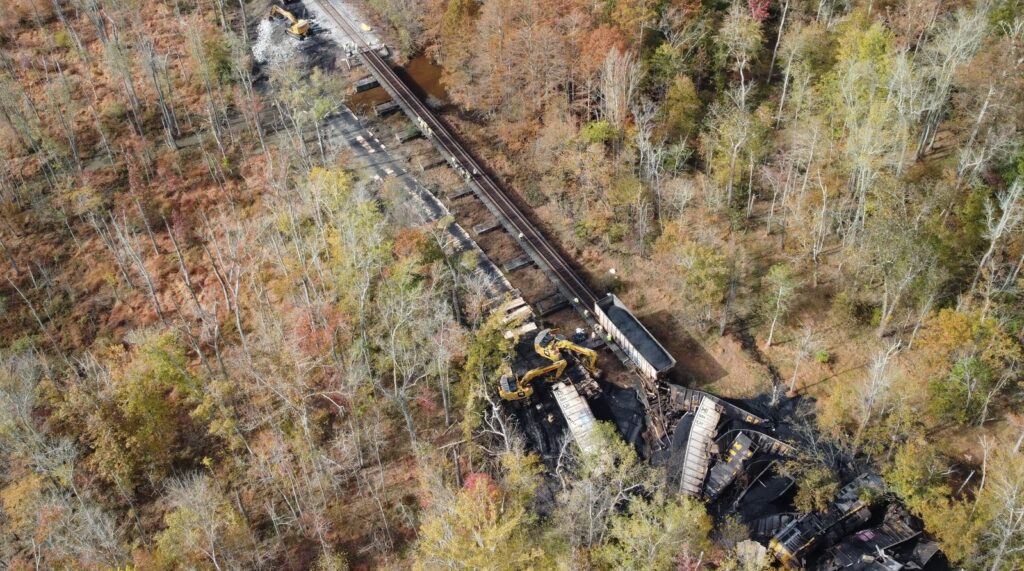
The railroad says it has not observed any new impacts to nearby waterways, and is working to recover the remaining coal and diesel fuel, repair the CSX and Amtrak rail infrastructure, and completely restore the area. While CSX doesn’t have a timeline yet, it will continue to provide updates.
JRA shared an update on Nov. 12, 2025, saying that crews were still working to remove train car debris and coal from the Chickahominy and surrounding wetlands. Passenger and freight travel has resumed. Rainfall has complicated cleanup efforts, but JRA says the Virginia Department of Environmental Quality and the U.S. Environmental Protection Agency are working together to contain diesel fuel and coal with silt fencing, turbidity curtains, and sorbent containment booms
“Next steps will include the creation and approval of a Corrective Action Plan for coal remediation and a Wetlands Restoration Plan,” says James Riverkeeper Tom Dunlap. He tells us, “JRA looks forward to continued coordination with the agencies to restore the Chickahominy.”