As one of the most flood-prone places on the Bay, the city of Norfolk has been busy putting anti-flooding measures into place. The high tides from Hurricane Erin along with this month’s coastal flooding put the city’s new projects to the test.
The term “nuisance flooding” is becoming almost as common in Norfolk as the flooding itself. As a low-lying city on the water, Norfolk is literally caught between sinking land and rising water levels. The city is working to give its citizens a little break from streets that are frequently underwater. In the past month, they have had some success!
In a coastal city such as Norfolk, storm drains along streets often drain directly into local waterways. In much of Norfolk, the drains run into the Elizabeth and Lafayette rivers. High tides push water into the storm drains and it backflows out into streets. This is tidal flooding that is not related to rainfall and can take place on bright sunny days. But rain can add to the problem. If the storm drains are already full of backed-up river water, the rain has no place to go and creates more flooding.
When facing this challenge, Christopher Epes, Project Manager for one of Norfolk’s current flood projects, told us that mitigation is the goal. Norfolk flooding is complicated and cannot be completely and simply eliminated. “We can mitigate as best as possible, but we cannot eliminate all flooding,” he said.
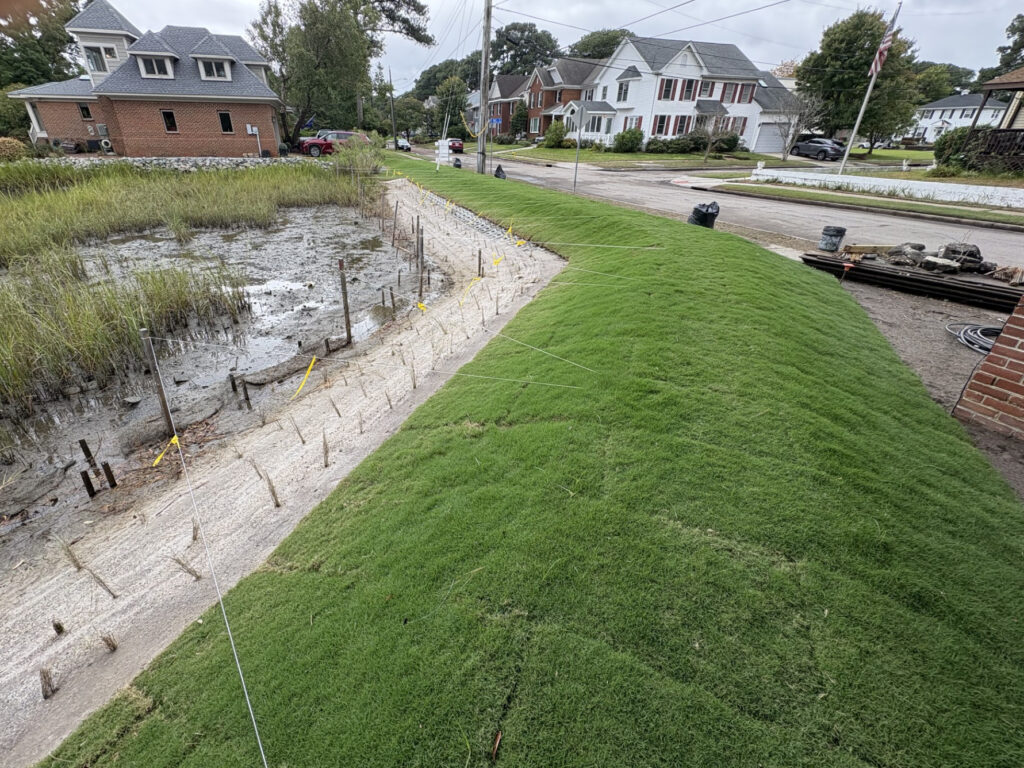
One of Epes’ projects is located by the intersection of Walnut Hill and Sylvan streets in Norfolk. Old city maps reveal that Walnut Hill is built on fill. It used to be a marsh. The street is low and flooding is common. This street will flood on spring tides, and doesn’t need a storm to get wet. This is a tidal flooding hot spot. Residents have learned to watch the forecasts and move their cars to higher ground (or stay home) when the street floods. There was an existing berm, but water flowed into the street from the storm drains long before it would come over the berm.
The new project called for rebuilding and lengthening the berm, and improving the drainage system. The new berm will be 130 feet long and 4 feet high. Interlocking concrete sections were put down to provide a stable foundation, joined together by 700 feet of cable. The foundation was covered with top soil then sod. Out of sight between the storm drains and the discharge pipe is a flapper valve. The valve is supposed to close when river water gets high. This will greatly slow the backflow of water into the street. When the tide falls, the valve opens, allowing the street to drain normally. The project also restored about 200 feet of wetlands.
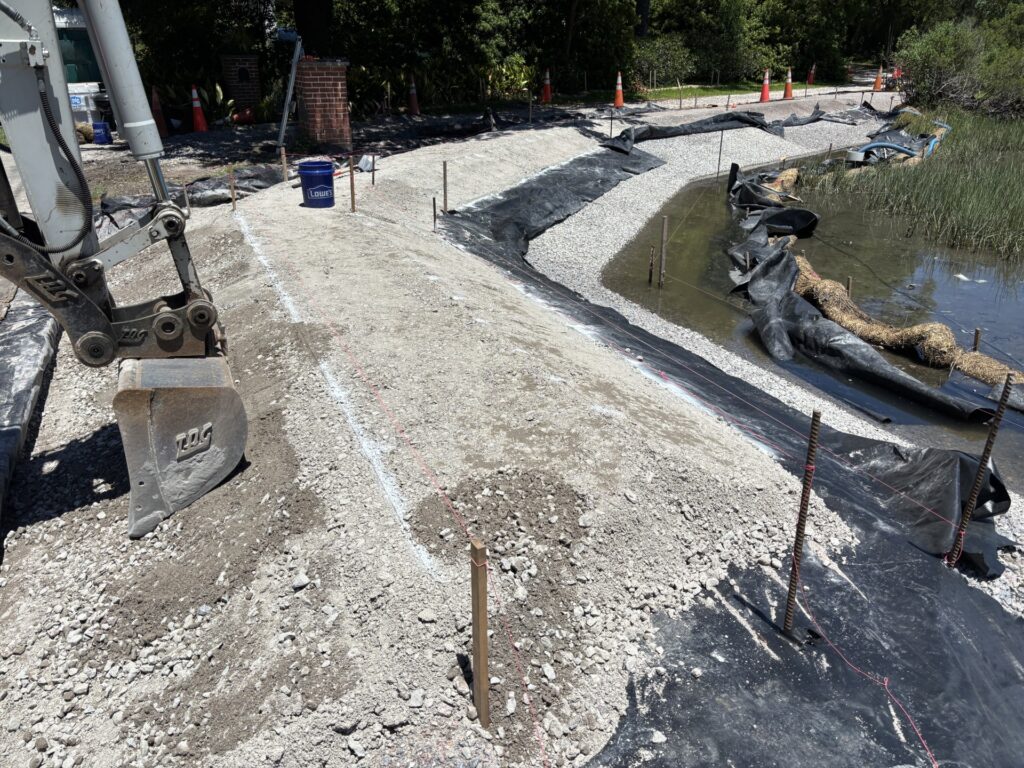
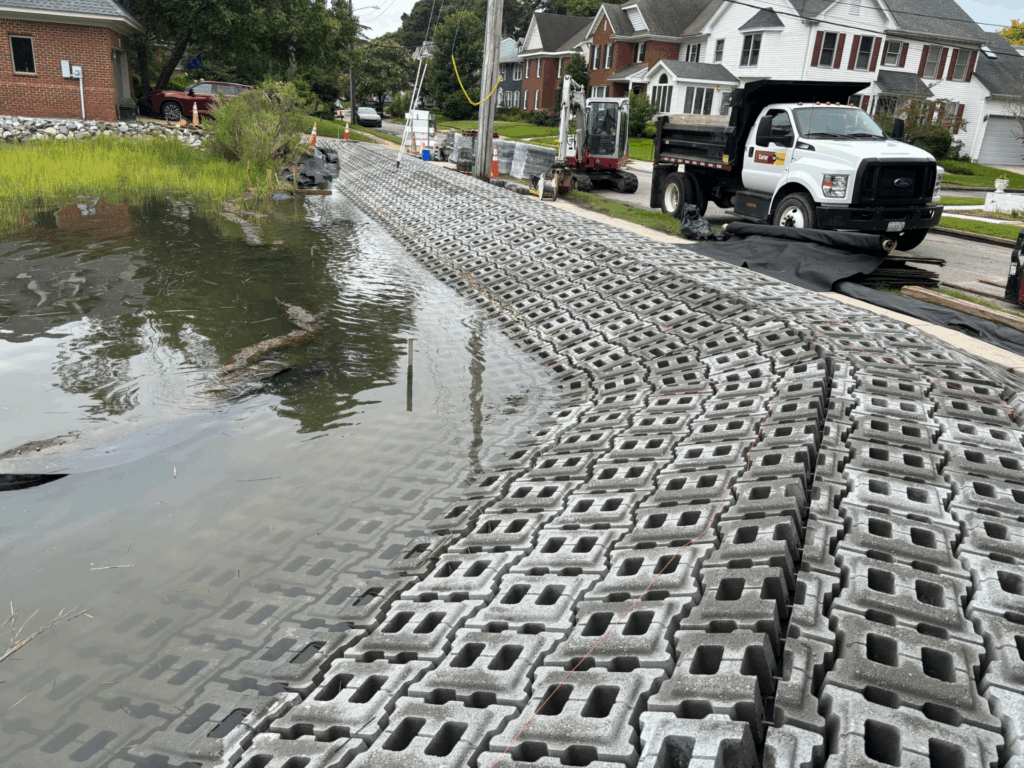
But the valves are not perfect. “Water can seep through the valves,” said Epes. “The valves can be damaged by debris and oysters. The valves have annual maintenance to keep them clean, but we encourage residents to call if they think a valve is not working properly.” All it takes is a tree limb or other object to defeat the system. This is one of the reasons Norfolk encourages residents to keep nearby storm drains free of yard waste.
The new system, while not completely finished, has been working. Flooding tides from Hurricane Erin and this week’s coastal low have been kept out to some extent. A little water seeped in, and some rainwater collected when the valve was closed, but it was definitely an improvement from before the project was put in place. At times, you could clearly see the high water outside the berm while Walnut Hill was passable. As Epes said, it is flood mitigation, not flood prevention.
If you want to learn more about flooding in Norfolk and what the city is doing to help, check out norfolk.gov/1055/Flooding-Awareness-Mitigation.