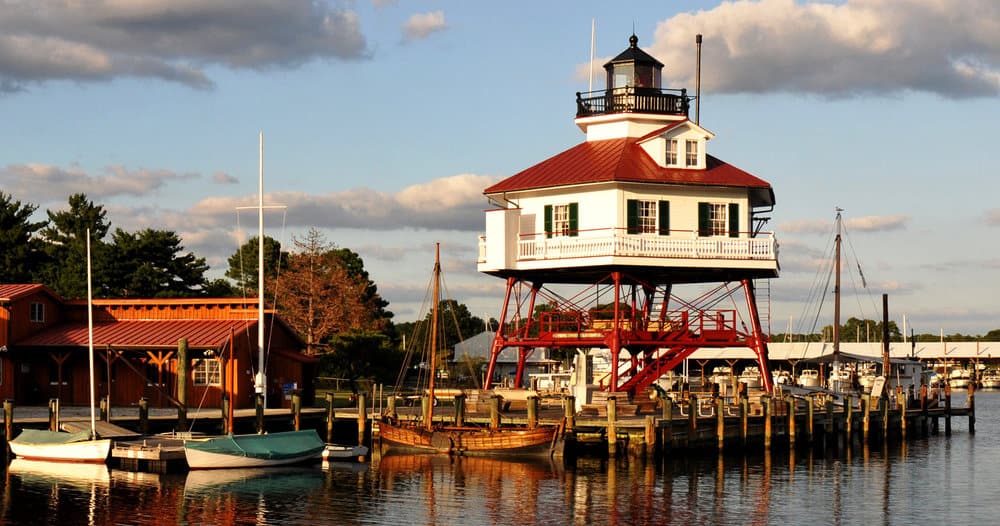
The Calvert Marine Museum in Solomons, Maryland, has launched a Diamondback Terrapin nest monitoring program in partnership with the American Chestnut Land Trust (ACLT).
“The goal of the program is to engage ACLT Master Naturalist volunteers in identifying and protecting terrapin nests along the organization’s beach,” says Matt Neff, Curator of Estuarine Biology for the Calvert Marine Museum. “In its first season, the program has already successfully protected 12 nests along this relatively small stretch of shoreline.”
“The program closely follows protocols established by Naval Air Station Patuxent River’s terrapin monitoring program, which has been in place for 13 years.” Neff explains. “Their work provides an important local model for terrapin monitoring and conservation, and we are pleased to build upon those established practices through our partnership with ACLT,” Neff says.
Turtles live primarily in coastal marshes from Massachusetts to Texas, where their populations have plummeted by 75% in the past 50 years, according to the Center for Biological Diversity.
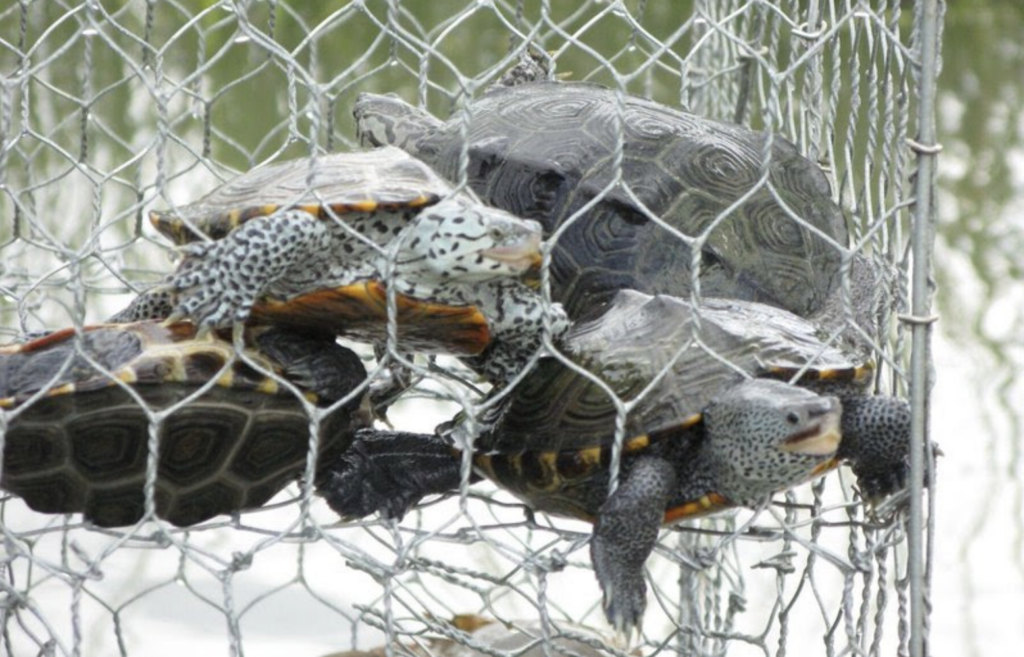
Drowning in crab traps is the leading cause of terrapin death. Traps are submerged cages with funneled entrances that catch both crabs and air-breathing terrapins. Around 3 million crab traps are deployed each year by recreational and commercial crabbers, which kill tens of thousands of diamondback terrapins annually, according to the Center.
The Center estimated between 25% and 50% of all crab traps are lost or abandoned annually in coastal waters. These derelict cages — called ghost traps — kill tens of thousands of additional terrapins every year. Researchers estimate that at least 80,000 terrapins are killed in active and abandoned crab traps each year.
How can you help? Use bycatch reduction devices (BRD). When installed on crab traps, BRDs have no negative effects on crab harvests, but reduce diamondback terrapin deaths by 94%. Several states already require bycatch reduction devices.