This fall, the importance of public food banks in the Chesapeake Bay region was front and center amid a record-breaking 43-day government shutdown. Now, new funding from the federal and state agriculture departments will support Bay-region food banks, lifting Maryland watermen and seafood processors at the same time.
People on the Bay were hit disproportionately hard by the federal shutdown that stretched from Oct. 1 to Nov. 12, 2025. Our region encompasses Washington, D.C., several military installations, and a high number of federal workers: Virginia and Maryland have the second and third-highest number of federal employees of any state (behind only California).
About 189,000 Virginia residents weren’t receiving paychecks during the shutdown, according to the White House. In Maryland, about 189,000 were furloughed or working without pay. At the same time, SNAP Benefits (federal food stamps) ran out. In Maryland and Virginia, nearly 1.5 million people lost their food assistance, of which more than 1/3 were children. Many turned to food banks, even some military members who had never needed to rely upon food assistance before.
Now that the shutdown has ended, food insecurity is still a problem in our region and state-run food banks remain a crucial need. Protein is especially important, so news of a $1.9 million grant to supply food banks with wild-caught Chesapeake Bay blue catfish is welcome.
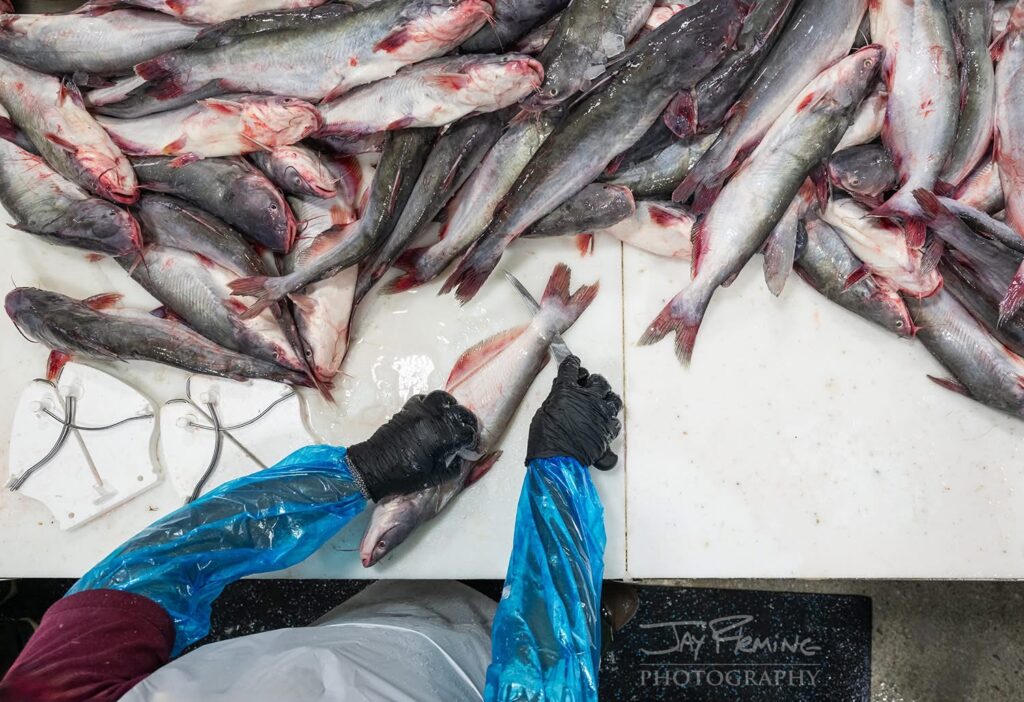
Through a cooperative agreement, the US and Maryland departments of agriculture awarded the funds to the Maryland Food Bank, Capital Area Food Bank, and Western Maryland Food Bank. With the funds the food banks will be able to buy 283,000 pounds of blue catfish filets from local watermen and seafood processors beginning this month, helping keep those seafood workers in business.
“Blue catfish is a win-win for the Maryland Food Bank—we are supporting local businesses and helping to combat an invasive species in the Bay, while also providing a nutritious source of protein to neighbors facing food insecurity,” said Meg Kimmel, President and CEO of the Maryland Food Bank.
Maryland Secretary of Agriculture Kevin Atticks called the partnership “an important tool in addressing hunger and supporting our rural maritime communities.” As an added bonus, harvesting blue catfish is good for the environment. The fish species is an invasive predator in the Chesapeake Bay and environmentalists are in a battle to get more of them out of our waterways. Blue catfish could threaten some of the Bay’s most beloved native species, since they’ve been known to eat just about anything in their path.
Over the next year, the Maryland Food Bank has $1.38 million to spend on blue catfish fillets, the Capital Area Food Bank has $499,000, and the Western Maryland Food Bank has received $53,000 for a blue catfish supply.
These funds trickle down to the seafood processors that supply the food banks, then the watermen the processors buy from, then the local bait sellers, gas docks, and gear shops the watermen patronize.
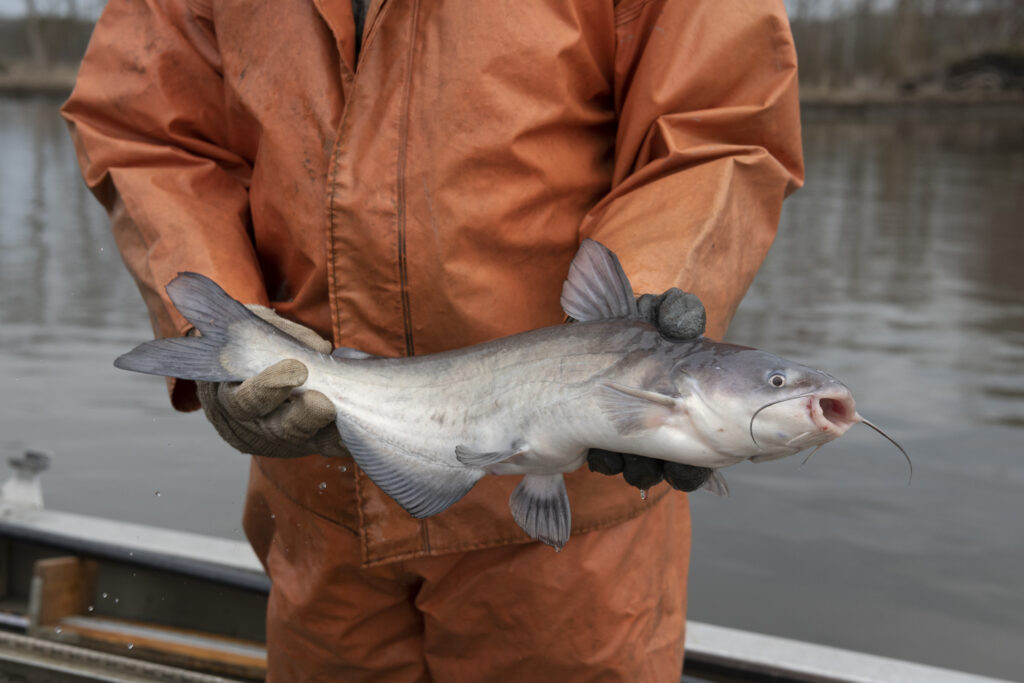
Tilghman Island Seafood is one of Maryland’s largest blue catfish processors, an early adopter of the blue catfish industry. In 2025 alone, they have processed 4 million pounds of the invasive fish. They buy from up to 40 Chesapeake Bay watermen. Owner Nick Hargrove says the company got involved in supplying food banks two years ago.
Because consistent, long-term contracts are a rarity in the seafood-selling business, Hargrove says the food bank program is especially helpful to his business and the fishermen they work with. “The good thing about the food banks is that you get standing orders for the whole year, for however many months the contract is. Having standing orders with a set price allows us to be consistent with the fishermen,” he tells Chesapeake Bay Magazine.
Hargrove believes the arrangement is a win-win on many levels. “You kill multiple birds with the same stone: jobs for fishermen and processing plants, good healthy protein for people with food insecurities in your community… and we want to get blue catfish out of the Bay,” he says.
Hargrove points out that blue cat is high in Omega 3 fatty acids, low in sodium, offering a healthy protein to food bank recipients who may usually get processed chicken, for example. It’s also an inclusive choice. Some religions can’t eat items like pork, for example, making fish a good alternative. Hargrove also finds the Hispanic community eats a lot of fish.
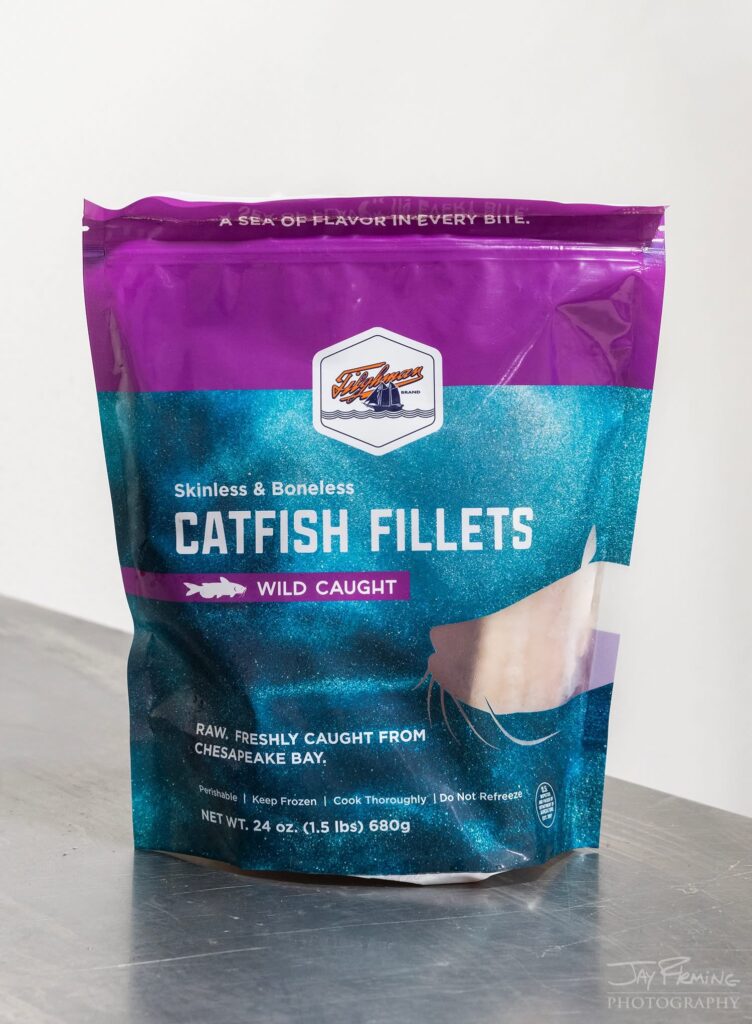
By offering fish to food-insecure communities, Hargrove says, “we’re training kids not just to eat nuggets and tater tots, either. Getting them young and teaching them about different foods will give them better eating habits.”
With a mild flavor and firm texture, Hargrove says blue catfish lends itself to a variety of recipes. “Without sounding like Forrest Gump,” he says with a laugh, “there are lots of different ways to eat blue catfish— pan-seared, baked, or on the grill. We eat a lot of fish tacos at my house. Breaded strips, fish dip, smoked…” Hargrove could clearly go on. He says it makes a good substitute for Canadian cod or pollock as the price of imported fish increases. Blue catfish can retail from $7.99 to $9.99 per pound, a bargain compared to rockfish or other fish at the grocery store.
Ultimately, the food bank blue catfish program is feeding the hungry, supporting local seafood businesses, and ultimately helping to save the Bay, too. “It’s having a positive impact on the environment,” Hargrove says, “and not a lot of fisheries can say that.”