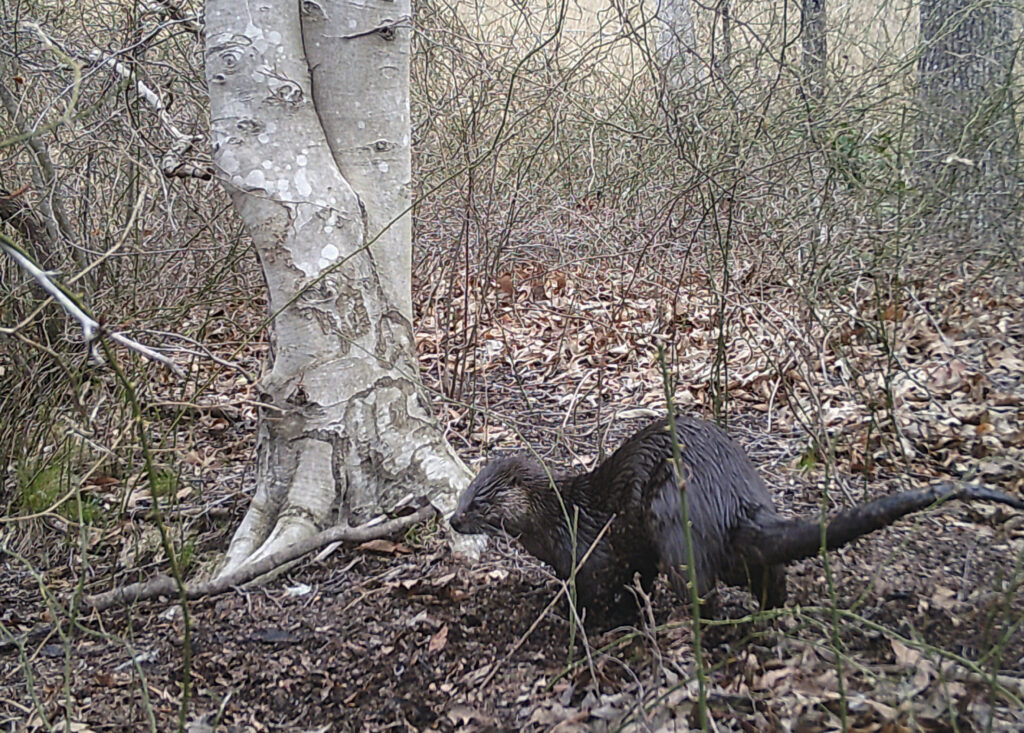
When you think of river otters, you probably think of their sociable nature and their playfulness. You probably don’t think about their poop. But some people have— scientists at the Smithsonian Environmental Research Center, who are studying the diets of Chesapeake Bay river otters by examining their scat. The results? Fish, blue crabs, and lots of parasites.
Released on Aug. 14, this first-ever study of otter diets in the Bay provides valuable information about otter prey, parasites, and the overall health of Chesapeake wildlife habitats. ”River otters are impressive apex predators that play a vital role in ecosystems,” said Calli Wise, lead author of the study and a research technician at the Smithsonian Environmental Research Center (SERC). “The parasites consumed by river otters may also teach us about the health of the environment.”
Researchers collected scat from otter habitats along 12 kilometers of the Rhode River, a subestuary of the Chesapeake Bay. These habitats are called “latrines,” a testament to the unhygienic eating habits of North American River otters. They eat, play, and poop all in the same place. But this makes data collection a little bit easier: by collecting otter scat, scientists can learn about their diets and living environments as well.
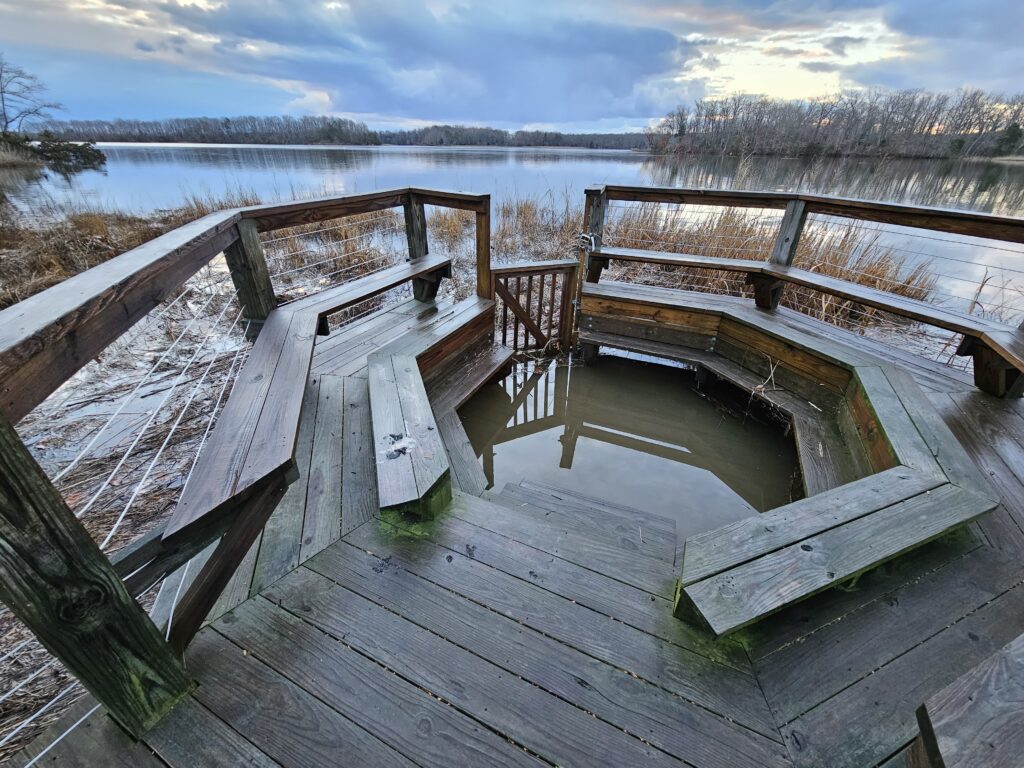
The study looked at scat from 18 active latrines on the SERC campus in Edgewater, Maryland. Although most of these sites were natural, researchers found that otters also use manmade structures such as floating docks and boardwalks. This demonstrates their ability to adapt in urbanized coastal environments such as the Chesapeake Bay.
Back at the lab, scientists put the otter poop under microscopes and ran DNA analyses with a technique called metabarcoding. Accounting for 93% of all prey items were finfish and crabs. The most abundant crustacean identified was the American blue crab, a signature beloved species of the Chesapeake Bay. Otters also eat amphibians, worms, and an occasional bird. Researchers even identified two species of invasive fish in their diets: the common carp and the southern white river crayfish.
Along with their fish and tasty blue crabs, it turns out that otters are digesting large amounts of parasites. While the data identified 6 different taxonomic classes, the majority were a species called trematodes—parasitic flatworms also known as “flukes.” Others included microscopic dinoflagellates and other flatworms known to infect fish. Most of them are not known to infect mammals, which means they probably belonged to the prey and not the otters themselves.
In fact, the otters might be helping out their prey species by weeding out sick animals, while the parasites help the otters catch prey that otherwise might elude them. “While parasites have negative impacts on individuals, they are extremely important in food webs,” said Katrina Lohan, co-author and head of SERC’s Coastal Disease Ecology Lab. “It is possible that river otters, like other top predators, wouldn’t be able to find enough food to eat without parasites.”
Only a few parasites in the study, such as roundworms and single-celled apicomplexans, are known to infect mammals. These probably did infect the otters themselves. None of the parasites infect humans, but some cause human diseases, including the gastrointestinal disease cystoisosporiasis.
“As river otters move into more urban waterways, they will be increasingly exposed to pollutants and parasites of concern to humans,” Wise said. “As mammals, river otters may be disease sentinels that we can study to learn more about environmental risks to humans.”
Otters are difficult to research: they’re nocturnal, semi-aquatic, and shy, so sightings are rare. But this latest study, published in the journal Frontiers in Mammal Science, gives new insight to their behavior by using what they leave behind. Further research may help us better understand these playful creatures as an indicator of the broader health of the Chesapeake Bay.