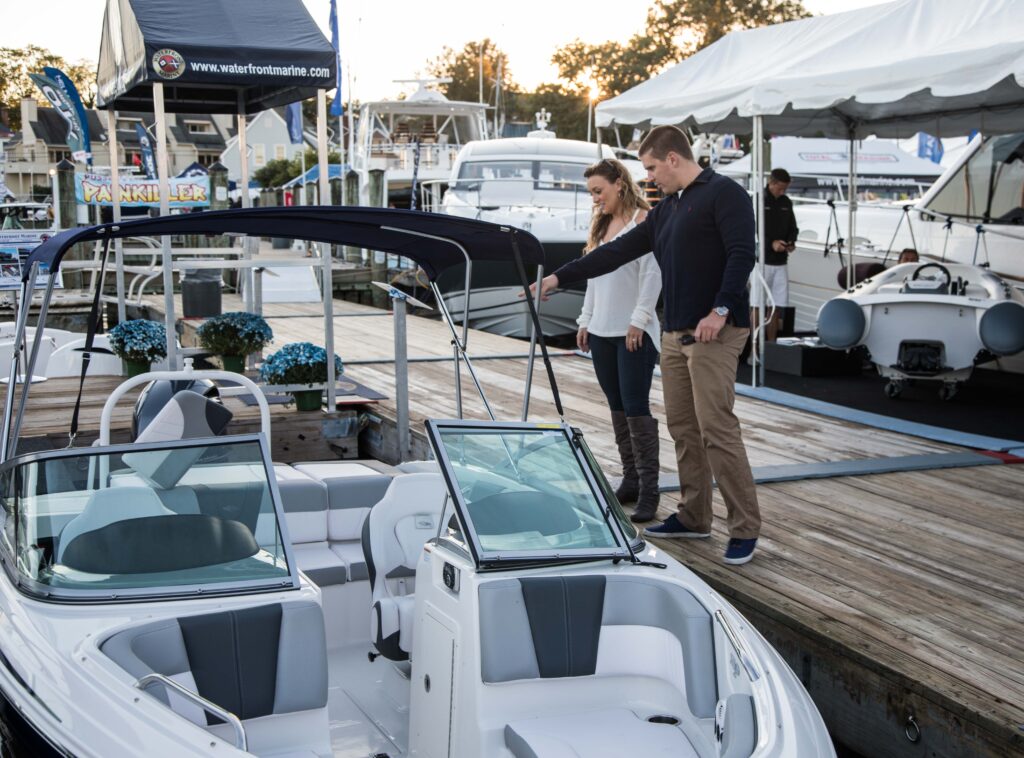
At a boat show last year, we listened to a major boat builder’s able sales manager explain in clear detail how the company’s design team had carefully crafted a new express cruiser’s amenities and performance around what their research told them their customers were looking for. One thing that strikes us about the best builders is their attention to detail. In this case, it was impressive, with much talk about how carefree those details would make a day of cruising, sunning, swimming, cooking, eating, and otherwise enjoying being on the water with family and friends.
But we were also struck by the fact that the emphasis was first on amenities and second on performance, with not much said about how the hull responds when wind and seas kick up. Most striking of all, there was little attention to the kind of daily maintenance that should go into ensuring safety, reliability, and durability in a vessel worth well up in six figures.
If you’re shopping at one of this winter’s indoor shows where sea trials aren’t available, the challenge is even trickier. You can still learn a lot, though. First, think hard about what it would be like to live with this particular boat. Go aboard and visualize what a typical day would feel like underway in both calm and gnarly seas, on the hook, or at a sandbar.
If you’re so inclined, how would she fish (drifting, jigging, bottom fishing, casting, and/or trolling)? Are there dedicated spaces for all of the gear you’d want to carry? Can you and your passengers move around safely? Are there secure handholds everywhere someone might reach for one?
Carefully study the shape of the hull (it might require crawling around underneath). Imagine the boat running at cruising speed. What does the running surface that’s carrying you look like? How sharp is the part of the hull that first hits oncoming seas? How will the running bottom change shape at different speeds, trim levels, and loads?
What kind of speeds are you looking for? In most cases, top speeds above 40 knots (46 mph) aren’t useful on the Chesapeake’s choppy water, for comfort as much as safety or fuel economy. More valuable are efficient cruising speeds of 15-25 knots (17-28 mph). In the open Bay, it’s especially useful to know the boat’s minimum planning speed when afternoon seas kick up. Don’t underpower, but don’t go over either. Some hulls balance better with smaller engines. Most boat and engine manufacturers publish speed/fuel performance profiles for specific models and power choices. Maximum power may or may not be the way to go. Think carefully about what you want to do with the boat first.
How well is the boat built? Sight along the hull to see if it is fair. Look carefully at joints where hull, deck, transom, and cabin meet. How well are its operating systems rigged? Is wiring accessible, neat, secure, and well labelled? Engine mount(s) and control systems? Steering system? How about plumbing, especially including bilge pump(s)? Does the cockpit have adequate drains? Open hatches and doors. Do they swing freely? Are there magnets or latches to hold them open? How well are hinges fastened? Look and feel around inside the anchor locker at the bow. How consistent and secure is the hull-to-deck joint? How neatly is the compartment finished? Is there a secure eye for tying off the bitter end of the anchor line? Is there adequate space for an appropriate anchor over a proper coil of rode and chain? Does the compartment drain overboard or to the bilge? How secure is the hatch?
Finally, what maintenance will the boat require beyond a good cleanup after each trip? How accessible are plumbing, wiring, steering, and throttle/shift controls? How much of the regular in-season and annual maintenance can you handle, and how much will you have to rely on the dealer or other service providers?
Questions, questions. Yes, the list is long and requires serious thought. Better think through now than become disappointed later. Bringing a boat into your family is like getting a new puppy. It will bring serious pleasure, but it also will require care and feeding. Make sure you know both sides of that equation ahead of time. Then go forward for a great 2026 on the Chesapeake!