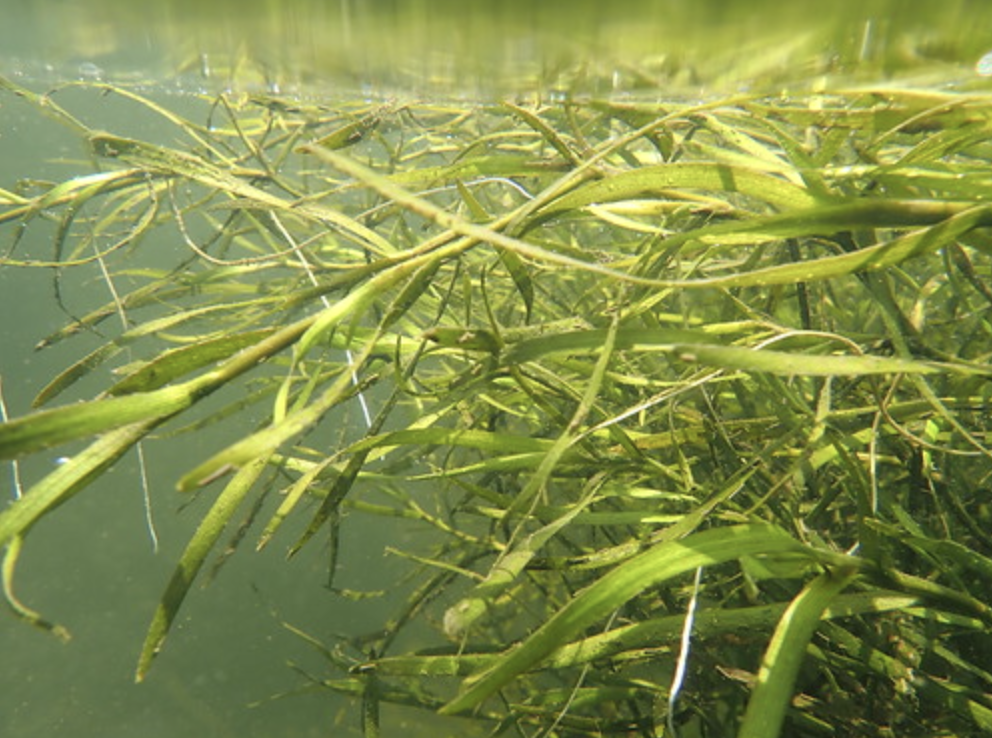
Underwater grasses across the Chesapeake Bay reached their highest point since 2018, though some rivers continue to see troubling declines.
Results from an annual survey conducted by the Virginia Institute of Marine Science and Maryland Department of Natural Resources recorded a total of 89,385 acres of underwater grasses, an increase of more than 6,000 acres compared to 2024 results.
The grasses are strong indicators of the Bay’s overall health. The grasses provide numerous ecosystem benefits but are sensitive to pollution. Underwater grasses lead to cleaner water and provide shelter and food for Bay species like blue crabs, fish, and waterfowl. They also mitigate climate change and diminish acidification caused in part by greenhouse gas emissions.
The goal of the Chesapeake Bay Watershd Agreement’s 2030 interim is 90,000 acres, though much work remains to meet the long-term goal of 196,600 acres by 2040.
The overall gains mask troubling declines in several of the Bay’s rivers, says the Chesapeake Bay Foundation (CBF). Underwater grasses have seen the biggest increases in the Bay’s saltier waters. Meanwhile, sections of some rivers in Maryland and Virginia have experienced dramatic drops in underwater grasses. Those include parts of the Potomac, Patapsco, Gunpowder, Rappahannock, and James rivers. In the 2024 report, saltier portions of the Bay also saw the largest gains.
“Increased underwater grass coverage is a clear sign of how the Bay is healing,” says Joe Wood, Virginia Senior Scientist with CBF. “While there’s plenty to celebrate with more grasses in saltier parts of the Bay, the declines in many rivers, including the Rappahannock, reveal that significant work remains. Polluted runoff from sources like development and agriculture remains a big threat to underwater grasses, and this is exacerbated by rising temperatures and more intense storms fueled by climate change,” Wood says.
“Underwater grass gains across the Bay are welcome news, but Maryland’s rivers tell a more complicated story,” says Julie Luecke, Maryland Coastal Resource Scientist with CBF. “Declines in places like the Patapsco, Gunpowder, and Potomac show the pressure from polluted runoff and increasingly intense rainstorms.”
“For thriving grasses across the region, we need more than celebration. We need action. The underwater grasses survey results show that state and federal leaders still have a lot of work ahead to meet their commitment of 196,600 acres of grasses by 2040,” says Luecke.