Finally, daytime temperatures are moderating after longer than usual sub-freezing snaps this winter and the ice floes are disappearing. That means the crews from Maryland’s and Virginia’s natural resources departments who conduct the annual winter crab dredge surveys have some catching up to do.
“We had a couple of weeks where we just couldn’t get out because of the weather and that put a damper on our survey,” says Mandy Bromilow, the Maryland Department of Natural Resource’s blue crab program manager. “There were days when the ice was in the slip and we couldn’t even get the boat out.”
There were other days when high winds made it too difficult to handle the boats and the dredging equipment. And crews in Virginia had the same problems, she added.
“After that nine, 10 days of cold, the weather did a complete180 on us and we had temperatures in the 50s, but that brought that wind out of the south and we couldn’t go out and work in that,” says Chris Walstrum, a fisheries biologist with Maryland’s DNR. He estimates they’re about three weeks behind where they should be because of the weather. “So, we’re kind of behind the eight ball now.”
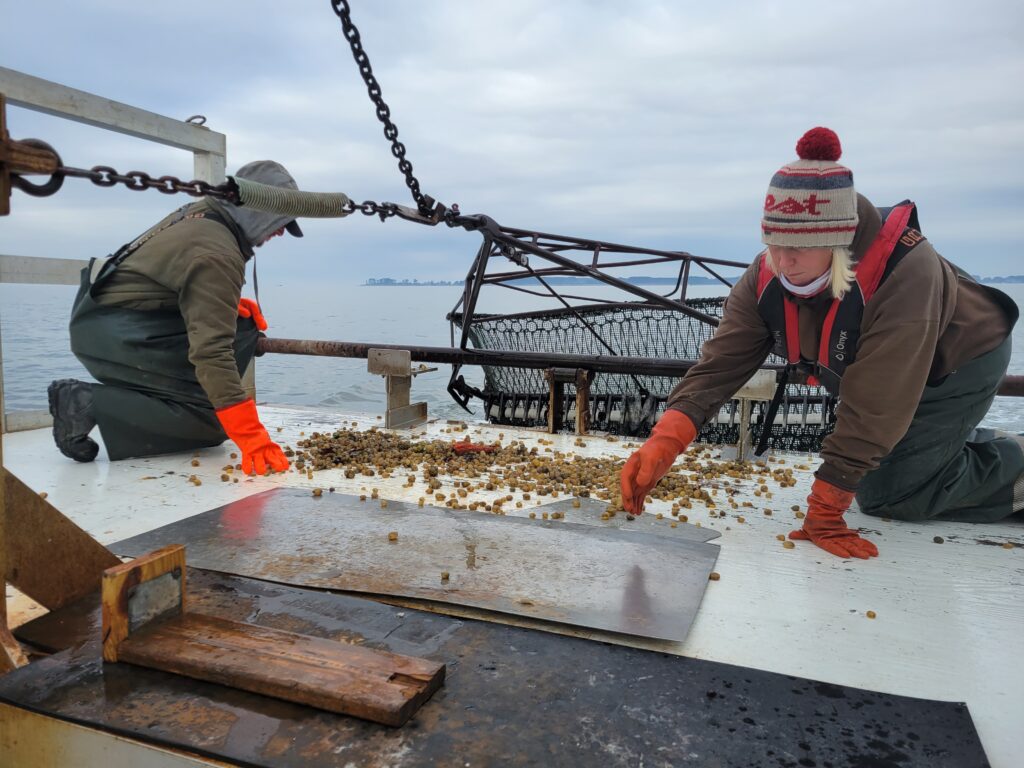
For more than 30 years, crews from Maryland and Virginia have been heading out onto the Chesapeake Bay and its tributaries from December through March, dredging the muddy bottom for crabs, not for the steamer, but for research. They sample the whole Bay–750 sites in each state chosen by a random computer program–to get an accurate picture. They carefully record the numbers, size and sex of the crabs they bring up with every swipe of the dredge, then toss them back into the water.
Scientists use the information they get to develop harvest regulations for commercial crabbers. Those regulations should come out a little later this year. Meanwhile, the information from previous year’s surveys is being fed into a stock assessment to be released in March that will be aimed at guiding future management of the crab fishery. In that analysis, scientists will examine years of data to assess potential factors that could be affecting the blue crab population, including loss of oxygen, water temperature, the availability of habitat and the effects of those voracious blue catfish.
They conduct the survey in the winter because that’s when crabs are hunkered down in the mud, Walstrum explained. They aren’t moving around like they would be in the summer.
This year, however, “it’s been a challenge,” he said. “It was going along like it should until that snow event in late January and that nine, 10-day stretch of below freezing weather. The places we wanted to sample weren’t capable of being sampled. It was those sheets of ice.”
Walstrum says there’s no playbook to decide whether to go or not. “We confer with the captain, and we rely on his extensive experience,” Walstrum explains.
The captain is Roger Morris, a Dorchester County waterman who works under contract with DNR and skippers Mydra Ann, his 45-foot Bay workboat. Morris, who fished crab pots in the summer for more than 40 years, once dredged for crabs in the winter in Virginia waters until that was banned in 2008 as an environmental conservation measure. Then, he bid on the job with Maryland’s DNR and has been doing it ever since. He says it’s a bit easier than the work in Virginia.
Walstrum says that “9 out of 10 times you can make a decision the night before” the survey trip. “But there are times when you get to the dock and you look and decide not to go. It’s not like we’re the Coast Guard.”
Those cold snaps may have had some effects on the crabs as well, DNR’s Bromilow says. “It’s too soon to say how the storms have affected the crabs, but in past years these kinds of cold snaps tend to increase morbidity.”
Walstrum says they haven’t seen anything “out of the ordinary” yet. “But there’s still a lot of winter to go.”
According to Bromilow, the crews from both states are a little more than halfway through sampling now and Maryland crews are aiming for sites in the Patuxent River and some open bay sites as well. But the weather delays don’t mean they won’t finish by the end of March, she added.
“We have built into the survey some buffer time. We just won’t be able to finish as early as we would.”
And those days when they can’t get out? There’s a lot of desk work to do, data entry and analysis.