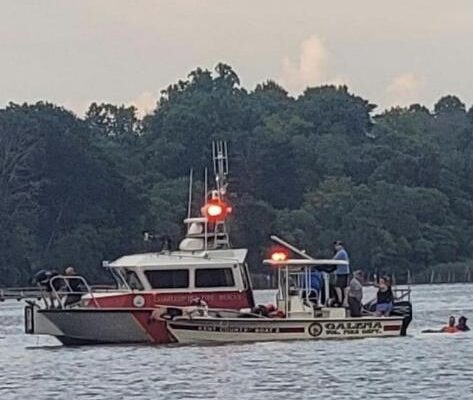
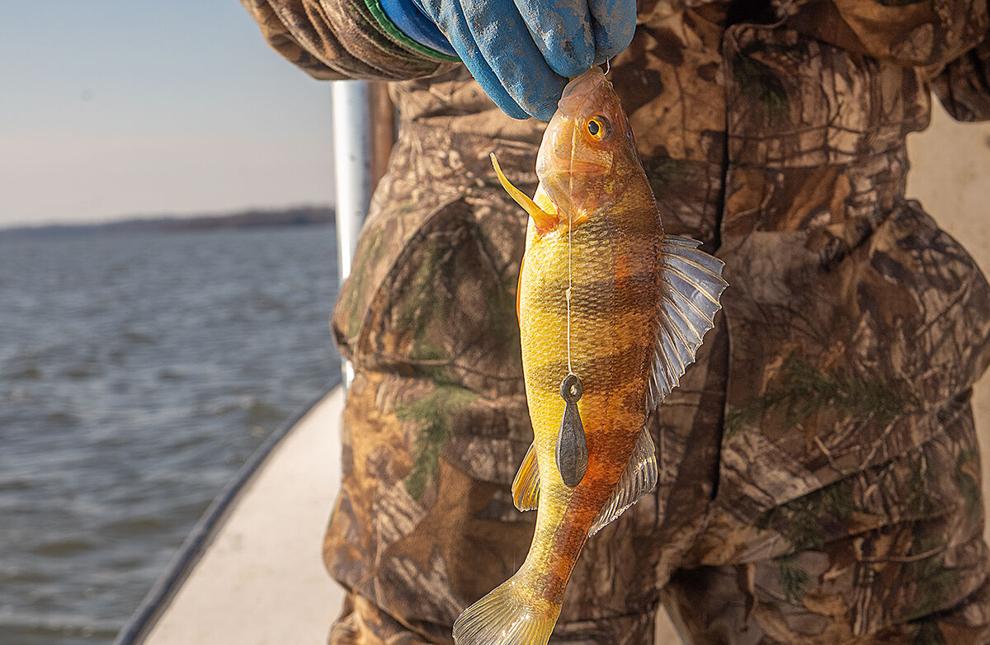
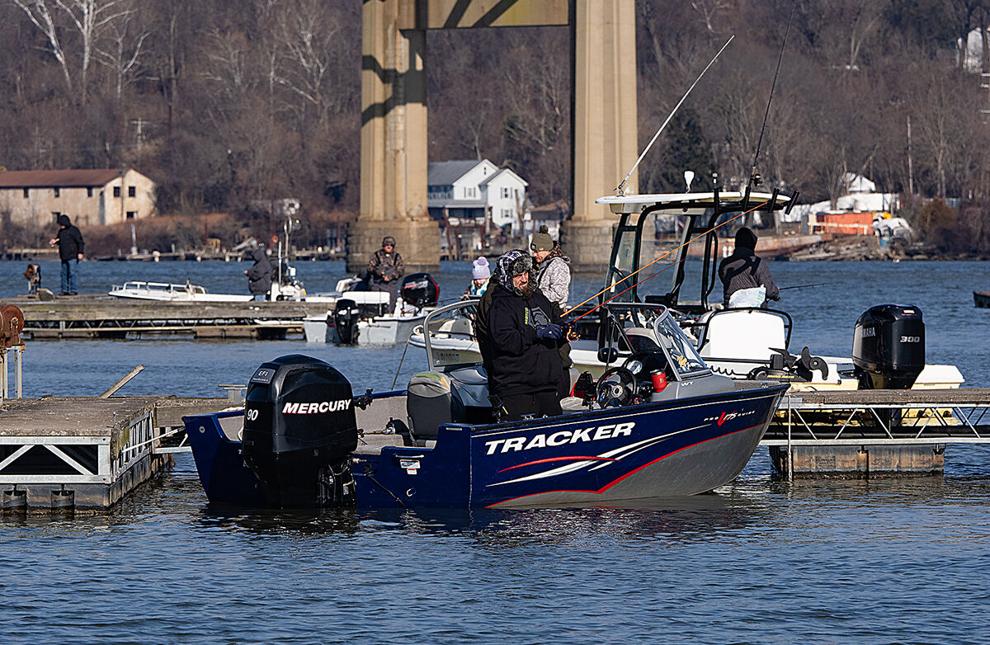
On a frigid, breezy morning in early January, Steve Lay bundled up against the cold and took his boat out from Havre de Grace to the mouth of the Susquehanna River. He dropped a line in the water, hoping to hook his favorite fish — yellow perch.
“I like them better than rockfish,” said Lay, a waterman and outdoorsman who’s been fishing and crabbing the upper Chesapeake Bay for decades. No disrespect to the Bay’s iconic striped bass, but Lay prefers the taste and firm flesh of a pan-fried “cold water fish” like yellow perch.
Now, though, recreational anglers will have to bring home fewer to fry up. Citing a six-year run of poor spawning or survival of young fish, the Maryland Department of Natural Resources on Jan. 8 halved the allowable daily recreational catch from 10 fish a day to five.
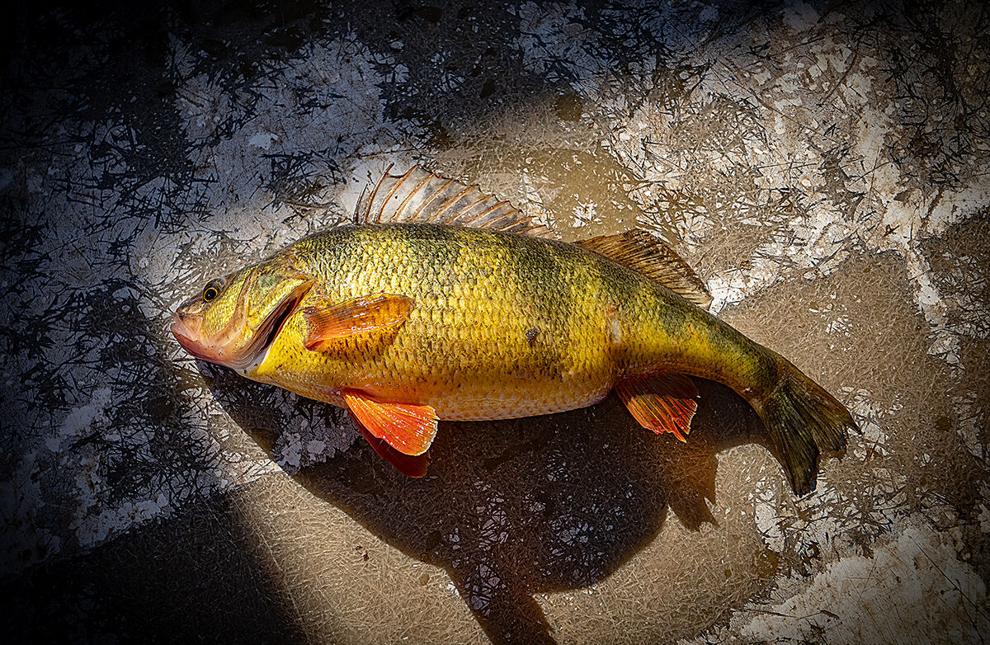
It’s a sobering caution flag for a colorful fish that once drew crowds. Bright yellow with orange pelvic fins and dark vertical bars down their sides, yellow perch are harbingers of spring. They live year-round in the rivers and creeks of the Bay, but in late February and early March they swim far upstream to spawn in shallow fresh water. The females lay gelatinous streamers of eggs that often end up festooning tree branches and other debris in the water.
Their spawning runs used to draw scads of anglers eager to leave winter behind and catch their first fish of the year. On the January morning in question, some did so from kayaks or small boats, but many simply lined up along creek banks and cast from shore.
There was once a robust yellow perch commercial fishery, too, which topped 200,000 pounds in the late 1990s, with much of the catch shipped live to stock freshwater lakes and ponds in the Midwest.
Not so much lately. The yellow perch population in Maryland has been up and down over the decades, but mostly down lately. The commercial harvest, limited to a four-month season from December through March, was just 16,000 pounds in 2025, well below the annually adjusted catch limit. The recreational catch isn’t tracked, but anecdotally, it is believed to be down considerably as well.
“You used to see 10 boats fishing in a particular area. Now you see two,” said Scott Lenox, an avid angler from Ocean City who pursues yellow perch in Eastern Shore streams. He also chairs DNR’s Sport Fisheries Advisory Commission. “It’s been really hit or miss the last couple years.”
Fisheries managers describe the recreational catch restriction as a precaution while they try to figure out what’s going on with yellow perch.
“It’s not like taking a nosedive, but it’s definitely not getting better,” saidCarrie Kennedy, director of tidal and coastal monitoring and assessment in DNR’s fishing and boating service.
Surveys indicate yellow perch are experiencing “recruitment challenges,” Kennedy explained. Though there still seem to be enough adult fish to sustain the population, the number of recently spawned juveniles showing up in annual net surveys has been low for the last six years straight.
This isn’t the first time yellow perch have struggled. Their numbers began to swoon in the 1970s, leading DNR to clamp down in 1989. Several rivers on both sides of the Bay were closed to commercial and recreational harvest — and some still are. Elsewhere, anglers were put on a five-fish a day creel limit, while commercial harvest was shut down statewide for all of February that year.
The population recovered some in the 1990s, leading DNR to relax regulations. The recreational creel limit went back up to 10 fish a day, and the Chester and Patuxent rivers reopened to limited commercial harvest.
While recreational regulations have remained unchanged for years, the commercial fishery has operated under a catch cap that is set annually based on trawl surveys. In the upper Bay, which has accounted for 80% to 90% of the statewide commercial landings, the cap was reduced nearly 70% overall from 2018 through 2025, yet the harvest came up short most years.
Lay, one of just a handful of watermen who still fish commercially for yellow perch, said the cap has been reduced so much that many have quit, saying it’s no longer worth going out.
When DNR asked for public feedback on what to do about yellow perch, some watermen suggested closing the fishery altogether. Instead, while restricting recreational catch, DNR decided to raise the upper Bay cap by 28% for each of the next three years, to 18,000 pounds.
Kennedy called the harvest limit increase an “experiment” intended to provide some stability for commercial fishermen. She said DNR would be keeping close tabs on the harvest and would lower the cap again if surveys show “unexpected and drastic” changes in the spawning stock.
Scott Lenox said the lower limit won’t keep him from going out. “Five keepers is plenty for me,” he said. Something had to be done, he added.
Some have wondered if invasive blue catfish are a factor in the dearth of young yellow perch. Proof of that is lacking, but there has been research linking poor survival of yellow perch eggs and larvae with the spread of pavement and buildings along streams where the fish spawn.
Whatever the cause, DNR’s analysis shows that the upper Bay population of spawning age females has been trending downward since the late 1990s. With declining fish habitat and poor juvenile survival, Kennedy said, “The only thing we have to control is fishing.”
One good spawn producing a bumper crop of young could “start to really turn the ship around a bit,” she said. But she acknowledged she isn’t sure when — or if — the stock can rebound to its past abundance.
Some diehards, like Steve Lay, still seek yellow perch — even during December and January, when they tend to school up in deeper water near the mouths of rivers. On that January day, there were six other boats out with his, though he said he’d seen as many as 30 in that area before.
“It used to be a lot of fishermen participated,” he said. “It was a good fishery, something to do in the winter when there was nothing else to do.”
This story first appeared at bayjournal.com on Jan. 9, 2026.