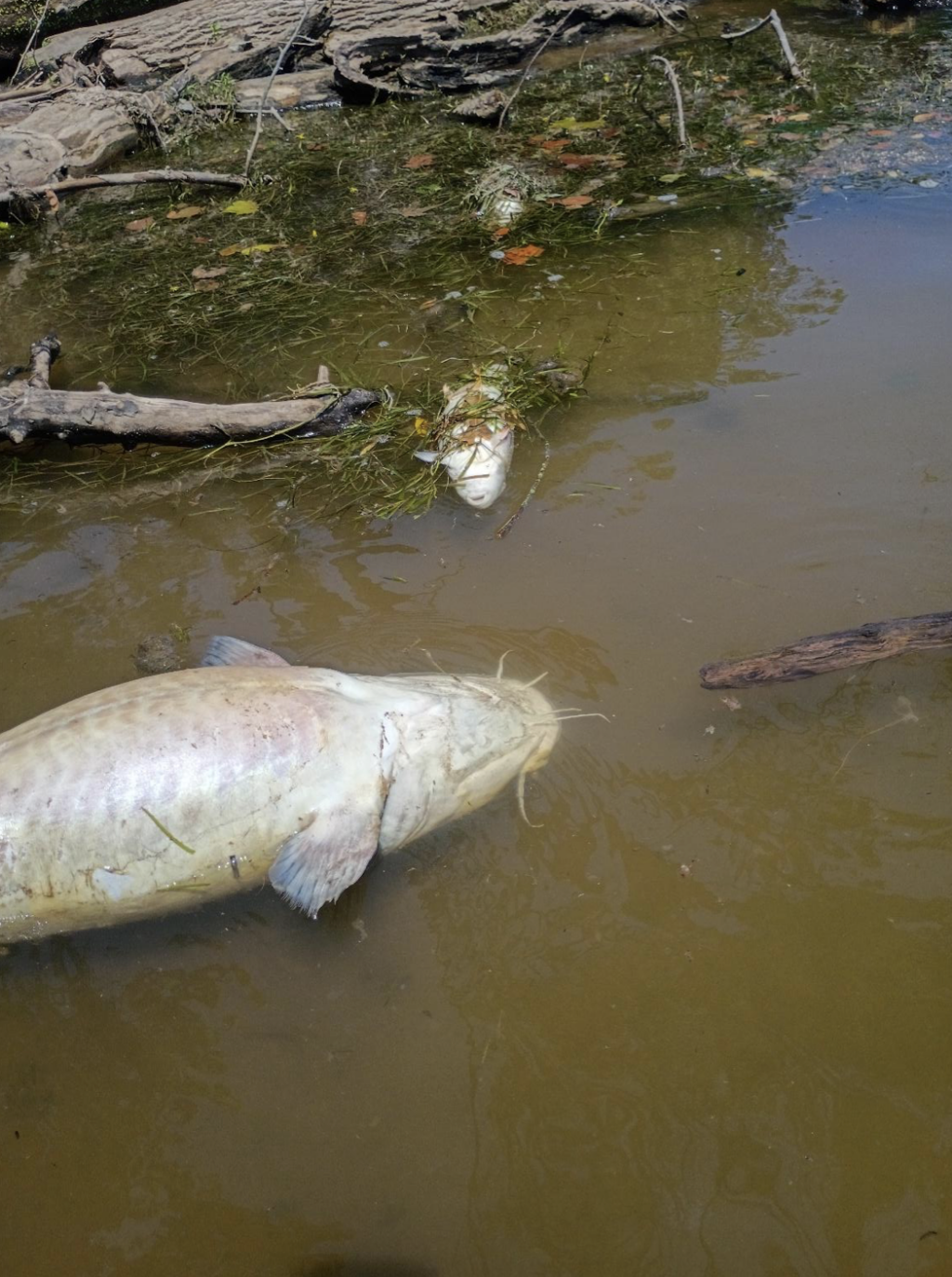
The intense heat wave that settled over Chesapeake Bay from early to mid-July helped trigger massive fish kills in the Upper Potomac River and Baltimore’s Inner Harbor. Maryland Department of the Environment scientists counted some 21,000 dead sucker fish, catfish, smallmouth bass and others floating along a 14-mile stretch of the river above Great Falls over the Fourth of July weekend. A few days later there were more than 100 dead blue crabs and other fish species floating in the waters of the Inner Harbor and raising a pungent odor.
The scientists said in social media posts the causes weren’t exactly the same—low dissolved oxygen that led to a “Pistachio Tide” in the harbor and drought in the Potomac, along with pollution in both places. But the heat played a significant part.
MDE biologists recorded a record-breaking water temperature of 94 degrees Fahrenheit in the Potomac, much higher than the species that swim in that river can tolerate. And Gussie Maguire, Maryland staff scientist at the Chesapeake Bay Foundation, explained the “Pistachio Tide,” a green sheen on the surface is caused by heat as well.
“We see it more frequently in the fall when you have hot, hot, hot days and then the sun goes down and it cools off quickly,” she said. “And that causes the sulfur bacteria in the bottom sediments to rise, and it turns the water that characteristic color of green.”
In this case, the heat and slightly cooler temperatures brought the sulfur to the surface and as it decomposed produced that green sheen and the unmistakable stink. And it depleted the oxygen in the water leading to the Inner Harbor fishkill.
At the same time, the Potomac recorded extremely high temperatures—more than striped bass and brook trout can tolerate–the river was flowing at only half its normal July volume because of the drought.
That combination of heat and drought is “highly stressful to many…fish species,” the MDE scientists said in their report. And the “most stressed fish become susceptible to explosive infections of pathogenic bacteria and parasites.”
The drought leads not only to water that is too hot for fish to tolerate, but to nutrient pollution as well, adds CBF’s Maguire. The intensity of the rain from the heavy thunderstorms washes nutrients into the water from yards, fields and streets.
“The dry soil makes it harder for the water to soak in, and the runoff carries hot water and lots of pollutants into the water, which leads to oxygen depletion and kills the fish,” she says.
And those fishkills aren’t confined to the Potomac and Baltimore, she adds. They’re getting reports of smaller fish kills throughout the Bay watershed, she adds.
But there is something that can help, Maguire says. Plant more trees.
“They help slow the runoff of the water and prevent nutrients from getting in the water and provide shade that helps cool the water. Sometimes you’ll see fish swimming near the edges of streams trying to find more oxygen.”
NOTE: Here are some tips to help from the Chesapeake Bay Foundation:
- Reducing stormwater pollution that runs off roads, sidewalks, and land into local waterways. This challenge is worsening from more intense weather from climate change — especially current drought conditions followed by intense rainstorms and flash flooding.
- Prioritize trees along rivers and streams. Planting and protecting forest buffers along our waterways not only help absorb and reduce polluted runoff, but also keeps water cool by providing shade.
- Giving striped bass a break during hot summer months. Anglers can use this time to target other species that have zero summer fishing restrictions, such as invasive blue catfish.