Back in February, a group of mostly Eastern Shore Republicans filed bills in Maryland’s General Assembly to open four of the state’s 51 oyster sanctuaries to commercial harvesting. About the same time, the US House Appropriations Committee approved a bill that would allow commercial harvesting on oyster sanctuaries and cut federal restoration funds for sanctuaries if harvesting is not allowed. That bill is headed to the House floor.
Now, the Chesapeake Bay Foundation has released a poll that found that three-quarters of Maryland residents, regardless of party affiliation or where they live, oppose opening the sanctuaries to harvest.
“Maryland voters support oyster sanctuaries because they understand what they can do for the Bay and its communities,” said Allison Colden, the organization’s Maryland executive director. “Opening these protected areas for harvest would run counter to the public’s best interest and backtrack on decades of progress.”
The poll of nearly 600 Maryland voters conducted between July 1 and July 9 by two research firms—one Republican and one Democratic—found 78 percent of voters overall support maintaining existing oyster sanctuaries as they are. Democrats and Independents reported 81 and 82 percent support, while Republicans registered 68 percent support.
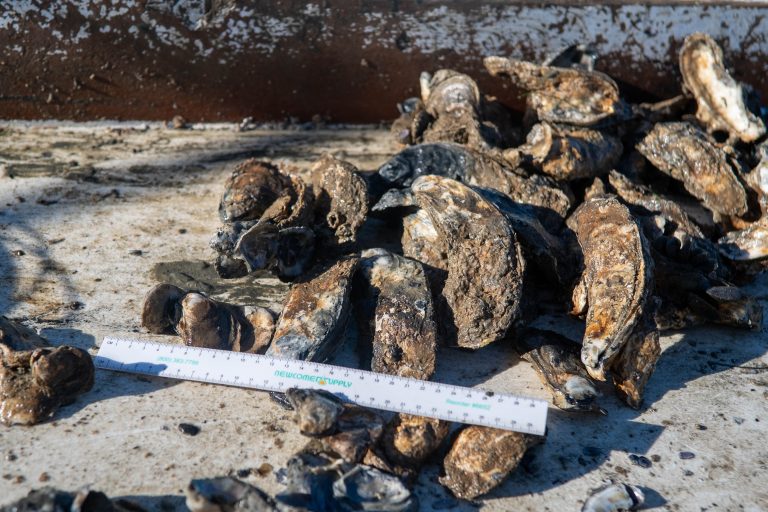
“Oyster sanctuaries are designed to protect, restore and enhance those non-harvest benefits,” Colden said. “In areas off limits to harvesting, reefs can grow undisturbed; oysters can grow to large sizes, which helps support greater filtration and contribute more to oyster reproduction.”
But Rep. Andy Harris, Maryland’s lone Republican in Congress and a member of the Appropriations Committee, dismissed the findings.
“You have to read the question and the way they asked it,” he said. “They could ask it to get the answers they want.”
Harris said there are sanctuaries where nothing has improved, but allowing some harvesting would help those sanctuaries.
“We can improve the oyster population and support the watermen as well,” he said. “This can be a win-win situation.”
Delegate Jay Jacobs, the lead sponsor of the Maryland House bill, saw the results of the poll and argued that the bay foundation is “not very friendly to commercial seafood business.”
“They have kind of a stop sign when it comes to watermen,” he said. “I think Alison Colden, she just doesn’t like commercial watermen at all.”
Jacobs said his bill, which died in committee, would only have applied to four of Maryland’s sanctuaries “that have been ignored since 2009.”
“Nobody’s doing anything with them,” he said. “We’re not talking about thousands of acres; we’re talking about 75 acres on each site.”
Under Jacobs’ plan, watermen would be allowed to harvest 25 acres a year on each of the four sites and required to replenish those acres before moving on to the next 25 acres.
Oysters, filter feeders, were once so plentiful it was said they could filter a volume of water equal to that of the entire Bay in a week. Until the mid-1980s, they were the most valuable commercial fishery in the bay. But stocks crashed due to overfishing and disease, and in 2008, Maryland began recovery efforts. Large-scale efforts were launched in 2015, leading to the network of oyster sanctuaries throughout the Bay and its tributaries.
And they appear to be working. In March, Maryland’s Department of Natural Resources announced a historic year for oyster reproduction. A survey taken the previous fall showed the concentration of new oysters in 2025 was nearly six times higher than the long-term average and the second highest recorded in the 41-year modern history of the state’s fall oyster survey.
Jacobs said the report shows it’s time to allow some harvesting in the sanctuaries.
“We’ve got more oysters in the bay now than we have in 25 years,” he said. “There’s an enormous amount of oysters in the bay. We had a bad year, but that was because we had a much bigger supply than we had a market.”
Ben Ford, the Miles and Wye Riverkeeper, conceded oyster restoration efforts are working, but insisted, “we’re not done.”
“We’ve gotten a lot of good news from the oyster front in the last few years,” he said. “People may hear that and think the job’s done. “But a 500 percent increase to a resource that was down to one percent is not restored.”