It’s one of the Chesapeake Bay waterfront’s oldest and most compelling histories. The remains of nearly 60 early settlers were unearthed one by one from a site in Historic St. Mary’s City, including members of Maryland’s founding family, the Calverts. After decades of excavating and studying the 17th- and 18th-century human remains, historians will return the early colonists to their graves.
This kind of event doesn’t come along all the time. On Saturday, Sept. 20, Historic St. Mary’s City (HSMC) will hold a Ceremony of Return, which they call “a solemn and historic occasion marking the reinterment” of the human remains. It is a collaboration with the Smithsonian Institution and descendants of the first Maryland European settlers.
The event will begin with a formal procession led by a horse-drawn hearse. It will include descendants of the Calvert family, members of the Ark and Dove Society (who can trace their lineage to those first ships), the St. Maries Cittie Militia, and historical interpreters in period dress. The free ceremony will be marked with cannon fire from the Maryland Dove, a tall ship reconstruction that represents the ships that carried Maryland’s first settlers to establish Maryland’s original capital along the St. Marys River.
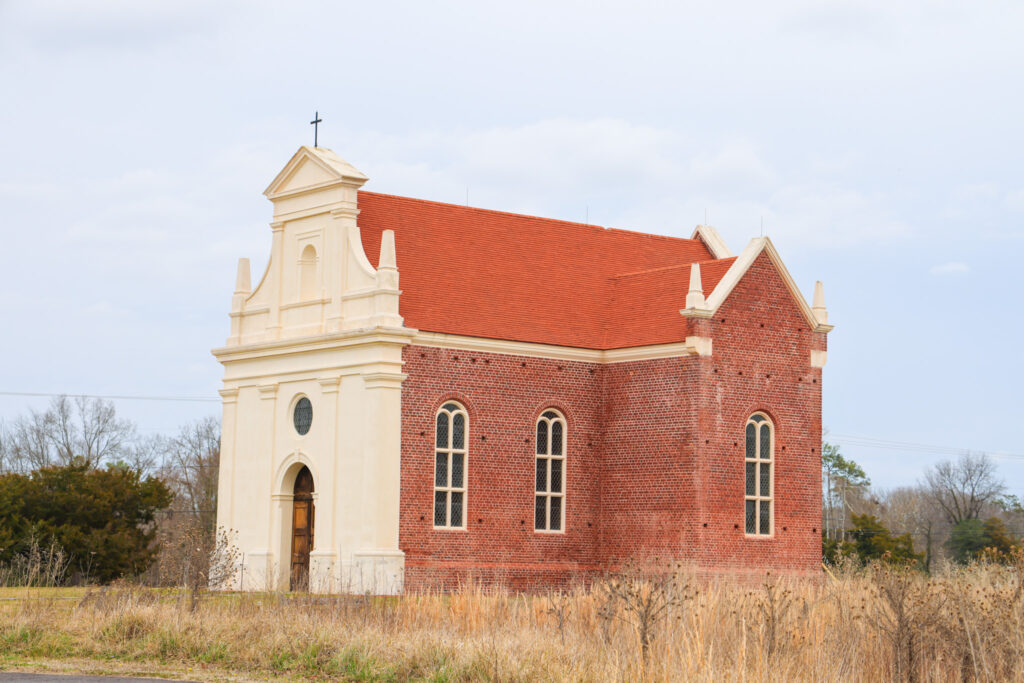
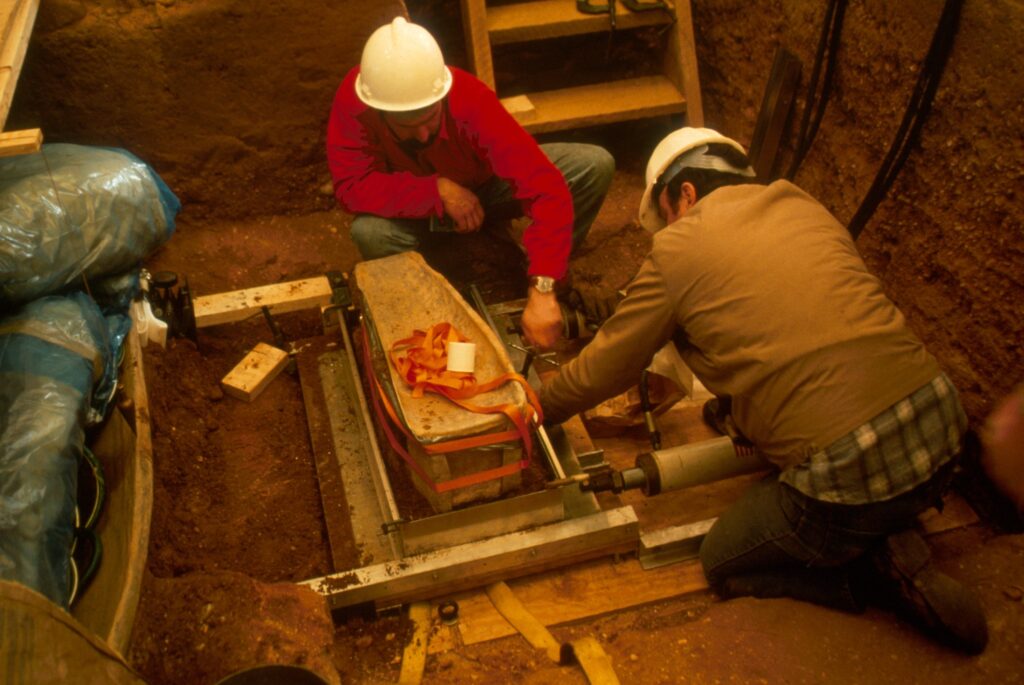
The remains will be returned to the exact location in which they were found, now known as HSMC’s Brick Chapel Exhibit. When HSMC began to rebuild the Brick Chapel back in 1990, archaeologists first had to excavate the area for preservation, removing any cultural materials that could be destroyed during construction. Dr. Travis Parno, Interim Executive Director at HSMC, explains that they had to excavate the whole interior of the chapel and a ten-foot perimeter around its original foundation. This is where they located a burial site. Parno says it was common for burials to take place in the spaces around chapels. Most of those found had been buried in wooden coffins or placed directly in the ground in simple burial shrouds. Where wooden coffins had been, the wood decomposed, leaving stains in the soil and lines of nails behind.
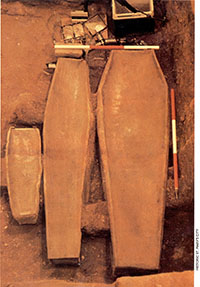
Three coffins, however, were quite different than the other 56. These three were found in the chapel, wrapped in lead. When they were discovered, HSMC didn’t know who they belonged to, only that they must have been members of the colonial elite. Back in England, lead coffins were reserved for royalty. The only five lead coffins ever to be found in the United States have all been discovered in St. Mary’s City.
Forensic anthropologists at the Smithsonian Museum of Natural History have been studying all of the remains that were excavated since the early 1990s, publishing their work along the way. They concluded that the three lead coffins held Philip Calvert (son of George Calvert, the first Lord Baltimore) who was Maryland’s fifth governor. Along with him were his second wife, Anne Wosley Calvert, and his infant son.
We’re told the Smithsonian team will soon release a massive volume detailing what they have learned from studying the remains of 17th- and 18th-century people throughout the Chesapeake.
Now that the interior exhibits of the Brick Chapel have been completed, Parno says, “This is the right time to return the remains of these individuals, who have taught us much, to their original resting place.”
You can learn more about the Lead Coffins Project here and how to register to attend the free Ceremony of Return here.