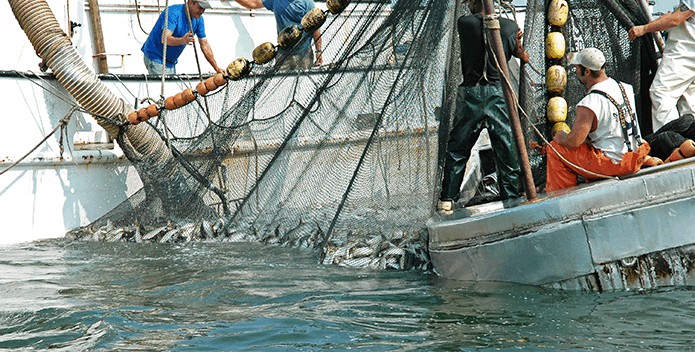
Three weeks ago, Maryland’s Department of Natural Resources (DNR) extended the state’s 2025-26 commercial oyster season for two weeks, to April 14. This past winter, poor market demand, windy weather, and low prices led to a disastrous start for the 2025-2026 season. Then, frozen waterways kept oyster boats tied up in January and February, despite DNR’s best ice-breaking efforts. “Maryland’s watermen have faced a difficult oyster season after recent declines in market demand and ice on waterways locked access to traditional harvest areas,” said DNR Secretary Josh Kurtz. “This oyster season extension will give them additional opportunities to boost their livelihoods and the local communities where they live.”
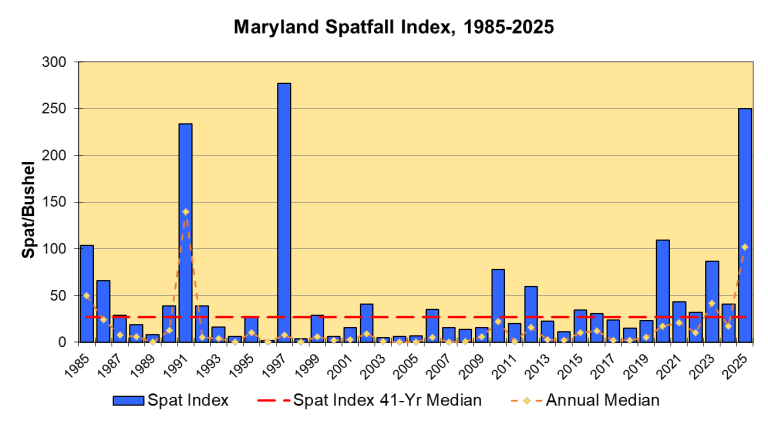
In a most ironic twist, though, last week the state’s Governor Wes Moore announced an historic year for oyster reproduction. According to the DNR, the spatset of larvae last fall was nearly six times the long-term average and the second highest ever recorded in the 41-year modern history of the state’s annual fall oyster survey. “Maryland is now seeing the best news for our oysters in decades,” said Gov. Moore. “Our robust and growing oyster population will help make sure we pass our Bay along to future generations as an heirloom, both as an economic driver for our seafood industry and for the environmental health of our waterways.”
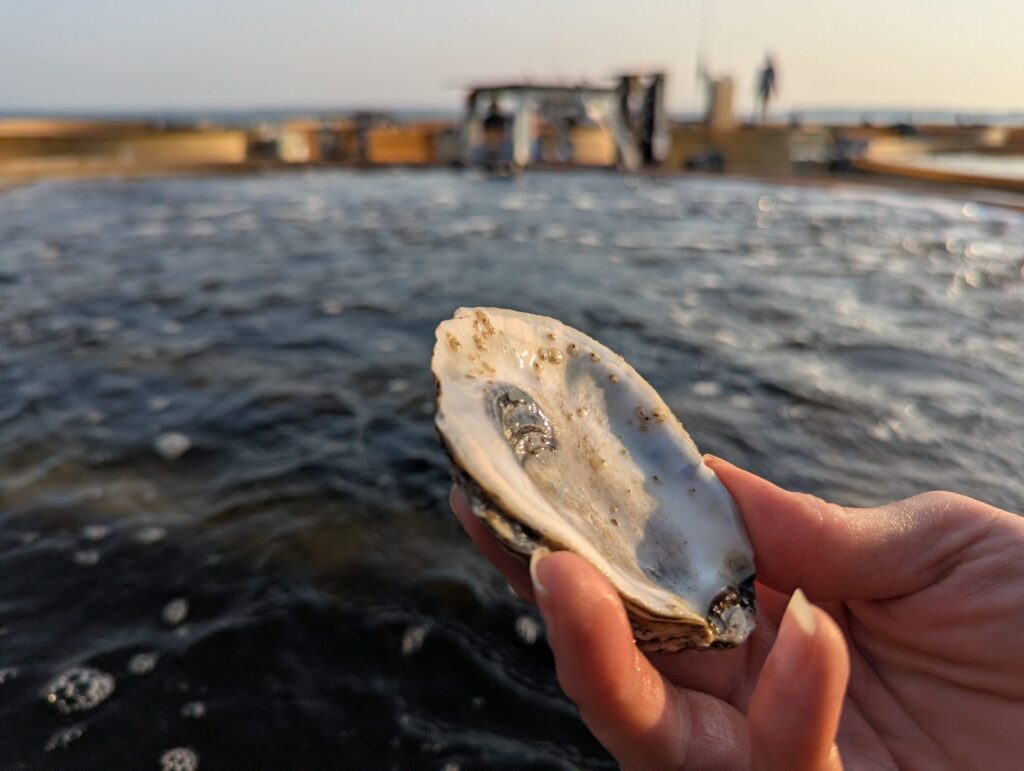
Oysters spawn in the summer, and their larvae move freely in the water before attaching to a hard surface-often other oyster shells-where they will grow and spend the rest of their lives. Every fall, Maryland Department of Natural Resources scientists dredge hundreds of sites and count the spat growing on oyster shells, rocks, or other materials.
Major survey highlights listed by DNR include:
• At an index average of 250 spat (or juvenile oysters) per bushel at the key sites where scientists measure the intensity of spat, the survey measured reproductive success and potential population growth for oysters at the highest level recorded since 1997, more than three times higher than the prolific reproduction in 2023. The long-term spatset average is 42.2 spat per bushel.
• The survey found the second-highest distribution of spat on record since 1985, lower only than 1991. Several areas saw especially high spatsets, including 3,600 spat per bushel on two bars in Broad Creek and more than 2,100 spat per bushel in the St. Mary’s River restoration sanctuary.
• Oyster mortality levels were the third lowest since 1985, continuing a dramatic decline in mortalities driven by low levels of oyster diseases. In 2025, the presence and intensity of the disease Dermo were among the lowest in 36 years. Preliminary results also show very low prevalence of MSX, the other prominent oyster disease in the Bay.
• Maryland Department of Natural Resources shellfish biologists calculate that oyster biomass, the overall estimated weight of oysters in the local ecosystem, is at its highest in the 33 years since the department began estimating that value. Current biomass is more than five times higher than the lowest point in 2002, when oyster populations were devastated by disease.
• Available oyster habitat was also at the highest level, with the three-year average from 2025 tied with the highest in the 21 years the Maryland Department of Natural Resources has measured. This encouraging news is based on measurements of available hard-surface habitat.
This most encouraging news comes on the heels of Gov. Moore’s announcement that Maryland completed restoration of oyster reefs in all of its five rivers.
“The continued strong reproduction and low mortality rates are great news for Maryland’s oyster population,” said University of Maryland Center for Environmental Science President Fernando Miralles-Wilhelm. “This continues the trend seen over the last 20 years and should fuel future increases in the number of oysters.”
Chesapeake Bay Foundation Maryland Coastal Resource Scientist Julie Luecke agreed:
“Oyster restoration in the Bay is working, and these strong survey results show it.”
In the wild, it typically takes one to three years for an oyster spat to grow into an adult, so the spat that set on reefs in 2025 won’t reach market size till 2028. However, the previous five years’ spatsets, while not record-breaking, have all been above the 41-year median, so watermen should have plenty to harvest next season. Here’s hoping Maryland’s oyster lovers take more advantage of this iconic Chesapeake resource over the next several weeks and in the season next fall.