History is coming alive at Fort Monroe National Monument, with a new memorial, lighthouse restoration, and Army barracks revamped as residences for those who want to live among the live oaks and historical landmarks.
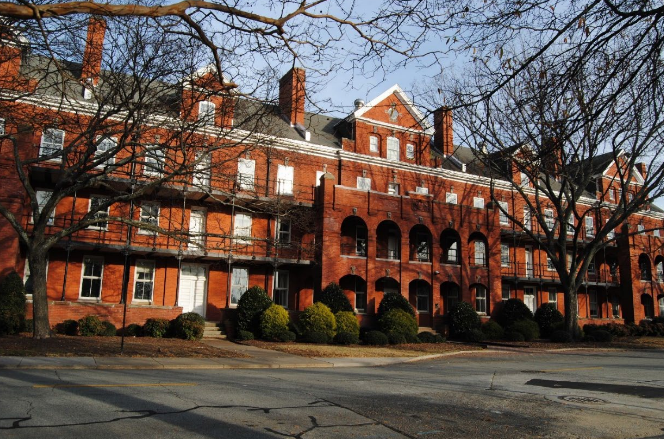
This month, the Fort Monroe Authority and Echelon Resources announced the Fort Monroe Lofts project in Hampton. The project will convert two historic buildings into a mix of studio, one-bedroom, and two-bedroom apartments. The first building, Randolph Hall, was built in 1932 as military barracks. The building is close to the water at Mill Creek. The second, Building 100, was completed in 1906 and was designed by the famous architect Paul Pelz, who designed the Library of Congress. The apartment units should be available toward the end of 2026.
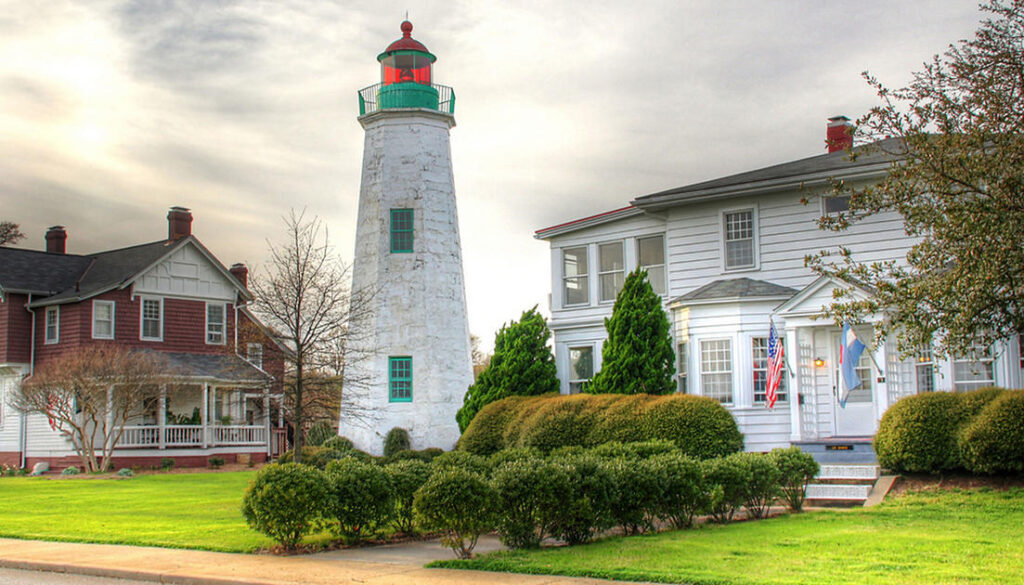
The Old Point Comfort Lighthouse is also being renovated. It is the second oldest lighthouse on the Chesapeake Bay, and the oldest still in use. It was built in 1802, and was briefly occupied by the British in the war of 1812. It is 54 feet tall, and was originally lit with 11 oil lamps.
According to Phyllis Terrell, Fort Monroe Authority spokesperson, the Coast Guard owns the lighthouse and is responsible for its maintenance. “The United States Coast Guard is conducting remedial activities on the Old Point Comfort Lighthouse,” she said.
Crews are using innovative technology, jet blasting with a soft sponge to remove lead containing exterior paint while minimizing the potential for damage to the 223-year-old structure, she said. “The effort by the Coast Guard was critical in ensuring that proper care was taken not to interfere with Old Fort George, which is located directly beneath the lighthouse.” The remediation project is expected to wrap up by the end of spring.
A significant new exhibit will highlight the landing of enslaved Blacks at Hampton in 1619. The African Landing Memorial commemorates the landing of the first Black enslaved people at Point Comfort. That year, a ship carrying over 350 captured Africans left Angola, in Africa, bound for Spanish colonies in America. In the Gulf, the ship was attacked by two privateers, the White Lyon and the Treasurer. The privateers were looking for valuables such as gold and silver, not human cargo. Nevertheless, the privateers sailed off with some of the captives.
The White Lyon brought them to the Virginia colony. According to archaeologist and author Ivor Noel Hume, the colonists in Virginia did not really want enslaved people, as they had little food for themselves and did not want more mouths to feed. Slavery was not in practice in the colony at that time. Nevertheless, the colonists traded food and water to the privateers and in return accepted about 20 enslaved people.

The memorial, created by Brian Owens, will display three components. The sculpted relief will be 25’ long and 9’ high and oriented on a direct line of sight toward Angola, the site of the people’s original capture. The sides of the relief will depict the story of the enslaved people up to the point where they were brought ashore in Hampton. A sculpture of three figures is inspired by the story of Antoney and Isabella, two of the Africans who were brought to Hampton in 1619. Their son, William, was the first documented birth of an African in Colonial Virginia. Lastly, a large arc will tower over the site. The arc, with a torch on the tip, symbolizes hope.

Fort Monroe’s other attractions are still present and mostly open. There is the Fort itself, Quarters 1 (the oldest building in the Fort), the Casemate Museum, fishing pier, marina, beaches, dining, and the pet cemetery on top of the Fort’s walls. It is a fantastic place to walk and explore. To learn more, check out fortmonroe.org.