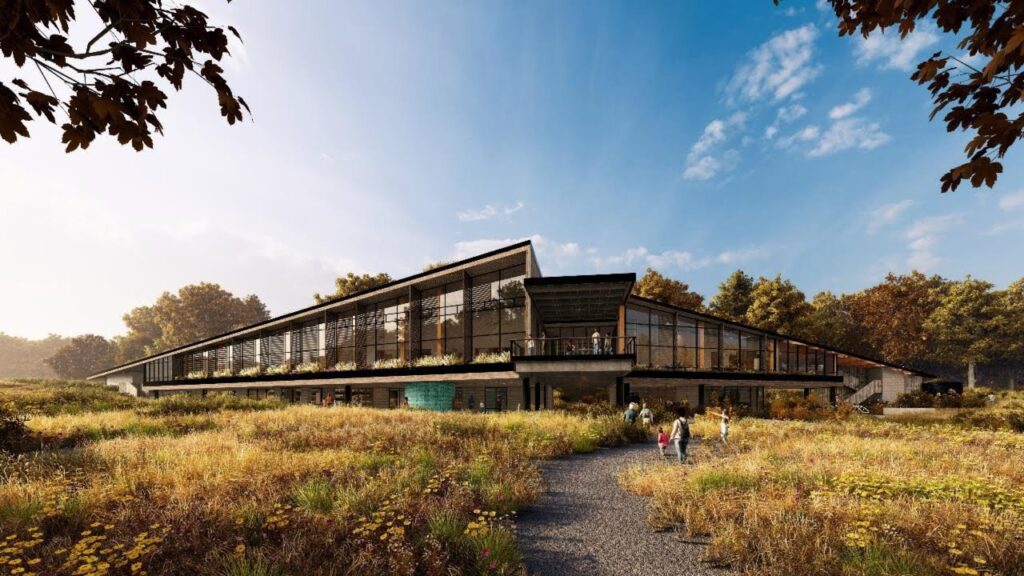
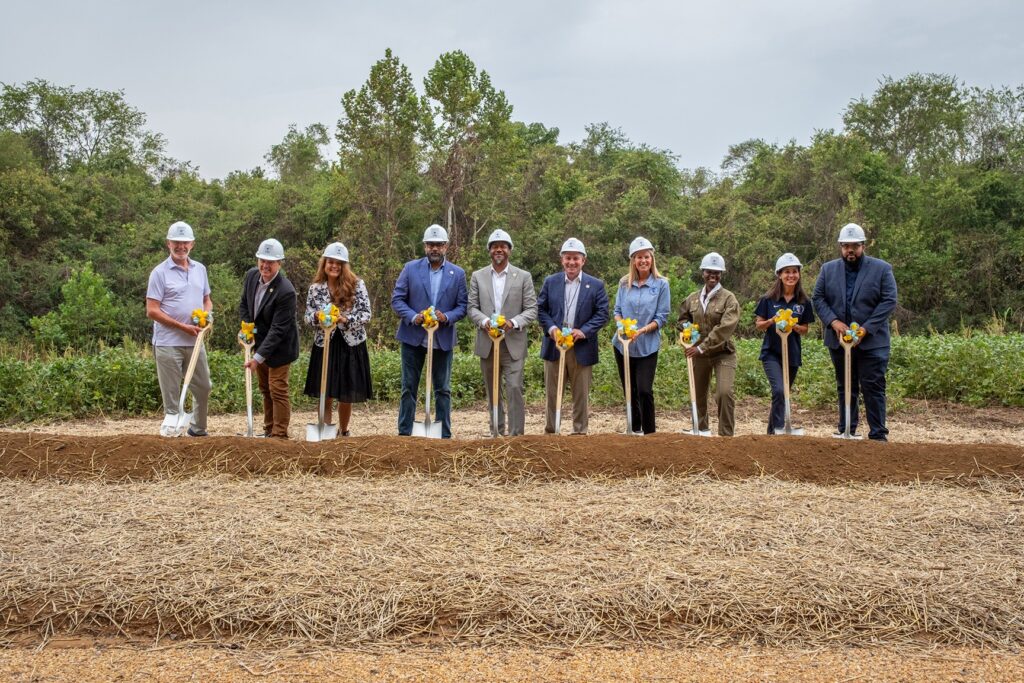
Recently, Henrico County Public Schools (HCPS) broke ground on an innovative environmental education project. It will be the first public school K-12 project in the world certified as a “Living Building Challenge” facility. The new 15,000-square-foot “living building” at Wilton Farm, to be built in the eastern part of the county along the James River below Richmond, will serve Varina High School’s Center for Environmental Studies and Sustainability. In addition, the Wilton Farm facility will be available to students from other Henrico schools and members of the Varina community. Most of the funding for the $16.3 million project will come from Henrico’s 2022 bond referendum. Design firm Perkins & Will worked with HCPS to create the project plans.
While the school building is the first of its kind, the cutting-edge approach and technology it will employ are well proven. The idea behind it the came from HCPS Superintendent Amy Cashwell, who previously as curriculum leader in the Virginia Beach City Public Schools played a major role in development of its high school Environmental Studies Program. That course operates at the Chesapeake Bay Foundation’s (CBF) Brock Environmental Center on Lynnhaven Inlet, Virginia’s first self-sustaining living building.
CBF recently celebrated the Brock Center’s 10th anniversary, demonstrating the enduring value of its sustainable features, as required by the International Living Future Institute. Features that the Wilton Farm facility will share with the Brock Center include net energy production, siting in an existing clearing to minimize tree removal, a potable rainwater collection system, composting toilets, and use of recycled construction materials to generate minimal landfill waste. (Salvaged gym flooring from other HCPS schools, for example, will have a valuable second life.)
Henrico County purchased 1,200 acres of the Wilton Farm property for $10 million in 2019, including 2.8 miles of riverfront. The site was a tobacco plantation in the 18th century and has centuries of Native American history. During the Revolutionary War, American troops led by the Marquis de Lafayette camped there. Except for agricultural uses, the property has been largely undisturbed since that time. Construction will proceed with consideration for preserving the property’s rich history.
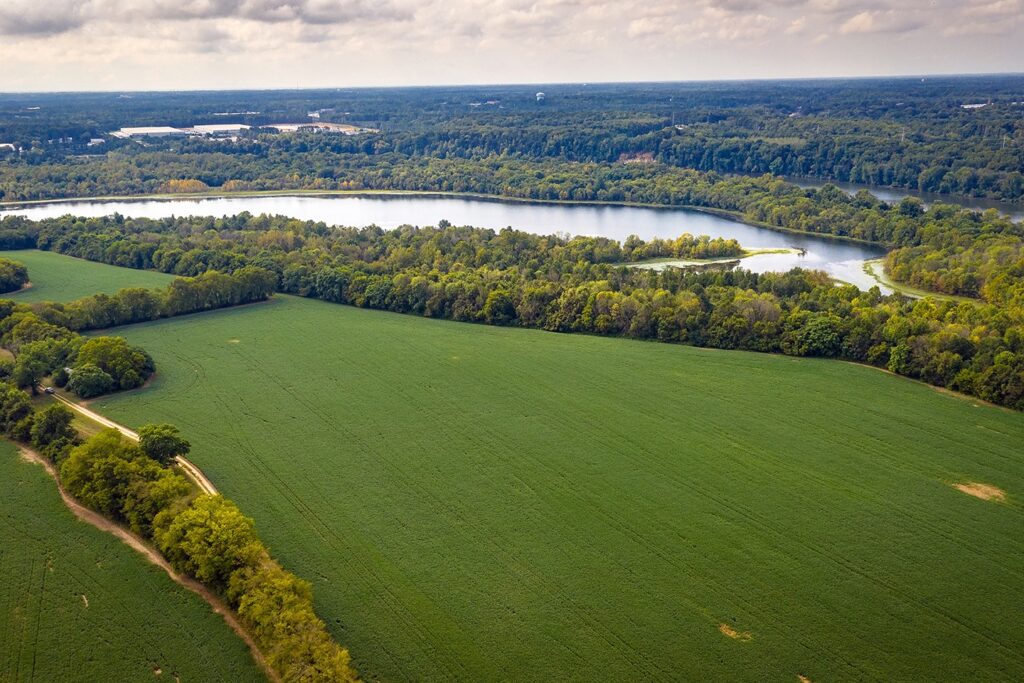
The HCPS curriculum will use proven, hands-on experiential learning principles, adapted to take advantage of Wilton Farm’s character. Students will be prepared for a wide range of environmental science careers thanks to outdoor learning areas in wetlands, woods, a lake, a creek, landscaping with native plants, a pollinator garden, an orchard, small farming areas, and a new student-planted forest.
It will also incorporate the center’s sustainable technical features, including solar panels that generate more energy than the building uses; rainwater collection and purification for drinking, cooking and restrooms; a small-scale wind turbine; and a green roof that will filter rainwater and help insulate the building. Large windows in classrooms and a common area will provide natural light, passive heating in winter, and sweeping views of the forest. The roof will extend to cover three outdoor learning areas.
Chris Gorri, the veteran building manager at CBF’s Brock Center, notes that while HCPS rightfully claims the new center will be, upon certification, the first K-12 living building public school, other school divisions have visited Brock, including at least one in Northern Virginia and a couple from other states. He sees the makings of a hopeful trend in this highly effective kind of education.