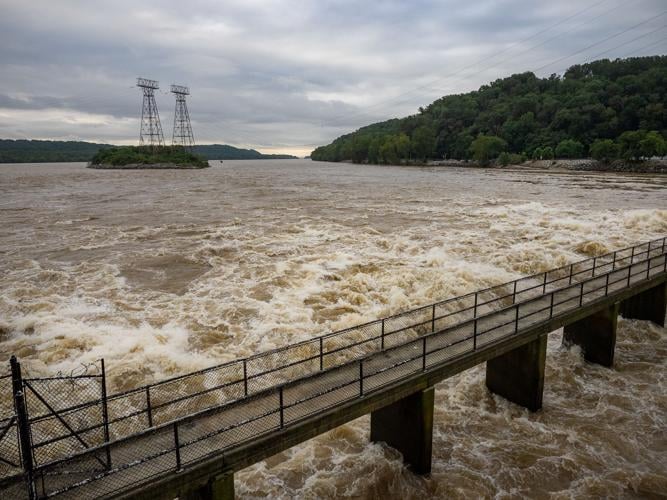
Just when it seemed settled, the marathon legal wrangling continues over how to address the impacts of Conowingo Dam on the Chesapeake Bay.
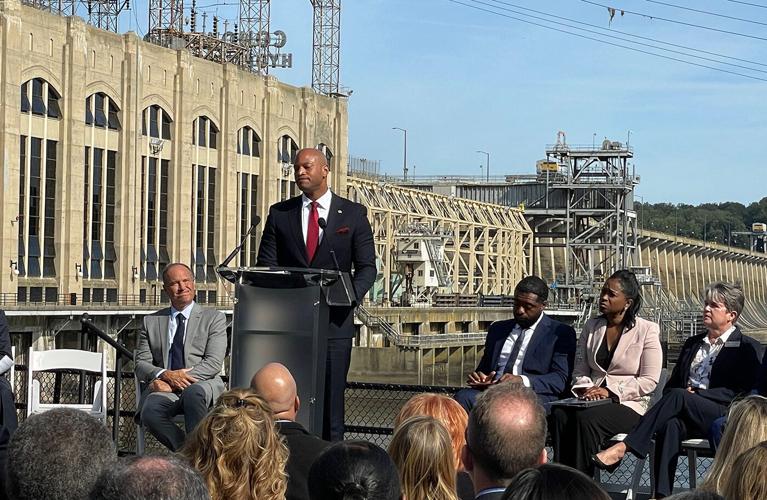
The Clean Chesapeake Coalition, representing four rural counties on Maryland’s Eastern Shore, has appealed an agreement announced in October that ostensibly resolved more than a decade of negotiations and litigation over a renewed operating permit for the hydroelectric facility on the lower Susquehanna River. The owner of two dams upriver of Conowingo has also raised objections to the agreement, which set conditions under which the dam can operate for the next 50 years.
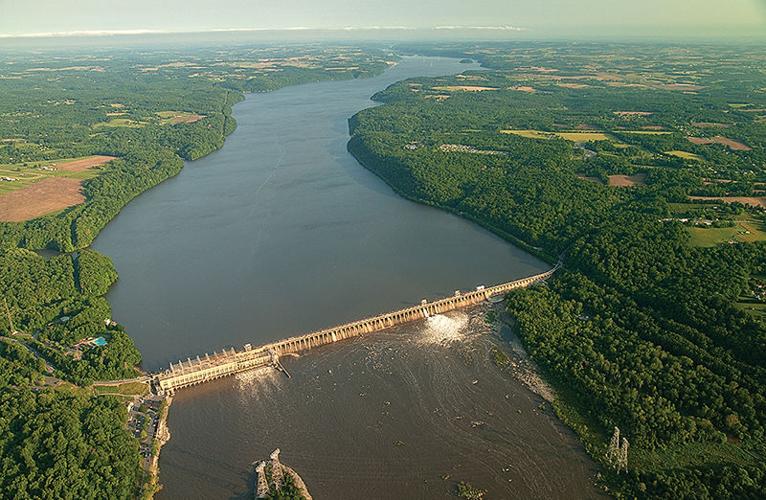
Under that deal, dam owner Constellation Energy pledged to spend more than $340 million to improve fish passage and water quality issues caused by the 94-foot-high structure completed in 1928.
But the coalition contends that the settlement falls short of what’s needed to offset the sediment and nutrient pollution escaping from behind the dam. It also argues that the Maryland Department of the Environment (MDE) failed to do required studies and didn’t give adequate public notice or collect public comments before agreeing to the deal.
“This just doesn’t feel like it’s satisfactory, that we’ve gone far enough,” said Charles “Chip” MacLeod, the coalition’s lawyer.
Clean Chesapeake, whose membership includes local officials from Cecil, Kent, Queen Anne’s and Dorchester counties, has long argued that the state should pursue dredging nutrient-laden sediment from behind Conowingo Dam to lessen the burden on downstream communities for cleaning up the Bay.
At issue is an MDE water quality certification that Constellation needs before it can obtain a new operating license from the Federal Energy Regulatory Commission (FERC).
In 2018, after years of studies and negotiations, MDE informed Constellation that it would have to drastically reduce nutrient pollution flowing through the dam or pay up to $172 million a year for others to do it.
The company sued, contending it should not be held responsible for pollution coming from upriver. In 2019, it reached an out-of-court settlement with Maryland that scaled back what Constellation would be required to do. The company committed at that time to spending $230 million on various environmental projects over the 50-year term of the license.
FERC issued a new operating license based on that settlement, but in 2021 four environmental groups sued. Waterkeepers Chesapeake, the Lower Susquehanna Riverkeeper, the Sassafras Riverkeeper and the Chesapeake Bay Foundation argued the state should not have been allowed to negotiate conditions in private that backtracked on its earlier requirements for maintaining water quality.
In 2022, the U.S. Court of Appeals for the District of Columbia sided with the environmental groups and vacated the license, ordering MDE to either stick with the original requirements or start the certification process over again. FERC allowed the dam to continue generating power through a series of one-year license extensions while Constellation, MDE and the environmental groups engaged in closed-door mediation that resulted in the agreement announced Oct. 2.
With the new agreement, MDE has revised yet again the conditions it originally imposed on Constellation to see that the dam would not impair water quality downriver and in the Bay.
Environmental groups hailed the new settlement, which commits Constellation to providing $87.6 million for pollution reduction and resiliency initiatives such as shoreline restoration, forest buffers and underwater grass beds.
It also keeps the door open to dredge some sediment from the reservoir, though questions remain about its cost-effectiveness. The U.S. Army Corps of Engineers is expected to complete a feasibility study within two years, and the agreement pledges $18.7 million for more studies.
Meanwhile, the new deal clears the way for fish passage improvements, agreed to in 2016, that would require Constellation to expand the dam’s existing fish lift and to trap and transport American shad, river herring and American eels upriver past other dams. The pact also includes $23 million toward construction of a mussel hatchery to help rebuild the river’s population of filter-feeding freshwater bivalves.
The Clean Chesapeake Coalition was not party to the settlement talks. In 2023, after the court invalidated the earlier agreement, the group urged MDE to “hold fast” to its 2018 requirements rather than relying on “tired and unproven” measures to control polluted runoff or putting “relentless blame on farmers and watermen for what ails the Bay.”
The coalition contends that MDE has failed to conduct studies to justify scaling back its 2018 assessment of impacts attributable to the dam. It also faulted MDE for not giving public notice and allowing public comment on the proposed changes.
MacLeod said the group wants dredging to be seriously pursued, not simply studied. But its objections to the new deal are broader than that, he noted. He questioned how much the state would be allowed to adjust environmental requirements over the 50-year term of the license and whether the money to be paid by Constellation would be spent where it’s needed most. He also complained that the deal didn’t mention maintaining the safety of the nearly century-old dam.
MDE spokesman Dave Abrams said the agency would respond to Clean Chesapeake’s appeal “as appropriate.” He did not elaborate on that process but expressed disappointment at the coalition’s action.
“Disrupting this process will only delay or possibly remove dredging and other water quality projects because it will plunge us back into even more years of delay with no action,” the MDE spokesman said. “We issued a revised certification that delivers the best outcomes for water quality downstream of the Conowingo Dam, which includes the Susquehanna River and the wider Chesapeake Bay. It is reckless to come in at the end of the process and try to halt real progress for Maryland.”
In addition to the coalition’s challenge, Brookfield Renewable Power Inc., which owns Holtwood and Safe Harbor dams upriver of Conowingo, has raised questions about the legitimacy of the deal.
In a Dec. 4 letter to FERC, Brookfield pointed out that the agreement calls for imposing similar environmental requirements on its hydroelectric facilities, even though they are separately licensed. Among other things, the settlement suggests that Brookfield should share the costs with Constellation of trapping and transporting fish and eels upriver and of removing trash and debris that flow downriver to the Bay.
This article first appeared at bayjournal.com on Dec. 8, 2025.